
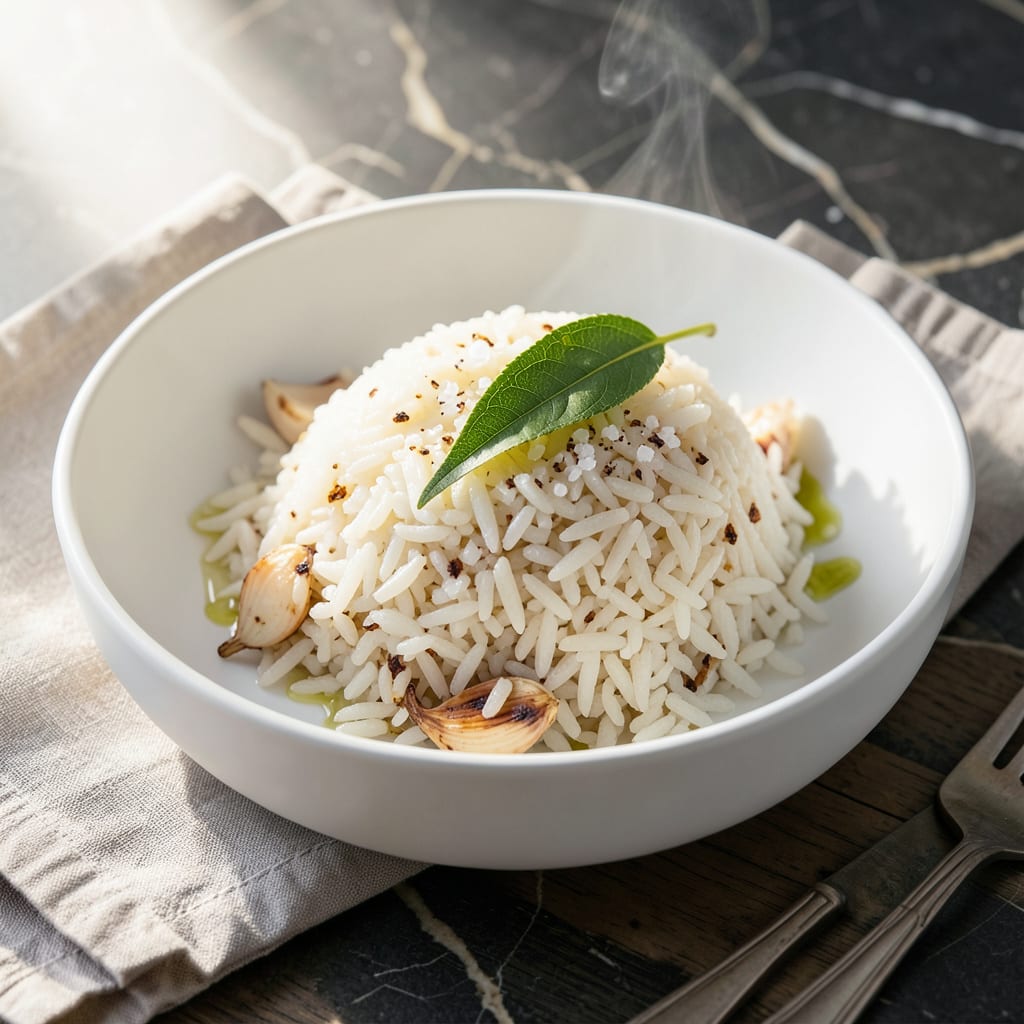
This steamed rice recipe delivers perfectly fluffy grains every time with minimal effort. The straightforward method requires just rice, water, and a pot with a tight lid.
What makes this dish special is its simplicity and health benefits. With no added fats and natural goodness, it pairs beautifully with any meal while keeping things light.
Ingredients for Healthy Steamed Rice
Five simple ingredients create light, fluffy rice that pairs with any meal effortlessly.
| Ingredient | Amount | Notes |
|---|---|---|
| Long-Grain White Rice 🍚 | 2 cups | Rinsed until water runs clear |
| Water 💧 | 4 cups | Filtered for best results |
| Sea Salt 🧂 | ½ tsp | Fine grain, optional for flavor |
| Bay Leaf 🍃 | 1 whole | Optional for aromatic infusion |
| Garlic Clove 🧄 | 1 clove | Smashed, optional for depth |
The rice quality matters most here. Jasmine or basmati yield the fluffiest results, but standard long-grain works perfectly. Rinsing until the water runs clear removes excess starch—skip this and you risk gummy grains. I source mine from Trader Joe’s or bulk bins at natural food stores, where turnover is high and quality is consistent. Look for unbroken grains with a uniform color.
No bay leaf? A strip of kombu adds subtle umami without overpowering. Short on time? Pre-rinsed rice from Seeds of Change or Lundberg saves a step. For extra flavor, toast the rice in the dry pot for 2 minutes before adding water. The salt is optional but recommended—Diamond Crystal kosher salt dissolves cleanly.
Steamed rice keeps beautifully. Store in an airtight container once cooled—lasts 4-5 days in the fridge, 3 months frozen. Reheat with a splash of water to restore moisture. Perfect for meal prep, as it absorbs flavors from accompanying dishes over time.
Why You’ll Love This Recipe
- Hands-Off Cooking: I just combine rice, water, and a few aromatics, then let the steam do all the work while I tackle the rest of dinner.
- Garlic-Bay Infusion: The garlic clove and bay leaf steeping in the water give every grain a subtle depth that plain rice just can’t match.
- Meal Prep MVP: It’s my base for grain bowls, stir-fries, or even breakfast fried rice—preps in bulk and reheats like a dream.
- Penny-Pincher’s Friend: Honestly, a pound of rice and a few pantry staples stretch into multiple meals without breaking the budget.
Step-by-Step Instructions for Healthy Steamed Rice
This method ensures perfectly fluffy grains with minimal effort and maximum flavor.
Step 1: Rinse and Prepare the Rice
Measure the 2 cups Long-Grain White Rice into a fine-mesh strainer and rinse under cold running water until the water runs completely clear. This removes excess starch that would otherwise make the rice gummy rather than fluffy.
I find that swirling the rice with my hand while rinsing speeds up the process considerably. Once rinsed, drain thoroughly—you want no standing water in the strainer. The rice should look clean and feel slightly gritty between your fingers when properly rinsed.
Step 2: infuse the Cooking Liquid
In a medium saucepan, combine the 4 cups Water with the 1 whole Bay Leaf and 1 clove Garlic Clove. Bring to a boil over high heat, then reduce to a simmer and let it steep for 2-3 minutes to allow the aromatics to infuse the water.
If using, add the 0.5 tsp Sea Salt now—it will dissolve completely in the hot water. The bay leaf and garlic add subtle depth without overpowering the rice’s natural flavor. Remove the garlic clove after infusing if you prefer a more delicate aroma.
Step 3: Cook the Rice to Perfection
Add the rinsed and drained rice to the infused water and return to a boil over high heat. Once boiling, immediately reduce the heat to low, cover with a tight-fitting lid, and let it simmer undisturbed for 15-18 minutes.
Resist the urge to lift the lid during cooking—releasing steam disrupts the cooking process and can lead to uneven texture. You should see small steam vents forming around the lid, but no violent boiling. The rice is absorbing the liquid evenly at this stage.
The water should be fully absorbed when done, and small craters will form on the surface of the rice. If you notice the water evaporating too quickly before the rice is tender, reduce the heat slightly and extend cooking time by 2-3 minutes.
Step 4: Rest and Fluff for Optimal Texture
Once the cooking time is complete, remove the pan from heat but keep the lid on. Let the rice rest for 10 minutes—this crucial step allows the grains to steam and become uniformly tender without turning mushy.
After resting, remove the bay leaf and discard. Gently fluff the rice with a fork, lifting from the bottom to separate the grains without breaking them. The rice should appear light and airy, with each grain distinct yet tender.
Taste and adjust seasoning if needed, though the subtle infusion from the aromatics should provide plenty of flavor. Serve immediately while hot and fluffy, as the rice will continue to firm up slightly as it cools.
Pro Tips For Making Healthy Steamed Rice
- Rinse the Rice: Always rinse long-grain white rice until the water runs clear to remove excess starch—this keeps the grains separate and fluffy, not gummy.
- Use the Right Ratio: For perfectly steamed rice, stick to a 1:1.5 rice-to-water ratio (1 cup rice to 1.5 cups water) unless your pot has a tight lid that traps steam—then drop to 1:1.25.
- Don’t Peek: Resist the urge to lift the lid while steaming—releasing the steam drops the temperature and can turn your rice undercooked or mushy.
- Infuse with Aromatics: Toss in the bay leaf and smashed garlic clove with the water before steaming to add subtle depth without overpowering the rice.
Regional Styles of These Flavors
Chinese Tradition
In China, steamed rice is the foundation of countless meals. They often use jasmine rice with a 1:1.5 rice-to-water ratio, producing grains that are fragrant and slightly sticky. A bamboo steamer is traditional, but a pot with a tight lid works just as well.
Japanese Precision
Japanese cooks prefer short-grain rice like Koshihikari, rinsed meticulously until the water runs clear. They soak it for 30 minutes before cooking with a 1:1.1 ratio in an electric rice cooker. The result is sticky, sweet grains perfect for sushi or accompanying miso soup. 🌟
Indian Basmati Style
For Indian cuisine, basmati rice is king. Soak it for 20-30 minutes, then cook with a 1:1.5 ratio. Add 1 tsp cumin seeds or a 2-inch cinnamon stick to the water for aromatic flair. The long grains stay separate and fragrant.
Thai Jasmine Approach
Thai cooks use jasmine rice with a 1:1.25 ratio, often adding 1-2 pandan leaves to the water for a subtle floral aroma. They cook it in a pot with a tight lid, never stirring, to maintain the grains’ integrity.
Mediterranean Twist
In the Mediterranean, long-grain rice is cooked with 1:2 ratio in broth instead of water. Add 1 tsp olive oil and a pinch of saffron for color and aroma. This method yields fluffy, flavorful grains that pair well with grilled meats and vegetables. 💛
Latin American Method
Latin American cooks often toast rice in oil before adding liquid. Use a 1:1.75 ratio with water or broth, plus 1 tsp salt and 1 clove garlic. This creates a slightly nutty flavor and firmer texture ideal for dishes like arroz con pollo.
Nutrition Facts
Frequently Asked Questions
What’s the best rice-to-water ratio?
Use a 1:2 ratio for long-grain white rice. This means 1 cup rice to 2 cups water for perfect fluffy results every time.
Why do I need to rinse the rice first?
Rinsing removes excess starch that can make rice gummy. Keep rinsing until the water runs completely clear for the best texture.
Can I make this in a rice cooker?
Use the same 1:2 ratio and follow your cooker’s instructions. Most models automatically handle the timing and steam release.
How do I fix undercooked rice?
Add 2-3 tablespoons water, cover, and cook for another 5 minutes on low heat. Let it rest 10 minutes before checking again.

- 6 Egg Cake Recipe with Oil: Light as Air With Buttery Moisture - October 4, 2026
- 4 Bean Casserole Recipe: One-Pan Heartiness With Smoky Paprika Depth - October 4, 2026
- 3-Ingredient Keto Mug Cake Recipe: Microwave Magic in 2 Minutes - October 4, 2026