
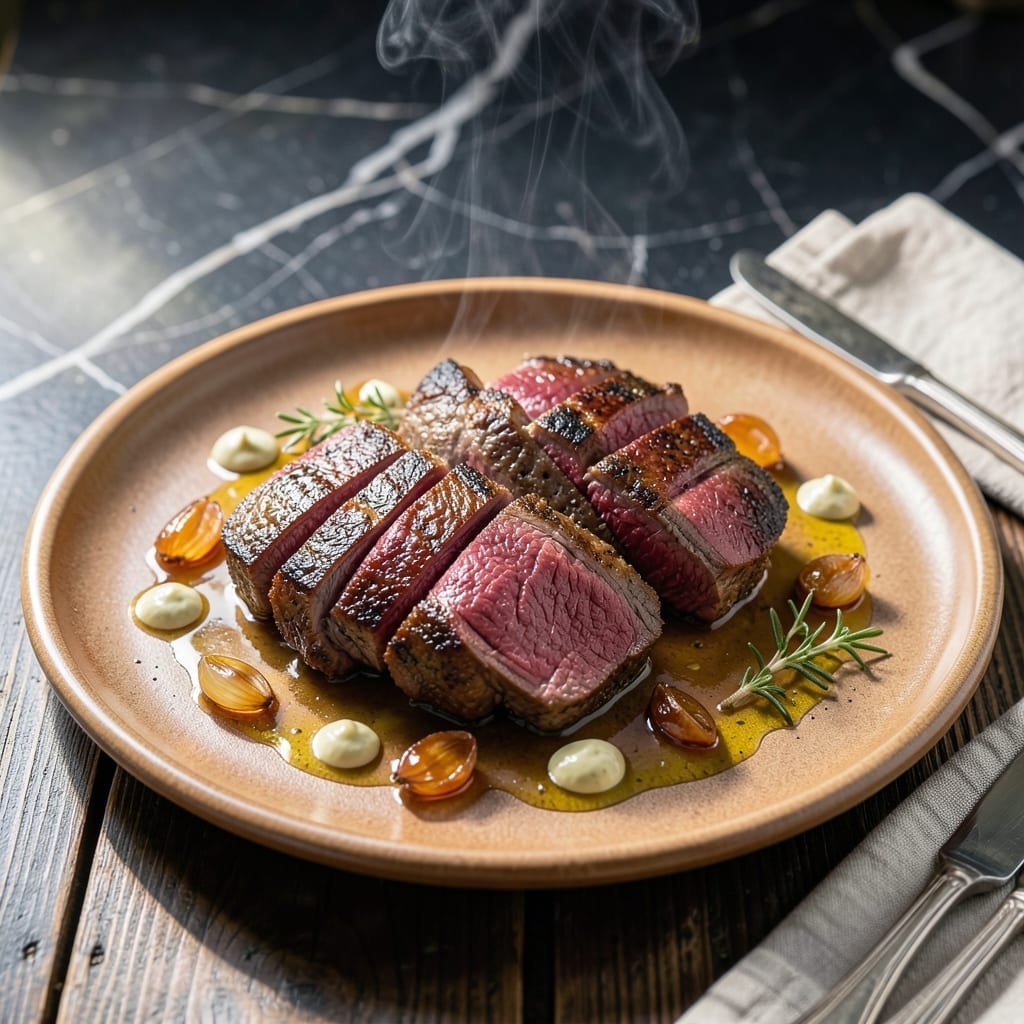
This pan-seared steak with brandy flambé delivers restaurant-quality results with a dramatic presentation.
I’ve perfected this method to achieve a tender, flavorful steak with a rich, creamy sauce. The brandy ignites for a show-stopping moment, infusing the dish with depth.
Cooking at high heat ensures a perfect sear while keeping the inside juicy. The sauce, built from pan drippings, brandy, and cream, ties everything together.
Serve immediately for the best experience, with the sauce spooned over the steak. This is a dish that impresses every time.
Ingredients for Steak Diane Recipe Gordon Ramsay
Restaurant-quality begins with these premium ingredients for a show-stopping pan-seared dish.
| Ingredient | Amount | Notes |
|---|---|---|
| Ribeye Steaks 🥩 | 4 whole | 1.5 inches thick, room temperature |
| Unsalted Butter 🧈 | 6 tbsp | Divided for cooking and sauce |
| Brandy 🥃 | ½ cup | Cognac or Armagnac preferred |
| Heavy Cream 🥛 | ½ cup | Full-fat for richness |
| Shallots 🧅 | 2 whole | Finely minced |
| Dijon Mustard 🟡 | 2 tbsp | Smooth, not whole grain |
| Worcestershire Sauce 🍶 | 2 tsp | Lea & Perrins recommended |
| Beef Stock 🥩 | ¼ cup | Low-sodium preferred |
| Fresh Parsley 🌿 | ¼ cup | Chopped, for garnish |
| Kosher Salt 🧂 | 1 tsp | Diamond Crystal preferred |
| Freshly Ground Black Pepper 🌶️ | 1 tsp | Coarse grind for searing |
| Neutral Oil 🫒 | 2 tbsp | High smoke point, like canola |
| Garlic Cloves 🧄 | 2 cloves | Minced for sauce |
The steak is non-negotiable—USDA Prime ribeye from a trusted butcher like Whole Foods or Local Butcher Shop ensures superior marbling and tenderness. 1.5-inch thickness allows for a perfect sear without overcooking. The brandy should be a quality VSOP Cognac; cheaper brands can impart harsh flavors. European-style butter (higher fat content) yields a richer sauce than standard American butter.
No brandy? Bourbon or whiskey works in a pinch, though the flavor profile shifts slightly. Dry sherry is another viable substitute. For a non-alcoholic version, apple cider with a splash of lemon juice mimics the acidity. The Dijon mustard can be swapped for whole-grain mustard for texture, but avoid yellow mustard—it’s too mild. Shallots and garlic are essential for depth; don’t substitute onion powder.
Prep the steaks just before cooking—room temperature ensures even doneness. Leftovers? Rare, but if any remain, store in an airtight container for up to 3 days. Reheat gently in a skillet to avoid overcooking. The sauce doesn’t reheat well, so make only what you’ll use immediately.
Why You’ll Love This Recipe
- One Pan Magic: I sear the ribeye, deglaze with brandy, and finish with cream—all in the same skillet. Cleanup’s a breeze.
- Rich Indulgence: That buttery shallot sauce with a splash of brandy is ridiculously good. Honestly, it’s restaurant-quality at home.
- Date Night Ready: I’ve made this for anniversaries and random Tuesdays—always feels special. The flambé step? Pure drama.
- Leftovers? No Chance: Between us, there’s never any left. But if there were, the flavors deepen overnight for a killer next-day lunch.
Step-by-Step Instructions for Steak Diane
Master this classic with precision timing and a show-stopping flambé finish.
Step 1: Sear the Ribeye to Crusty Perfection
Heat 2 tbsp neutral oil in a heavy skillet over medium-high heat until it shimmers. Meanwhile, pat the 4 whole ribeye steaks dry with paper towels and season both sides aggressively with 1 tsp kosher salt and 1 tsp freshly ground black pepper.
Add 2 tbsp unsalted butter to the oil, then place the steaks in the pan. Sear undisturbed for 3-4 minutes per side until a deep mahogany crust forms and the internal temperature reaches 125-130°F for medium-rare. The butter will brown and foam—this is the Maillard reaction creating complex flavors.
Step 2: Build the Aromatic Sauce Base
Transfer the steaks to a plate and tent with foil. Reduce heat to medium and add the remaining 4 tbsp unsalted butter to the pan. Immediately add 2 whole shallots (finely minced) and sauté for 2 minutes until translucent and sweet-smelling.
Add 2 cloves garlic cloves (minced) and cook for 30 seconds until fragrant but not browned. Stir in 2 tbsp Dijon mustard and 2 tsp Worcestershire sauce, coating the alliums completely. This layer builds depth before the flambé.
Step 3: Execute the Brandy Flambé
Remove the pan from heat and carefully pour in 0.5 cup brandy. Return to medium-high heat and tilt the pan slightly to ignite the vapors with a long match. Stand back—the blue flames will rise dramatically as the alcohol burns off.
Let the flames die naturally (about 1-2 minutes), then add 0.25 cup beef stock. Scrape up all browned bits from the pan bottom with a wooden spoon. Reduce by half—this concentrated liquid will form the sauce base.
Step 4: Finish with Creamy Luxury
Lower heat to medium-low and stir in 0.5 cup heavy cream. Simmer for 2-3 minutes until the sauce thickens enough to coat the back of a spoon. Taste and adjust seasoning—remember the steaks are already salted.
Return the steaks and any accumulated juices to the pan. Spoon the sauce over the meat for 1 minute to reheat and marry the flavors. The sauce should cling to the steaks with a velvety sheen.
Step 5: Rest and Garnish
Transfer the steaks to a serving platter and let rest for 5 minutes. This allows the juices to redistribute for maximum tenderness. Spoon the remaining sauce over the top and garnish with 0.25 cup fresh parsley (chopped).
Serve immediately while the sauce is still fluid. The parsley adds fresh contrast to the rich, brandy-infused sauce that perfectly complements the seared ribeye.
Pro Tips For Making Steak Diane Recipe Gordon Ramsay
- Sear Hot and Fast: Crank your pan to smoking hot before adding the ribeye—this gets that deep crust Ramsay insists on. I learned this the hard way after too many gray, sad steaks from a lukewarm pan.
- Deglaze Immediately: Pour the brandy in right after removing the steak while the pan’s still screaming hot, scraping up those browned bits. After burning my first batch by waiting, I now keep the brandy measured and ready to go.
- Warm Your Cream: Take the heavy cream out of the fridge 10 minutes before using, or it can seize when it hits the hot pan. Sounds finicky, but it actually changes the outcome—no one wants a broken sauce.
- Rest the Steak: Give the ribeye a solid 5-10 minutes under foil before slicing, even if you’re starving. My grandmother swore by this, and she was right: the juices stay put instead of pooling on your plate.
Regional Styles of These Flavors
French Classic Origin
This dish traces its roots to French bistros, where it was originally called entrecôte à la Diane. The name honors Diana, Roman goddess of the hunt, reflecting the dish’s rich, meaty character. French versions often use Cognac and finish with a touch of tarragon.
American Adaptation
In the US, the recipe evolved with more accessible ingredients. American cooks often substitute bourbon for brandy and add Worcestershire sauce for extra umami depth. The flambé remains central to both versions for that dramatic tableside presentation.
British Pub Style
British pubs serve this with a simpler approach—often using scotch whisky instead of brandy and skipping the cream. I’ve had excellent versions in London pubs where the sauce was more pan-jus based, with just a knob of butter for richness. 🔥
Gordon Ramsay’s Touch
Ramsay’s version stays true to the French roots but emphasizes perfect execution. He insists on high heat for searing and uses European butter for the sauce. The flambé is non-negotiable in his approach—it’s all about that showstopping moment.
Australian Variation
Down under, chefs often add bacon to the sauce base for extra smokiness. The steak is typically a sirloin rather than ribeye, as it’s more commonly available. I tried this version in Sydney and loved the added depth.
Modern Fusion
Contemporary chefs are experimenting with mushroom duxelles in the sauce or using port wine instead of brandy. Some even add a splash of truffle oil at the end for luxury. These twists keep the classic dish feeling fresh and exciting.
Nutrition Facts
Frequently Asked Questions
What’s the best substitute for brandy?
Use bourbon or whiskey for a similar depth. For non-alcoholic, try apple cider with 1 tsp lemon juice per 0.5 cup.
How do I prevent the sauce from curdling?
Keep heat at medium-low when adding cream. Stir constantly and avoid boiling. If it curdles, whisk in 1 tsp ice water to smooth it out.
Can I use a different cut of steak?
Yes! Try filet mignon or sirloin, but adjust cooking time. Thinner cuts need 2-3 minutes per side for medium-rare.
Why rest the steak before serving?
Resting for 5 minutes lets juices redistribute. Slicing too soon causes dryness. The sauce will also cling better to rested meat.

- 6 Egg Cake Recipe with Oil: Light as Air With Buttery Moisture - October 4, 2026
- 4 Bean Casserole Recipe: One-Pan Heartiness With Smoky Paprika Depth - October 4, 2026
- 3-Ingredient Keto Mug Cake Recipe: Microwave Magic in 2 Minutes - October 4, 2026