
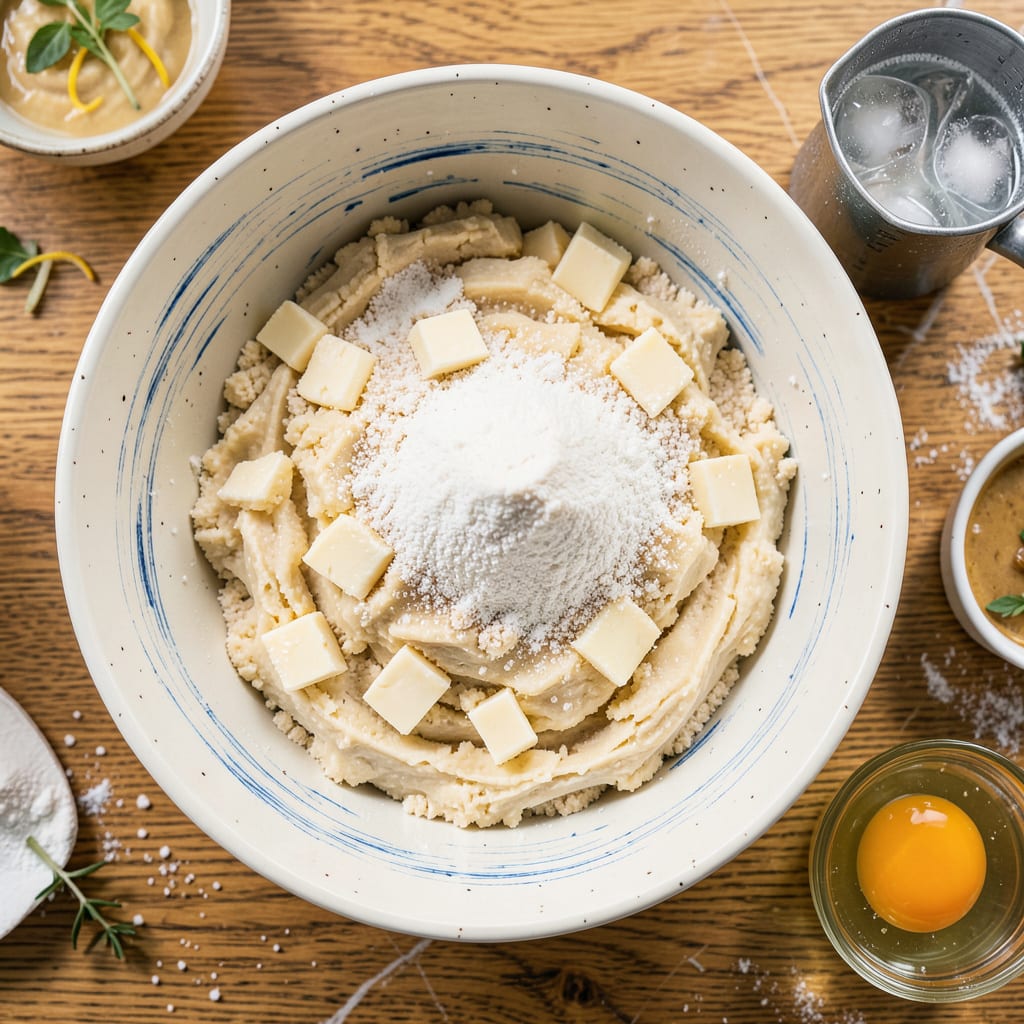
Perfect shortcrust pastry is the foundation of countless desserts and savory dishes, from delicate fruit tarts to hearty quiches. This recipe delivers the buttery, flaky results Mary Berry is famous for—every single time. The secret lies in precise technique and quality ingredients, transforming simple flour and butter into pastry that bakes up golden and tender.
What sets this method apart is its reliability. Whether you’re making sweet pies or savory galettes, this pastry holds its shape without shrinking or cracking. The key is keeping ingredients cold and handling the dough just enough to bring it together. With minimal effort, you’ll achieve professional-quality results that elevate any dish they’re part of.
Ingredients for Mary Berry Shortcrust Pastry
Seven essential ingredients transform into Mary Berry’s signature flaky, buttery pastry—reliable results every time.
| Ingredient | Amount | Notes |
|---|---|---|
| All-Purpose Flour 🌾 | 2 ½ cups | Plus extra for dusting |
| Unsalted Butter 🧈 | 1 cup | Cold, cubed into 1/2-inch pieces |
| Granulated Sugar 🍚 | 2 tbsp | Fine white sugar preferred |
| Fine Sea Salt 🧂 | ½ tsp | Diamond Crystal brand recommended |
| Large Egg Yolk 🥚 | 1 whole | Cold, for binding dough |
| Ice Water 💧 | 3 tbsp | Plus additional as needed |
| Lemon Zest 🍋 | 1 tsp | Finely grated (optional) |
The butter is critical for flakiness—European-style unsalted butter (like Plugrá or Kerrygold) yields the best texture due to its higher fat content. Use all-purpose flour with 10-12% protein; King Arthur or Gold Medal are consistent choices. Keep both butter and flour chilled until use, and measure flour by spooning into cups (not scooping) for accuracy. The fine sea salt should be pure without additives—Diamond Crystal dissolves evenly without over-salting.
For a dairy-free version, substitute cold vegan butter (like Miyoko’s) at a 1:1 ratio. If avoiding eggs, replace the yolk with 1 tbsp ice water—though the dough may require slightly more liquid. The sugar can be omitted for savory applications, while the lemon zest (optional) adds brightness to sweet tarts. Always use freshly grated zest—bottled lacks intensity.
Store wrapped dough in the refrigerator for up to 3 days or freeze for 3 months. For best results, chill dough 30 minutes before rolling. If freezing, thaw overnight in the fridge. Baked pastry keeps 2 days at room temperature in an airtight container.
Why You’ll Love This Recipe
- Five-Minute Mix: I swear, the hardest part is waiting for the butter to soften. Just rub cold butter into flour with your fingertips—no fancy equipment—then the egg yolk binds it all together like magic. Honestly, I’ve made this between Zoom calls.
- Buttery, Crumbly Heaven: That first bite where the pastry shatters just enough but still holds its shape? It’s all thanks to the salted butter and a touch of sugar—sweet but not cloying. My kids fight over the scraps before they even hit the oven.
- Sweet or Savory Chameleon: Quiche for dinner, jam tarts for dessert, or even a quick galette when friends pop over. This pastry doesn’t judge. I’ve used it for everything from mincemeat pies at Christmas to last-minute cheese straws for book club.
- Freezer’s Best Friend: Double the batch, roll it into discs, and stash it away. Frozen dough thaws in 10 minutes flat, which means homemade pie on a Tuesday night with zero guilt. Between us, I always keep a log in the freezer—it’s my secret weapon for looking like I planned ahead.
Step-by-Step Instructions for Shortcrust Pastry
This method delivers consistently flaky, tender pastry with minimal effort and maximum reliability.
Step 1: Prepare the Butter and Dry Ingredients
Begin by placing the 2.5 cups All-Purpose Flour, 2 tbsp Granulated Sugar, and 0.5 tsp Fine Sea Salt in a large mixing bowl. Whisk these dry ingredients together thoroughly to ensure even distribution of the sugar and salt throughout the flour.
Add the 1 cup Unsalted Butter that you’ve already cubed into ½-inch pieces and kept cold. The butter must remain firm—if it starts to soften, return it to the refrigerator for 10 minutes before proceeding. This cold temperature is crucial for creating those desirable flaky layers in the finished pastry.
Step 2: Cut in the Butter Using the Rubbing Method
Using your fingertips, rub the cold butter cubes into the flour mixture. Lift the mixture high as you work to incorporate air, which contributes to the pastry’s lightness. Continue this process until the mixture resembles coarse breadcrumbs with some pea-sized butter pieces remaining visible.
This stage requires patience—it should take about 3-4 minutes of continuous rubbing. The presence of visible butter pieces is essential; they’ll melt during baking to create steam pockets that result in flaky layers. Avoid overworking the mixture, as this would warm the butter and compromise the texture.
Step 3: Bind the Dough with Egg Yolk and Water
Make a well in the center of your flour-butter mixture. Add the 1 whole Large Egg Yolk and 1 tsp Lemon Zest (if using) to the well. Using a fork, begin to incorporate these wet ingredients into the dry mixture, working from the center outward.
Gradually add the 3 tbsp Ice Water, one tablespoon at a time, mixing just until the dough begins to come together. The dough should be slightly crumbly but hold its shape when pressed—it should not be sticky. If needed, add additional ice water by the teaspoon, but be conservative; too much water makes the pastry tough.
Step 4: Rest the Dough for Optimal Texture
Gently shape the dough into a flat disc about 1 inch thick. Wrap it tightly in plastic wrap, ensuring no air pockets remain. Refrigerate for at least 1 hour, or ideally 2 hours. This resting period allows the gluten to relax and the butter to firm up again.
The dough can be refrigerated for up to 3 days or frozen for 1 month at this stage. If frozen, thaw overnight in the refrigerator before using. Proper resting is non-negotiable—it prevents shrinkage during baking and ensures a tender, flaky result.
Step 5: Roll and Shape the Pastry
Lightly dust your work surface and rolling pin with additional all-purpose flour. Roll the chilled dough from the center outward in all directions, turning it occasionally to maintain an even thickness. Aim for a ⅛-inch thickness for most applications, or follow your specific recipe requirements.
For pie shells, carefully transfer the rolled pastry to your pie dish by rolling it around your pin and unrolling it into the dish. Press gently into the corners without stretching. Trim the edges, leaving a ½-inch overhang for crimping. For pre-baking, chill the lined pie shell for 30 minutes before blind baking at 375°F for 15 minutes with weights, then 10 minutes without.
Flavor Customization for This Recipe
Sweet Pastry Twist
For fruit tarts or custard pies, I love adding 1 tsp vanilla bean paste to the egg yolk mixture. This enhances the buttery flavor without overpowering. You can also swap the granulated sugar for vanilla sugar—just scrape the seeds from 1 vanilla pod into your sugar jar a week ahead. The speckled pastry looks stunning with berry fillings. 💛
Another sweet variation is incorporating 2 tbsp ground almonds into the flour mixture. This adds subtle nutty depth that pairs beautifully with stone fruits or chocolate ganache. The almonds also help absorb excess moisture from juicy fillings, preventing soggy bottoms.
Savory Herb Infusion
When making quiches or savory tarts, I replace the sugar with 1 tbsp finely chopped fresh herbs. My go-to is thyme and rosemary, but tarragon works wonderfully with chicken fillings. Simply mix the herbs into the flour before adding butter. The aromatic oils infuse beautifully during baking.
For a cheesy note, add ¼ cup finely grated Parmesan to the dry ingredients. This creates a crisp, flavorful crust that complements spinach and mushroom fillings perfectly. The cheese also helps the pastry brown more evenly.
Citrus Brightness
The optional lemon zest can be amplified with 1 tsp orange zest for a more complex citrus profile. This works especially well with chocolate or caramel fillings. I’ve found that Meyer lemon zest (when in season) adds a floral dimension that’s particularly lovely with berry tarts.
For a tropical twist, try ½ tsp lime zest combined with the lemon. This unexpected combination shines with coconut cream pies or key lime tarts. The bright acidity cuts through rich fillings beautifully.
Spiced Warmth
During autumn, I add ½ tsp ground cinnamon and ¼ tsp nutmeg to the flour mixture. This creates a warm, aromatic base for pumpkin or apple pies. The spices should be freshly ground for maximum potency—pre-ground spices lose their intensity quickly.
For gingerbread-inspired desserts, include 1 tsp ground ginger and ¼ tsp cloves. This pairs wonderfully with molasses or caramel fillings. The spices develop deeper flavors if you let the dough rest overnight before rolling.
Chocolate Lover’s Dream
For chocolate tarts, replace 2 tbsp of the flour with 2 tbsp cocoa powder. I recommend Valrhona or Guittard brands for superior flavor. The cocoa should be unsweetened to maintain the pastry’s structure. This creates a subtle chocolate base that intensifies when paired with ganache.
For a more pronounced chocolate flavor, add 2 oz finely chopped dark chocolate (70% cacao) when rubbing in the butter. The chocolate melts during baking, creating delicious pockets throughout the crust. This works particularly well with salted caramel or raspberry fillings.
Gluten-Free Adaptation
While not traditional, I’ve had success replacing the all-purpose flour with a 1:1 gluten-free blend. My preferred brand is King Arthur Measure for Measure. Add 1 tsp xanthan gum to improve elasticity. The dough will be slightly more fragile, so roll between two sheets of parchment paper.
For best results with gluten-free pastry, increase the resting time to 3 hours and handle the dough as little as possible. Bake at a slightly lower temperature (350°F) for 5-10 minutes longer to prevent burning before the crust sets.
Nutrition Facts

- 6 Egg Cake Recipe with Oil: Light as Air With Buttery Moisture - October 4, 2026
- 4 Bean Casserole Recipe: One-Pan Heartiness With Smoky Paprika Depth - October 4, 2026
- 3-Ingredient Keto Mug Cake Recipe: Microwave Magic in 2 Minutes - October 4, 2026