
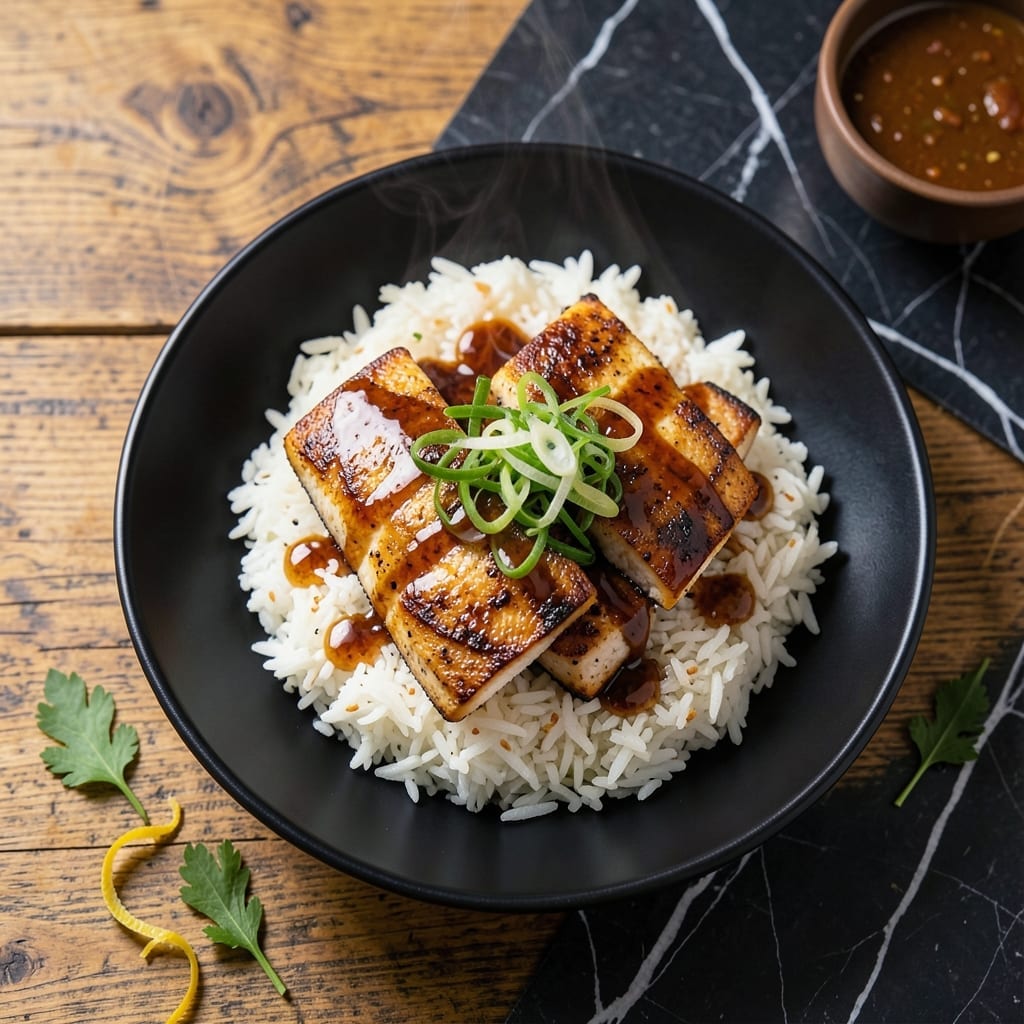
This miso-glazed mahi mahi delivers flaky, tender white fish with a rich, umami-packed finish. The secret lies in a simple marinade that transforms the mild fish into something extraordinary.
I developed this method after years of experimenting with miso in various dishes. The key is balancing the salty-sweet miso paste with just enough honey and rice vinegar to create a glossy, caramelized glaze.
The fish cooks quickly at high heat, ensuring it stays moist while the miso develops deep, savory flavors. Each bite offers perfectly cooked mahi mahi with a sticky, slightly charred exterior.
Serve this with steamed rice and blanched vegetables for a complete meal. The flavors are bold yet balanced, making it a dish worth repeating.
Ingredients for Miso Mahi Mahi
Fresh fish and bold umami flavors come together for a restaurant-worthy dish everyone will love.
| Ingredient | Amount | Notes |
|---|---|---|
| Mahi Mahi Fillets 🐟 | 1 ½ lb | Skin-on or skinless, about 1-inch thick |
| White Miso Paste 🥣 | ½ cup | Fermented, smooth variety |
| Honey 🍯 | 3 tbsp | Pure, liquid form |
| Rice Vinegar 🍶 | 2 tbsp | Unseasoned variety preferred |
| Soy Sauce 🫒 | 2 tbsp | Low-sodium for balance |
| Fresh Ginger 🌿 | 1 tbsp | Finely grated or minced |
| Garlic Cloves 🧄 | 3 cloves | Minced for marinade |
| Sesame Oil 🫒 | 1 tsp | Toasted variety for depth |
| Vegetable Oil 🫒 | 2 tbsp | High smoke point, for searing |
| Sesame Seeds 🌰 | 1 tbsp | Toasted for garnish |
| Green Onions 🧅 | 3 whole | Thinly sliced for serving |
| Lime 🍈 | 1 whole | Cut into wedges for serving |
The mahi mahi needs to be fresh—look for firm, translucent flesh with no fishy odor. Most seafood counters will happily cut fillets to your preferred thickness. Whole Foods and Trader Joe’s have reliable frozen options too (thaw overnight in the fridge). For the miso, white or light yellow varieties work best; avoid dark miso as it can overpower the glaze.
No white miso? Yellow miso at half the amount plus extra honey balances the salt. Substitute agave for the honey if needed. The soy sauce can be tamari for gluten-free. Fresh ginger is ideal, but ground ginger at one-quarter the amount works in a pinch. For extra char, swap the sesame oil for a drizzle of chili oil when serving.
Marinate the fish no longer than 30 minutes—miso can cure it too much. The glaze keeps in the fridge for 5 days, so make extra for quick weeknight meals. Reheat gently to avoid breaking the flaky texture.
Why You’ll Love This Recipe
- 20-Minute Meal: I can have this on the table faster than it takes to order takeout—just mix the miso, honey, and vinegar, then let the fish do its thing.
- Umami Bomb: The white miso and soy sauce create this deep, savory-sweet glaze that makes every bite of mahi mahi irresistibly rich.
- Weeknight MVP: Honestly, it’s my go-to for busy evenings when I need something impressive but unfussy.
- Leftovers? Yes Please: The flavors actually get better overnight, so I always make extra for lunch the next day.
Step-by-Step Instructions for Miso Mahi Mahi
Here’s the method. Straightforward, tested, works every time.
Step 1: Prepare the Miso Glaze
In a medium bowl, whisk together the 0.5 cup White Miso Paste, 3 tbsp Honey, 2 tbsp Rice Vinegar, and 2 tbsp Soy Sauce until smooth. The miso paste may be thick, so press it against the bowl with the back of a spoon to break it up as you whisk.
Add the 1 tbsp Fresh Ginger and 3 cloves Garlic Cloves, minced. Stir in the 1 tsp Sesame Oil. This creates a balanced glaze with sweet, tangy, and umami notes that will caramelize beautifully on the fish.
Step 2: Coat and Marinate the Fillets
Pat the 1.5 lb Mahi Mahi Fillets dry with paper towels to ensure the glaze adheres well. Place them in a shallow dish or resealable bag and pour half of the miso glaze over them, turning to coat evenly on all sides. Reserve the remaining glaze for basting.
Let the fillets marinate at room temperature for 15-20 minutes. This short marination allows the flavors to penetrate without overpowering the delicate fish. Don’t exceed 30 minutes, as the acids in the vinegar and miso can start to “cook” the fish.
Step 3: Sear the Fillets to Perfection
Heat the 2 tbsp Vegetable Oil in a large skillet over medium-high heat until it shimmers. Add the fillets and sear for 3-4 minutes per side, basting occasionally with the reserved glaze. The fish is ready to flip when it releases easily from the pan.
Cook until the fish is opaque and flakes easily with a fork, and the glaze has caramelized into a glossy coating. The internal temperature should reach 145°F for perfectly cooked mahi mahi that stays moist and flaky.
Step 4: Garnish and Serve Immediately
Transfer the fillets to a serving platter. Sprinkle with the 1 tbsp Sesame Seeds and the 3 whole Green Onions, thinly sliced. The sesame seeds add a nutty crunch, while the green onions provide a fresh, mild bite.
Serve with lime wedges on the side for a bright, citrusy finish that cuts through the richness of the miso glaze. Serve immediately while the fish is hot and the glaze is still sticky and glossy.
Pro Tips For Making Miso Mahi Mahi
- Pat Dry the Fillets: I learned this the hard way—moisture on the mahi mahi prevents the miso glaze from sticking properly. Use paper towels to dry the fillets thoroughly before applying the marinade.
- Bloom the Miso: Warm the white miso paste in a small pan with a splash of oil for 1-2 minutes to deepen its flavor before mixing it with honey and rice vinegar.
- Avoid Overcooking: Mahi mahi dries out fast. Pull it off the heat when the internal temperature hits 130°F—it’ll rise to 135°F while resting.
- Use Fresh Miso: Sounds obvious, but old miso paste loses its brightness. Check the date on the tub, and if it’s been in your fridge for over a year, grab a fresh batch.
Dietary Considerations for This Dish
Gluten-Free Adaptations
Use tamari instead of soy sauce to make this dish gluten-free. Tamari offers a similar umami depth without the wheat. Also verify your miso paste is certified gluten-free, as some brands contain barley malt.
Dairy-Free and Vegan
This recipe is naturally dairy-free. For a vegan version, swap mahi mahi for extra-firm tofu or thick cauliflower steaks. Press tofu for 30 minutes before marinating to ensure it absorbs the glaze well.
Low-Sodium Considerations
Reduce sodium by using low-sodium soy sauce and cutting the miso paste to ¼ cup. Boost flavor with extra ginger and garlic. The dish will still be rich and satisfying without overwhelming saltiness.
Pescatarian Friendly
This dish is perfect for pescatarians, offering a high-protein, omega-3 rich meal. Mahi mahi is a sustainable choice—look for MSC-certified fillets at your seafood counter for the most eco-friendly option.
Nut Allergies
While this recipe doesn’t contain nuts, always check your miso paste labels. Some brands process their products in facilities that handle nuts. Stick with trusted brands like Miso Master for allergy safety. 💪
Diabetic Adjustments
Reduce the honey to 1 tbsp and add 1 tsp erythritol for sweetness without spiking blood sugar. The miso and vinegar will still provide plenty of flavor complexity.
Nutrition Facts
Frequently Asked Questions
Can I use a different type of fish?
Try firm white fish like halibut or cod. Avoid delicate varieties like tilapia as they may fall apart.
How do I know when it’s done?
Look for opaque flesh that flakes easily with a fork. The internal temp should reach 145°F for perfect doneness.
Can I make the glaze ahead?
The glaze keeps in the fridge for up to 5 days. Store in an airtight container and stir before using.
What if my glaze burns?
Lower the heat to medium and clean the pan between batches. Baste frequently to prevent burning.

- 6 Egg Cake Recipe with Oil: Light as Air With Buttery Moisture - October 4, 2026
- 4 Bean Casserole Recipe: One-Pan Heartiness With Smoky Paprika Depth - October 4, 2026
- 3-Ingredient Keto Mug Cake Recipe: Microwave Magic in 2 Minutes - October 4, 2026