
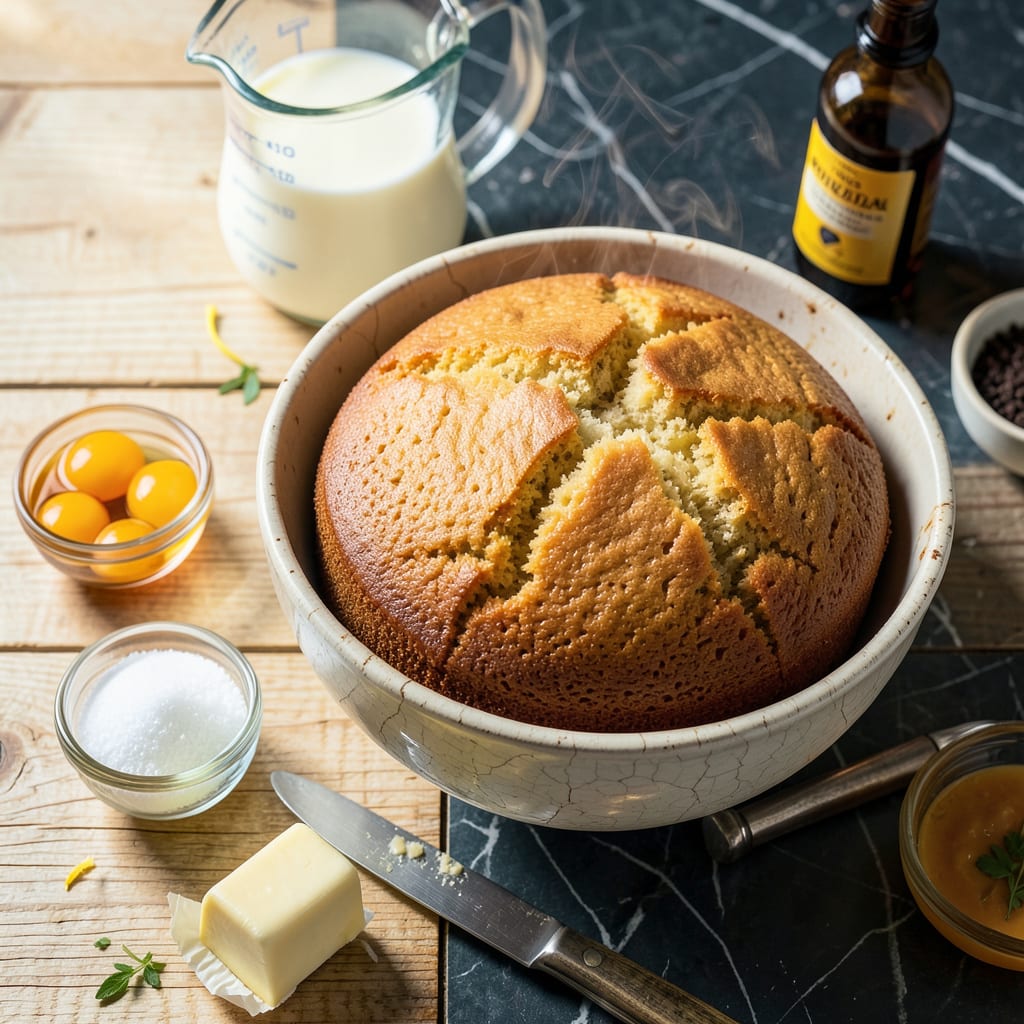
Patti LaBelle’s pound cake has achieved legendary status for good reason—this recipe delivers perfectly moist, buttery richness with a tender crumb that melts in your mouth. The secret lies in the precise balance of simple ingredients and proper technique, transforming basic components into something extraordinary.
What sets this version apart is the careful creaming of butter and sugar until light and fluffy, followed by the gradual incorporation of eggs. The result is a cake with a velvety texture and golden crust that’s equally impressive served plain or dressed up with fresh berries and whipped cream. This is the kind of recipe that becomes a family tradition.
Ingredients for Patti Labelle Pound Cake
These classic ingredients combine to create Patti LaBelle’s signature buttery, velvety pound cake with perfect texture.
| Ingredient | Amount | Notes |
|---|---|---|
| Unsalted Butter 🧈 | 1 ½ cup | Softened to room temperature |
| Granulated Sugar 🍚 | 3 cups | Fine white granulated preferred |
| Large Eggs 🥚 | 9 whole | Room temperature for best volume |
| All-Purpose Flour 🌾 | 3 cups | Sifted for lighter texture |
| Whole Milk 🥛 | 1 cup | Room temperature, full-fat preferred |
| Pure Vanilla Extract 💧 | 2 tsp | High-quality for best flavor |
| Baking Powder 🧂 | 1 tsp | Fresh for proper rise |
| Salt 🧂 | ½ tsp | Fine sea salt recommended |
| Sour Cream 🥛 | ½ cup | Full-fat for moisture |
| Lemon Zest 🍋 | 1 tsp | Freshly grated for brightness |
| Vanilla Bean Paste 🌱 | 1 tbsp | Optional for enhanced vanilla flavor |
The butter and eggs must be at room temperature—this is non-negotiable for proper emulsification. Land O’Lakes unsalted butter is ideal for its consistent 80% fat content. For the vanilla, Nielsen-Massey or Rodelle extracts deliver superior flavor. The flour should be weighed for precision (12.75 oz total), but if volume measuring, spoon into cups and level. King Arthur all-purpose is preferred for its protein content, which supports the cake’s structure without toughness.
No vanilla bean paste? Use an additional 1 tsp vanilla extract. Sour cream can be substituted with full-fat Greek yogurt for similar tang and moisture. If avoiding dairy, coconut oil replaces butter (1:1 ratio) and coconut cream replaces sour cream, though flavor will differ slightly. For a lighter cake, replace 1 cup all-purpose flour with cake flour, but expect a slightly less dense crumb.
Store the cooled cake airtight at room temperature for up to 5 days, or freeze slices wrapped in plastic and foil for 3 months. Bring to room temperature before serving. The batter can be refrigerated overnight before baking—this actually enhances flavor development. Always use a light-colored metal pan for even baking; dark pans may cause over-browning.
Why You’ll Love This Recipe
- One-Bowl Magic: Honestly, I love that this recipe lets me dump everything—creamed butter and sugar, eggs, flour, and milk—into a single bowl. No fancy equipment, no extra dishes, just a wooden spoon and 10 minutes of mixing before it goes into the oven.
- Buttery, Dense Bliss: That first bite where the crisp golden crust gives way to the moist, velvety center? It’s all thanks to the full pound of butter and slow-baked flour structure. I’ll be real: I’ve made this three times in two weeks because the texture is that good.
- From Brunch to Midnight Snack: This cake doesn’t just belong at Sunday dinner—it’s my 3 p.m. coffee companion, my “oops, forgot dessert” potluck hero, and even my breakfast with a schmear of jam when no one’s judging. (Yes, even on a Tuesday night.)
- Stays Fresh for Days: Unlike those sad store-bought cakes that dry out overnight, this one gets better—tighter crumb, richer flavor—wrapped in foil on the counter. I’ve stretched one loaf across five days of lunches, and my wallet’s never been happier.
Step-by-Step Instructions for Patti LaBelle’s Pound Cake
This method delivers the signature dense yet tender crumb and rich vanilla flavor that defines Patti LaBelle’s famous cake.
Step 1: Cream Butter and Sugar to Ribbon Stage
In a large mixing bowl, beat the 1.5 cup unsalted butter with the 3 cups granulated sugar on medium-high speed for 6-8 minutes. You’re looking for the mixture to become pale yellow and fluffy, with a ribbon-like texture that holds its shape when the beaters are lifted.
This extended creaming process incorporates air that creates the cake’s fine crumb structure. Scrape down the bowl halfway through to ensure even mixing. The butter should be fully softened but not melted – 65-68°F is ideal for proper emulsification.
Step 2: Incorporate Eggs Gradually for Maximum Volume
Add the 9 whole large eggs one at a time, beating for 30 seconds after each addition before adding the next. This gradual incorporation prevents the batter from curdling and builds maximum volume. The mixture should look smooth and slightly glossy after each egg is fully incorporated.
After adding all eggs, beat for an additional 2 minutes on medium speed. You’ll notice the batter lighten in color and increase in volume significantly. This step is crucial for achieving the cake’s characteristic tender yet dense texture that Patti LaBelle’s recipe is known for.
Step 3: Alternate Dry and Wet Ingredients for Perfect Emulsification
In a separate bowl, whisk together the 3 cups all-purpose flour, 1 tsp baking powder, and 0.5 tsp salt. With the mixer on low speed, add the dry ingredients in three additions, alternating with the 1 cup whole milk and 0.5 cup sour cream. Begin and end with the dry ingredients.
After each addition, mix just until the ingredients are incorporated – about 15-20 seconds. Overmixing at this stage would develop gluten and make the cake tough. The final batter should be thick but pourable, with no visible flour streaks.
Step 4: Add Flavorings and Prepare for Baking
Gently fold in the 2 tsp pure vanilla extract, 1 tbsp vanilla bean paste, and 1 tsp lemon zest using a silicone spatula. The vanilla bean paste will give you those distinctive black specks throughout the cake that are characteristic of Patti LaBelle’s version.
Pour the batter into a well-greased and floured 10-inch bundt pan or 10-inch tube pan. Smooth the top with an offset spatula and tap the pan firmly on the counter 3 times to eliminate any air pockets that could create tunnels in the baked cake.
Step 5: Bake Low and Slow for Even Texture
Bake in a preheated 325°F oven for 1 hour 20 minutes to 1 hour 30 minutes. The cake is done when a wooden skewer inserted into the center comes out clean and the top springs back when lightly pressed. The lower temperature and longer baking time ensure even cooking without a dry crust.
Let the cake cool in the pan for 20 minutes, then invert onto a wire rack to cool completely. The cake will continue to set as it cools, so resist the temptation to slice it while warm. For best flavor and texture, wrap tightly and let it rest at room temperature for at least 4 hours before serving.
Regional Styles of patti labelle pound cake
Classic Southern Style
In the heart of the South, this cake becomes a centerpiece for family gatherings and church potlucks. The traditional approach sticks closely to Patti’s original method but often includes a splash of bourbon vanilla extract for extra depth. I’ve found that Southern bakers swear by White Lily flour for its lower protein content, which creates an even more tender crumb. 💛
Many Southern cooks also add a pinch of nutmeg to the dry ingredients—about ¼ teaspoon—for warmth. The cake is typically served with fresh peaches or a dollop of homemade whipped cream sweetened with a touch of powdered sugar and vanilla.
New Orleans Jazz Brunch
In the Big Easy, this pound cake gets a Creole twist with the addition of 1 tablespoon orange liqueur (like Grand Marnier) to the batter. The citrus notes complement the vanilla beautifully. I love serving it at jazz brunches with a side of praline pecans and café au lait.
Local bakers often use Cane River pecans in their praline toppings, creating a textural contrast that’s pure New Orleans decadence. The cake also appears frequently during Mardi Gras season, sometimes dusted with purple, green, and gold sugar crystals for festive flair.
Texas Hill Country
Out in Texas, they take the richness up a notch by replacing ½ cup of the milk with heavy cream. This creates an ultra-moist texture that stands up to the dry Hill Country climate. I’ve seen it served with fresh blackberries and a drizzle of local wildflower honey—the tartness cuts through the buttery cake perfectly.
Some Texas bakers also add 1 teaspoon almond extract alongside the vanilla for complexity. The cake often appears at rodeo celebrations and county fairs, where it’s prized for its ability to stay moist even in warm outdoor conditions.
Midwest Comfort
In the Midwest, this cake becomes a winter holiday staple, often baked in loaf pans instead of Bundt pans for easy slicing. The batter might include 1 teaspoon cinnamon for warmth. I remember my Minnesota friends serving it with hot apple cider—pure comfort food for snowy days.
Many Midwestern bakers also add ½ cup chopped walnuts to the batter for texture. The cake frequently appears at potlucks alongside other classics like green bean casserole and scalloped potatoes, proving its versatility as both dessert and coffee cake.
California Coastal
On the West Coast, this recipe gets a lighter touch with cake flour replacing half the all-purpose flour. The result is a slightly airier texture that pairs beautifully with fresh berries. I’ve enjoyed it at beach picnics with a sprinkle of edible flowers for a stunning presentation.
California bakers often reduce the sugar by ¼ cup and add zest from one orange for brightness. The cake appears frequently at farmers’ market stands, sometimes glazed with a simple lemon-vanilla drizzle made from powdered sugar and citrus juice.
Northeast Bakery Style
In New England, professional bakers often scale this recipe up for sheet pans, creating a thinner version that’s perfect for layering. The batter might include 1 tablespoon instant espresso powder to enhance the vanilla notes. I’ve seen it served in Boston cafés with a side of maple cream for dipping.
Many Northeast versions also incorporate brown sugar (replacing up to ½ cup of the granulated sugar) for a deeper caramel flavor. The cake frequently appears at holiday markets alongside other spiced treats, proving its adaptability to colder climates and heartier flavor profiles.
Nutrition Facts
Frequently Asked Questions
Why does this recipe use so many eggs?
The 9 eggs create the signature dense yet tender texture. They provide structure, richness, and moisture that makes Patti’s cake so velvety. The high egg content also helps the cake stay moist for days.
Can I make this in a regular cake pan?
Yes, but adjust the baking time. Use two 9-inch round pans or one 9×13-inch pan. Check for doneness after 45 minutes and add time as needed. The Bundt pan creates the classic shape but isn’t mandatory.
What’s the secret to the perfect crust?
Grease the pan thoroughly with butter and dust with flour for even browning. The 65-68°F butter in the batter also contributes to that golden crust. Avoid overbaking—remove when a skewer comes out clean.
Can I substitute cake flour for all-purpose?
You can, but use 1:1 ratio and expect a slightly lighter texture. Cake flour has less protein, so the crumb won’t be as dense. For best results, stick with all-purpose as written in the original recipe.

- 6 Egg Cake Recipe with Oil: Light as Air With Buttery Moisture - October 4, 2026
- 4 Bean Casserole Recipe: One-Pan Heartiness With Smoky Paprika Depth - October 4, 2026
- 3-Ingredient Keto Mug Cake Recipe: Microwave Magic in 2 Minutes - October 4, 2026