
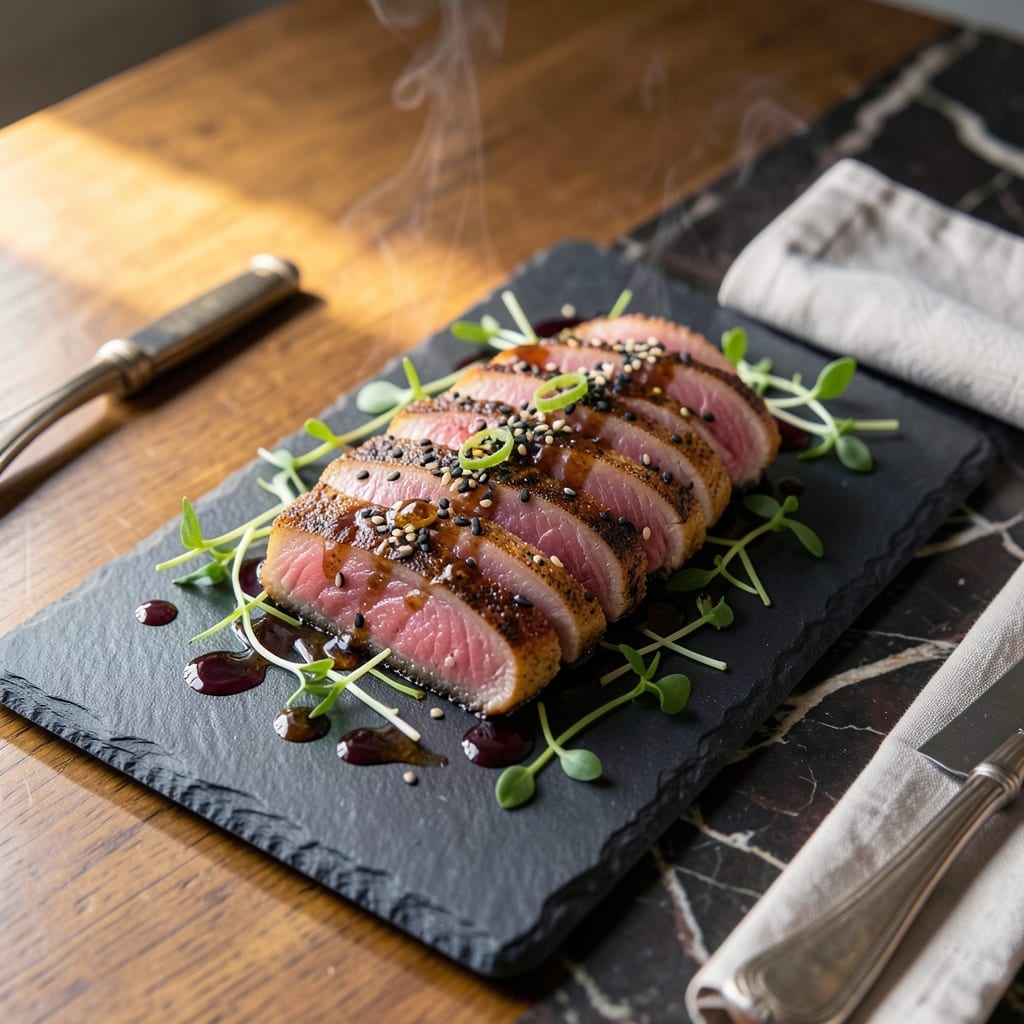
Achieving steakhouse-quality ahi tuna at home requires precision and a few professional techniques. This recipe delivers perfectly seared exterior while maintaining a cool, tender center.
The secret lies in using sushi-grade tuna and a very hot pan. A quick sear creates a flavorful crust without overcooking the delicate fish inside.
I’ve refined this method to ensure restaurant-level results every time. The accompanying sauce and garnishes elevate the dish to gourmet status.
Serve immediately for the best texture and presentation. The contrast between the warm seared edges and cool center is what makes this appetizer special.
Ingredients for Ruth’s Chris Ahi Tuna Appetizer
Sushi-grade tuna and a few Asian pantry staples create this steakhouse-worthy appetizer with minimal effort.
| Ingredient | Amount | Notes |
|---|---|---|
| Sushi-Grade Ahi Tuna 🐟 | 1 ½ lb | Center-cut, sashimi grade required |
| Black Sesame Seeds 🌰 | 2 tbsp | Toasted for nutty flavor |
| White Sesame Seeds 🌰 | 2 tbsp | Toasted for nutty flavor |
| Soy Sauce 🫒 | ¼ cup | Low-sodium preferred for balance |
| Sesame Oil 🫒 | 1 tbsp | Toasted for depth of flavor |
| Rice Vinegar 🫒 | 2 tbsp | Unseasoned variety essential |
| Fresh Ginger 🌿 | 1 tbsp | Peeled and finely grated |
| Garlic Cloves 🧄 | 2 cloves | Minced to fine paste consistency |
| Green Onions 🧅 | 4 whole | Thinly sliced on diagonal |
| Neutral Oil 🫒 | 2 tbsp | High smoke point, avocado or grapeseed |
| Wasabi Paste 🌶️ | 1 tsp | Adjust to heat preference |
| Pickled Ginger 🌿 | ¼ cup | For garnish and palate cleanser |
| Sea Salt 🧂 | 1 tsp | Flaky variety for finishing |
| Black Pepper 🌶️ | ½ tsp | Freshly cracked for best aroma |
The tuna quality is non-negotiable here. Sushi-grade ahi must be labeled as such—Whole Foods or a trusted fishmonger are reliable sources. Look for vibrant red color, no fishy odor, and firm texture. The sesame seeds should be freshly toasted (30 seconds in a dry pan) to release their oils. For the soy sauce, Kikkoman low-sodium provides the cleanest flavor without overpowering the dish.
No wasabi paste? Freshly grated wasabi root (if you can find it) delivers superior heat and aroma. Substitute prepared horseradish at half the amount for a similar kick. The rice vinegar can be apple cider vinegar in a pinch, though the flavor profile shifts slightly. If avoiding gluten, tamari replaces soy sauce one-for-one. The green onions can be swapped for chives if that’s what’s on hand.
The seared tuna is best consumed immediately—within 10 minutes of cooking—for optimal texture contrast. Store uncooked tuna in the coldest part of your fridge for up to 1 day. The sauce components can be mixed ahead and kept in an airtight container for 3 days (the ginger and garlic flavors intensify over time).
Why You’ll Love This Recipe
- No Cook Needed: I just sear the ahi tuna for 60 seconds per side and it’s ready—no fancy techniques required.
- Umami Bomb: That mix of soy sauce and sesame oil with the nutty crunch of black and white sesame seeds? Ridiculously good.
- Dinner Party Star: I serve this as an appetizer for guests, and it always feels restaurant-fancy without the effort.
- Leftovers? No Problem: Honestly, the seared slices taste just as good cold the next day over salad or rice.
Step-by-Step Instructions for Ruth’s Chris Ahi Tuna Appetizer
Master these professional techniques to achieve restaurant-quality seared ahi with perfect texture and presentation.
Step 1: Prepare the Marinade and Coat the Tuna
In a shallow dish, whisk together the 0.25 cup soy sauce, 1 tbsp sesame oil, 2 tbsp rice vinegar, 1 tbsp fresh ginger, and 2 cloves garlic cloves minced to a fine paste. This aromatic blend will infuse the exterior with umami depth and balanced acidity.
Pat the 1.5 lb sushi-grade ahi tuna completely dry with paper towels to ensure optimal searing. Submerge the tuna in the marinade, turning to coat all sides. Let it marinate for 15-20 minutes—long enough to develop flavor but not so long that the acid begins to “cook” the fish. Remove and pat dry again before searing.
Step 2: Create the Sesame Seed Crust
On a large plate, combine the 2 tbsp black sesame seeds and 2 tbsp white sesame seeds. The contrast of colors creates visual appeal while delivering a nutty crunch. I always toast the seeds lightly first to enhance their aroma, though the recipe works well with untoasted seeds too.
Roll the marinated tuna in the sesame seed mixture, pressing gently to ensure an even, thorough coating on all sides. This crust will create a textural contrast against the tender interior. Season the exterior with 1 tsp sea salt and 0.5 tsp black pepper, freshly cracked for optimal aroma.
Step 3: Sear the Tuna to Perfection
Heat the 2 tbsp neutral oil in a large skillet over high heat until it shimmers but doesn’t smoke. The high smoke point of avocado or grapeseed oil prevents burning during the intense searing process. Add the tuna and sear for 1-2 minutes per side for medium-rare center.
Watch for the sesame seeds to turn golden brown and the edges to develop a crisp crust. The tuna should develop a dark, caramelized exterior while remaining cool and raw in the very center. Use tongs to flip—the fish is too delicate for a spatula. The internal temperature should reach 110-115°F for ideal doneness.
Step 4: Rest, Slice, and Plate
Transfer the seared tuna to a cutting board and let it rest for 5 minutes. This allows the juices to redistribute throughout the fish. Slice against the grain into ½-inch thick pieces, revealing the perfect gradient from seared exterior to raw center.
Arrange the slices on a serving platter, slightly overlapping for visual impact. Garnish with 4 whole green onions thinly sliced on the diagonal, and serve with 0.25 cup pickled ginger and 1 tsp wasabi paste on the side. The pickled ginger provides a refreshing palate cleanser between bites of the rich tuna.
Pro Tips For Making Ruth’S Chris Ahi Tuna Appetizer
- Chill the Tuna First: Pop the ahi in the freezer for 15-20 minutes before slicing—it firms up the texture and makes thin, even cuts way easier. I learned this the hard way after mangling my first few attempts with room-temp fish.
- Toast the Seeds: Lightly toast the black and white sesame seeds in a dry pan for 1-2 minutes until fragrant. Sounds unnecessary, but it actually brings out a nutty depth that raw seeds just can’t match.
- Skip the Overcook: Sear the tuna for no more than 30-45 seconds per side—any longer and you’ll lose that buttery, rare center. After ruining a perfect piece by leaving it too long, I now set a timer every time.
- Use the Good Soy: Splurge on a high-quality soy sauce for the marinade—it’s the difference between a flat dish and one with real complexity. I was skeptical until I tried it, but the upgrade is noticeable.
Essential Equipment for ruths chris ahi tuna appetizer
High-Heat Skillet
A heavy cast iron skillet or stainless steel pan is essential for achieving the perfect sear. I recommend Lodge for cast iron—it retains heat beautifully and develops a natural non-stick surface over time. The pan must be oven-safe if you want to finish in the oven. 🔥
Precision Thermometer
An instant-read digital thermometer ensures perfect doneness every time. I use a ThermoWorks Thermapen for its speed and accuracy. The internal temperature should reach 110-115°F for that ideal cool center with a seared exterior.
Sharp Slicing Knife
A long, sharp knife like a 10-inch chef’s knife or slicing knife is crucial for clean cuts. I prefer Wüsthof for its balance and edge retention. Slice against the grain into ½-inch thick pieces for the best texture.
Tongs for Flipping
Use locking tongs (I like OXO brand) to flip the tuna gently. A spatula can damage the delicate fish, while tongs provide better control. Look for 12-inch tongs to keep your hands safe from the hot pan.
Marinade Dish
A shallow glass or ceramic dish works best for marinating. I use a 9×13-inch Pyrex for even coverage. Avoid metal dishes, as they can react with the acidic ingredients in the marinade.
Cutting Board
A large bamboo or plastic cutting board gives you space to rest and slice the tuna. I prefer Teakhaus boards for their durability. The board should be big enough to accommodate the whole tuna with room to slice comfortably.
Nutrition Facts
Frequently Asked Questions
Can I use regular tuna instead of sushi-grade?
No, always use sushi-grade ahi. Regular tuna isn’t safe for raw consumption. Look for sashimi-grade labeling at specialty markets.
How do I know when the tuna is done?
The center should remain cool and raw. Use a thermometer to confirm 110-115°F internal temperature. The exterior will be seared golden brown in 1-2 minutes per side.
What if my sesame seeds won’t stick?
Pat the tuna completely dry after marinating. Press the seeds firmly into the fish. Using toasted seeds helps them adhere better.
Can I make this ahead of time?
Marinate and coat the tuna up to 1 day ahead, but sear just before serving. Sliced tuna is best eaten within 10 minutes of cooking.

- 6 Egg Cake Recipe with Oil: Light as Air With Buttery Moisture - October 4, 2026
- 4 Bean Casserole Recipe: One-Pan Heartiness With Smoky Paprika Depth - October 4, 2026
- 3-Ingredient Keto Mug Cake Recipe: Microwave Magic in 2 Minutes - October 4, 2026