
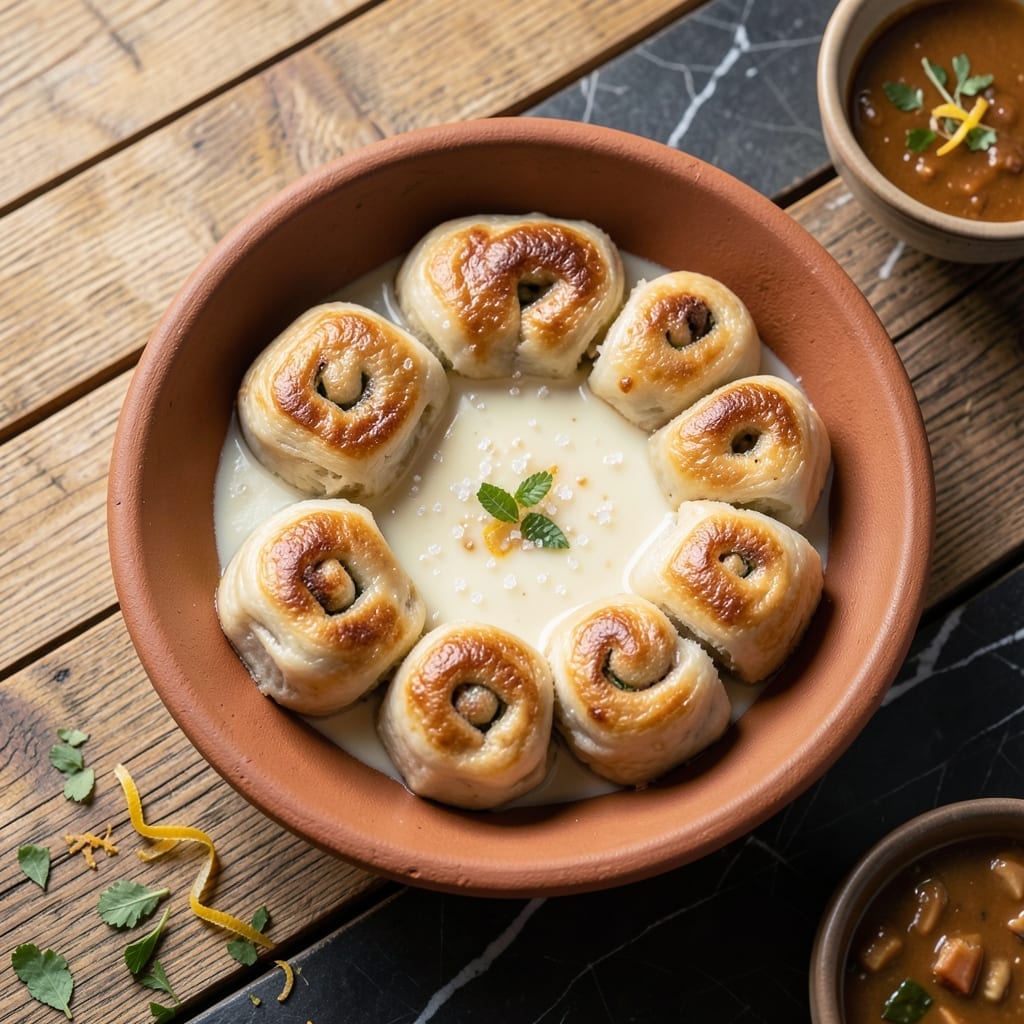
This Trinidadian flatbread holds deep cultural significance as a traditional offering in Hindu rituals and celebrations. The recipe has been passed down through generations, maintaining its authentic preparation and meaning.
The fluffy texture comes from a simple dough enriched with coconut milk and a touch of sugar, creating a slightly sweet, tender bread. The cooking process requires precise heat control to achieve the characteristic golden-brown spots.
Each piece carries the warmth of tradition, with a delicate coconut aroma that fills the kitchen as it cooks. The bread is soft enough to tear easily, yet sturdy enough to hold its shape when served.
Perfect for religious observances or as a comforting everyday bread, this recipe preserves the essence of Trinidadian culinary heritage.
Ingredients for Trinidad Parsad
These authentic ingredients create a traditional Trinidadian flatbread with rich cultural heritage and fluffy texture.
| Ingredient | Amount | Notes |
|---|---|---|
| All-Purpose Flour 🌾 | 3 cups | Plus extra for dusting |
| Coconut Milk 🥥 | 1 cup | Full-fat canned preferred |
| Granulated Sugar 🍚 | ¼ cup | Adjust to taste preference |
| Active Dry Yeast 🍞 | 2 ¼ tsp | One packet, proofed in warm water |
| Salt 🧂 | 1 tsp | Fine sea salt preferred |
| Baking Powder 🧂 | 1 tsp | Ensures fluffy texture |
| Ground Cumin Seeds 🌿 | 1 tsp | Lightly toasted for aroma |
| Vegetable Oil 🫒 | 2 tbsp | For dough and cooking |
| Water 💧 | ¾ cup | Warm, for yeast activation |
| Fresh Cilantro 🌿 | ¼ cup | Chopped, for garnish |
The coconut milk is key here—Chaokoh or Thai Kitchen brands offer the right creaminess and authentic flavor. Look for full-fat versions in cans at Asian markets or the international aisle. The flour should be all-purpose, unbleached if possible. For yeast, Fleischmann’s or Red Star are reliable choices that proof consistently. Freshness matters most with yeast, so check the expiration date carefully.
No coconut milk? Coconut cream diluted with water (1:1 ratio) works in a pinch, though the flavor will be richer. Yeast can be replaced with instant yeast at the same quantity, but active dry gives better control for beginners. For a different twist, swap cumin for anise seeds—common in some Trinidadian variations. The cilantro is optional but adds a fresh finish.
Dough rests best in a warm, draft-free spot—1-2 hours for optimal rise. Leftover parsad keeps 2-3 days at room temperature in an airtight container, or freeze for 1 month. Reheat gently in a dry skillet to restore softness. The aroma intensifies overnight, making leftovers especially fragrant.
Why You’ll Love This Recipe
- One Bowl Wonder: I mix everything—flour, coconut milk, sugar, yeast—in a single bowl, no fancy gadgets needed.
- Sweet Coconut Magic: The coconut milk gives it this rich, slightly tropical taste that pairs perfectly with the light sweetness.
- Breakfast or Snack: I serve it warm for breakfast or pack slices for an afternoon pick-me-up. Versatile like that.
- Budget Stretch: A handful of pantry staples makes a big batch, so it feeds my family for days without breaking the bank.
Step-by-Step Instructions for Trinidad Parsad
Master the technique for perfectly fluffy, aromatic flatbread with these proven steps.
Step 1: Activate the Yeast and Mix Wet Ingredients
Begin by proofing the 2.25 tsp Active Dry Yeast in the 0.75 cup Water heated to 110°F. The water should feel warm but not hot to the touch. Let it sit for 5-7 minutes until foamy—this confirms the yeast is active.
In a large mixing bowl, whisk together the proofed yeast mixture, 1 cup Coconut Milk, 0.25 cup Granulated Sugar, and 2 tbsp Vegetable Oil. The coconut milk adds richness, while the sugar feeds the yeast for proper rise. Ensure all ingredients are fully incorporated before proceeding.
Step 2: Combine Dry Ingredients and Form the Dough
In a separate bowl, sift together the 3 cups All-Purpose Flour, 1 tsp Salt, 1 tsp Baking Powder, and 1 tsp Ground Cumin Seeds. The baking powder ensures a light, airy texture, while the cumin adds an aromatic depth characteristic of Trinidadian flavors.
Gradually add the dry ingredients to the wet mixture, stirring until a shaggy dough forms. Turn it out onto a lightly floured surface and knead for 8-10 minutes until smooth and elastic. The dough should be slightly tacky but not sticky—add a dusting of flour if needed.
Step 3: First Rise and Portioning
Place the dough in a lightly oiled bowl, cover with a damp cloth, and let it rise in a warm, draft-free area for 1-1.5 hours, or until doubled in volume. This first rise develops the gluten structure and enhances the flavor.
Once risen, punch down the dough to release excess air and divide it into 8 equal portions. Roll each portion into a ball, then flatten slightly into a disc. Cover with a cloth and let rest for 15 minutes—this relaxes the gluten, making rolling easier.
Step 4: Roll and Cook the Flatbread
On a floured surface, roll each disc into a thin round, about ¼-inch thick. Heat a skillet or griddle over medium-high heat and lightly brush with some of the 2 tbsp Vegetable Oil. Cook each flatbread for 2-3 minutes per side, until puffed in spots and golden brown with charred bits.
Press down gently with a spatula if the bread puffs too much—this ensures even cooking. The flatbread should be soft and pliable, with a slightly crisp exterior. Keep cooked parsad wrapped in a clean cloth to retain warmth and moisture.
Step 5: Garnish and Serve
Once all flatbreads are cooked, stack them and sprinkle with the 0.25 cup Fresh Cilantro, finely chopped. The cilantro adds a fresh, bright contrast to the rich, spiced bread.
Serve warm, ideally with a curry or as part of a prasadam offering. The parsad should be tender yet sturdy enough to hold up to dipping or tearing. For best results, enjoy immediately while still warm.
Pro Tips For Making Trinidad Parsad
- Activate the Yeast: I learned this the hard way—always bloom the yeast in warm coconut milk with a pinch of sugar before mixing, or your parsad won’t rise properly.
- Knead Longer Than Expected: The dough should be smooth and elastic, so give it a solid 8-10 minutes of kneading—it’s the thing that matters most for that soft texture.
- Skip Cold Coconut Milk: Using chilled coconut milk straight from the can slows down the yeast. Let it sit at room temperature for 20 minutes first.
- Cover While Resting: After shaping the parsad, cover it with a damp towel—it prevents a dry crust from forming while it proofs.
Essential Equipment for This Recipe
Essential Cookware
For authentic parsad, a heavy-bottomed skillet or cast iron griddle is indispensable. I swear by my Lodge 12-inch for even heat distribution. Avoid non-stick surfaces—they don’t achieve the characteristic golden-brown spots as effectively. 🔥
Mixing Tools
A large mixing bowl and wooden spoon are perfect for combining ingredients. For kneading, a clean countertop works, but I prefer a silicone pastry mat for easy cleanup. The dough comes together beautifully with these simple tools.
Rolling Equipment
A rolling pin is essential for achieving the ¼-inch thickness needed. I use a French tapered pin for better control. Dust your surface with flour to prevent sticking—this ensures smooth, even rounds every time.
Resting Setup
During rising, cover your dough with a damp kitchen towel to maintain moisture. I place mine in a warm oven (turned off) with the light on for consistent warmth. This setup guarantees optimal proofing conditions.
Serving Essentials
A clean cotton cloth keeps cooked parsad warm and soft while you finish the batch. For presentation, a bamboo serving tray adds a traditional touch. I always have a sharp serrated knife ready for slicing if needed.
Safety Gear
Since you’re working with hot oil, keep a silicone brush for oiling the pan and tongs for flipping. I also recommend heat-resistant gloves for handling the hot skillet. Safety makes the process more enjoyable. 💪
Nutrition Facts
Frequently Asked Questions
What’s the ideal dough consistency?
It should be slightly tacky but not sticky after kneading for 8-10 minutes. Add flour in 1 tbsp increments if too wet. The dough will smooth out as you work it.
Can I make this without yeast?
Yes! Replace yeast with 1 tsp baking powder for a quicker version. The texture will be denser but still delicious. Let the dough rest 20 minutes before rolling.
How do I store leftovers?
Keep in an airtight container at room temperature for 2-3 days. Reheat in a dry skillet over medium heat for 30 seconds per side to restore softness.
Why isn’t my parsad puffing?
Check your yeast freshness first. Also ensure oil is hot enough—medium-high heat is key. Don’t overhandle the dough or it won’t rise properly.

- 6 Egg Cake Recipe with Oil: Light as Air With Buttery Moisture - October 4, 2026
- 4 Bean Casserole Recipe: One-Pan Heartiness With Smoky Paprika Depth - October 4, 2026
- 3-Ingredient Keto Mug Cake Recipe: Microwave Magic in 2 Minutes - October 4, 2026