
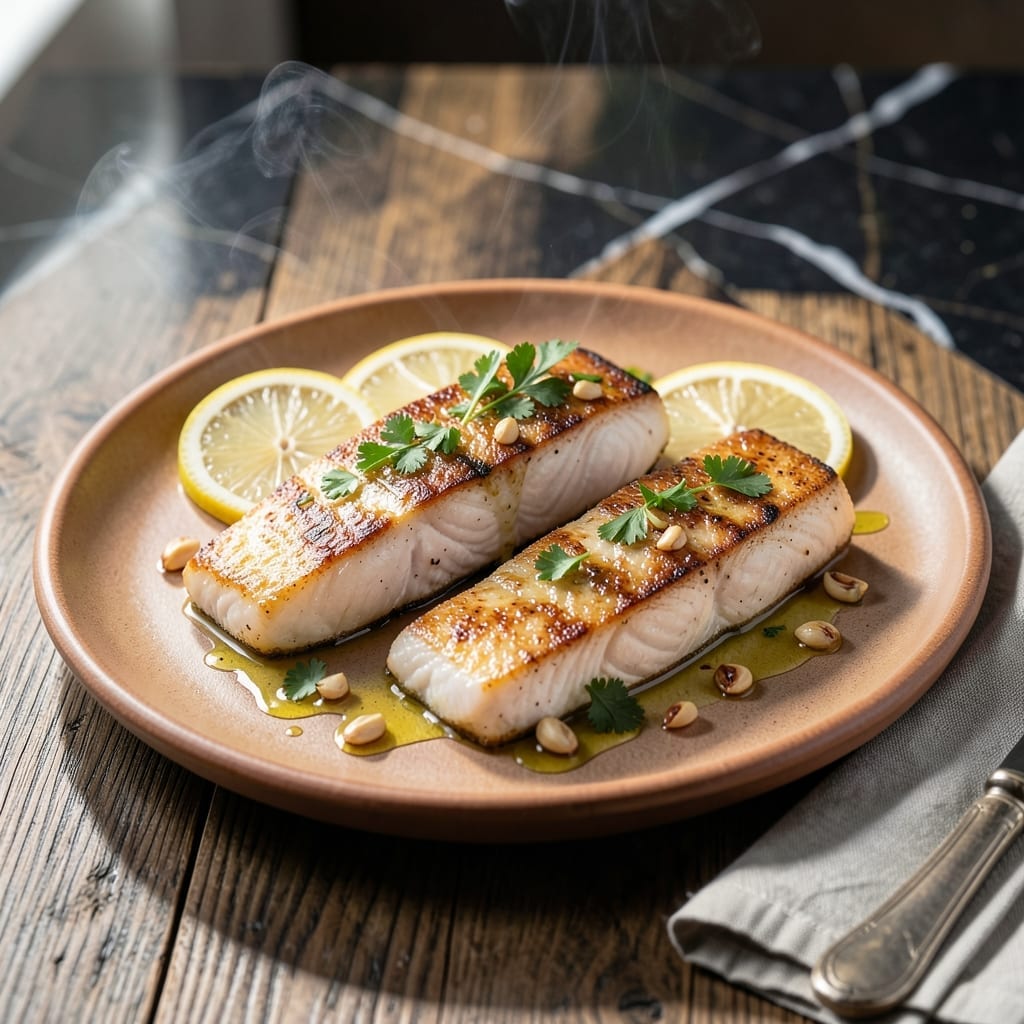
This Alaska pollock recipe delivers flaky, tender fish with minimal effort. The mild flavor of pollock makes it the perfect canvas for a bright lemon butter glaze that enhances without overpowering.
I’ve perfected this method to ensure the fish stays moist and delicate, never dry or rubbery. A hot oven and precise timing are key to achieving that ideal texture that falls apart with just a fork.
The lemon butter glaze adds a luxurious finish, balancing richness with acidity. It’s a simple yet elegant dish that’s ready in under 20 minutes.
Serve with roasted vegetables or a light salad for a complete, restaurant-worthy meal.
Ingredients for Alaska Pollock Fillet
Fresh pollock fillets and a few bright ingredients create this elegant dish with ease.
| Ingredient | Amount | Notes |
|---|---|---|
| Alaska Pollock Fillets 🐟 | 1 ½ lb | Skinless, boneless, fresh or thawed |
| Unsalted Butter 🧈 | ½ cup | Melted for glaze |
| Fresh Lemon Juice 🍋 | 3 tbsp | From about 1 large lemon |
| Lemon Zest 🍋 | 1 tbsp | Finely grated from 1 lemon |
| Garlic Cloves 🧄 | 2 cloves | Minced finely |
| Fresh Parsley 🌿 | 2 tbsp | Chopped, for garnish |
| Olive Oil 🫒 | 1 tbsp | For brushing fillets |
| Kosher Salt 🧂 | ½ tsp | Plus more to taste |
| Freshly Ground Black Pepper 🌶️ | ¼ tsp | Plus more to taste |
| Dry White Wine 🍷 | 2 tbsp | Optional for deglazing |
| Paprika 🌶️ | ¼ tsp | For a hint of color |
| Dijon Mustard 🟡 | 1 tsp | For depth in glaze |
Pollock is the star here. Wild-caught Alaska pollock is ideal—look for fillets that are firm, translucent, and smell like the ocean (not fishy). Most Whole Foods or Trader Joe’s locations carry it fresh or frozen. Thaw overnight in the fridge if using frozen. The key is dry fillets—pat them very dry with paper towels before cooking to prevent steaming.
No white wine? Substitute chicken broth or just skip it—the glaze will still be delicious. Fresh lemon juice is non-negotiable though (bottled lacks the brightness). If you’re out of parsley, fresh dill or chives work beautifully. For a richer glaze, add an extra tablespoon of butter. The Dijon mustard can be swapped for whole-grain if that’s what you have.
Cook immediately after prepping—pollock doesn’t hold well once seasoned. Leftovers keep for 2-3 days in the fridge, but the texture is best fresh. Reheat gently in a low oven to avoid drying out. The glaze can be made ahead and reheated in a small saucepan.
Why You’ll Love This Recipe
- One Pan Wonder: I just melt butter, toss in garlic, and let the pollock soak up that lemony goodness—minimal effort, maximum payoff.
- Buttery Lemon Bliss: The combo of zesty lemon and rich butter makes every bite taste like a restaurant dish, honest to goodness.
- Weeknight Hero: Between us, it’s my go-to for busy evenings when I need something quick but still impressive.
- Budget Friendly: Pollarock fillets are affordable, and this recipe stretches them into a meal that feels anything but cheap.
Step-by-Step Instructions for Alaska Pollock Fillet
This method ensures tender, flaky fish with a bright, buttery finish every time.
Step 1: Prep and Season the Fillets
Pat the 1.5 lb Alaska Pollock Fillets completely dry with paper towels. This step is crucial—moisture prevents proper browning and can make the fish steam instead of sear. I always check for any remaining bones, though these fillets are typically boneless.
Brush both sides lightly with the 1 tbsp Olive Oil, then season evenly with 0.5 tsp Kosher Salt, 0.25 tsp Freshly Ground Black Pepper, and a dusting of 0.25 tsp Paprika for color. The paprika adds a subtle warmth without overpowering the delicate flavor of the pollock.
Step 2: Sear the Fillets to Golden Perfection
Heat a large nonstick or cast-iron skillet over medium-high heat. Once hot, add the seasoned fillets, skin-side down if they have skin (though these are skinless). Cook undisturbed for 3-4 minutes until the edges appear opaque and the bottom develops a light golden crust.
Gently flip the fillets using a thin spatula—pollock is delicate, so avoid pressing down. Cook for another 2-3 minutes until the fish flakes easily with a fork and reaches an internal temperature of 145°F. Transfer the fillets to a plate and tent loosely with foil to keep warm.
Step 3: Create the Lemon Butter Glaze
Reduce the heat to medium-low and add the 0.5 cup Unsalted Butter to the same skillet. Once melted, stir in the 2 minced Garlic Cloves and cook for 30 seconds until fragrant—don’t let the garlic brown or it will turn bitter.
Add the 3 tbsp Fresh Lemon Juice, 1 tbsp Lemon Zest, 1 tsp Dijon Mustard, and 2 tbsp Dry White Wine. Simmer for 2 minutes, stirring constantly, until the sauce thickens slightly and becomes glossy. The lemon zest adds a bright pop of citrus that balances the richness of the butter.
Step 4: Finish and Garnish
Return the pollock fillets to the skillet and spoon the lemon butter glaze over each one. Let them warm through for 1-2 minutes, basting occasionally with the sauce. This step infuses the fish with extra flavor and ensures it stays moist.
Transfer the fillets to a serving platter and drizzle any remaining glaze on top. Sprinkle with the 2 tbsp Fresh Parsley for a fresh, vibrant finish. Serve immediately while the fish is hot and the sauce is still glossy. Each bite should deliver tender, flaky pollock with a tangy, buttery richness.
Pro Tips For Making Alaska Pollock Fillet
- Pat Fillets Dry: Use paper towels to thoroughly dry the pollock fillets before cooking—this guarantees a better sear instead of steaming in their own moisture.
- Warm the Butter: Melt the unsalted butter gently over medium-low heat with minced garlic and lemon zest for 2-3 minutes to infuse flavors before adding the fish.
- Skip Overcooking: Pull the fillets off the heat when they’re just opaque and flake easily with a fork, usually 3-4 minutes per side for 1-inch thickness.
- Finish with Lemon: Squeeze fresh lemon juice over the fillets right before serving to brighten the dish—adding it too early can make the fish tough.
Serving Suggestions for This Recipe
Plating Elegance
Arrange each fillet on a warm plate with a spoonful of the lemon butter glaze pooled beneath. The glossy sauce creates a beautiful base that elevates the presentation. I like to drizzle extra glaze over the top in a zigzag pattern for visual appeal. 💛
Vegetable Pairings
Serve with roasted asparagus or steamed green beans to complement the delicate fish. Toss the vegetables with a bit of the leftover glaze for a cohesive flavor experience. A simple arugula salad with lemon vinaigrette also balances the richness perfectly.
Starch Sides
Jasmine rice or creamy mashed potatoes soak up the buttery sauce beautifully. For a lighter option, try quinoa or couscous. I often serve mine with roasted baby potatoes—their crispy edges contrast the tender fish wonderfully.
Garnish Like a Pro
Beyond parsley, try adding thin lemon slices or edible flowers for a restaurant-quality touch. A sprinkle of flaky sea salt on top enhances the flavors and adds texture. The bright colors make the dish pop on the plate.
Bread for Sauce
Offer crusty bread or garlic bread on the side to mop up every last drop of that delicious glaze. I love using sourdough—its tanginess pairs especially well with the lemon butter. Warm the bread just before serving for best results.
Family-Style Serving
For a casual gathering, place all fillets on a large platter with sides arranged around them. Let guests serve themselves—this encourages sharing and makes the meal feel more communal. The glaze will pool in the center, ready for everyone to enjoy. 🍽️
Nutrition Facts
Frequently Asked Questions
Can I use frozen pollock fillets?
Yes, but thaw them completely in the fridge overnight first. Pat them very dry before cooking to avoid steaming. Never cook from frozen, as this can lead to uneven cooking and a rubbery texture.
What’s the best way to check doneness?
The fish is done when it reaches an internal temperature of 145°F and flakes easily with a fork. Look for opaque flesh that separates cleanly—this usually takes 5-7 minutes total cooking time.
Can I substitute the white wine?
Use 2 tablespoons of chicken broth or simply skip it. The glaze will still be delicious with just the lemon, butter, and mustard. The wine adds depth but isn’t essential.
How do I prevent the glaze from breaking?
Keep the heat at medium-low and stir constantly after adding the butter. If it separates, remove from heat and whisk vigorously to re-emulsify. A little patience keeps it smooth and glossy.

- 6 Egg Cake Recipe with Oil: Light as Air With Buttery Moisture - October 4, 2026
- 4 Bean Casserole Recipe: One-Pan Heartiness With Smoky Paprika Depth - October 4, 2026
- 3-Ingredient Keto Mug Cake Recipe: Microwave Magic in 2 Minutes - October 4, 2026