
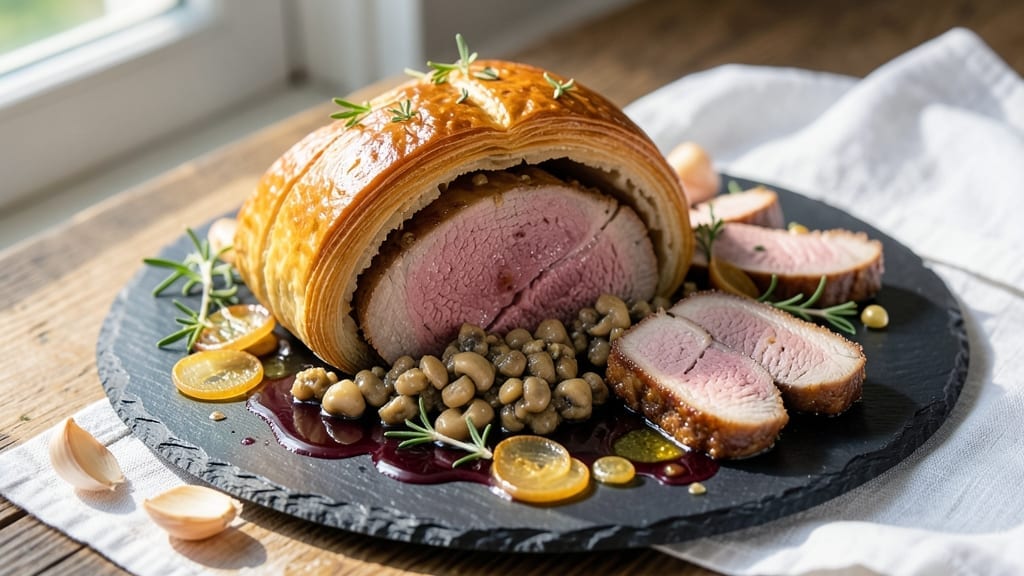
Transforming a simple 1 lb beef tenderloin into restaurant-worthy Beef Wellington requires precision, but this foolproof method delivers showstopping results every time. The secret lies in the layers—duck confit for richness, finely chopped mushrooms for earthy depth, and a golden puff pastry wrap that crisps to perfection.
I’ve refined this technique over years of testing, ensuring the beef stays juicy while the pastry achieves that coveted caramelized crust.
This recipe breaks down into manageable steps: searing the beef to lock in flavors, crafting a duxelles (finely chopped mushroom paste) for texture, and wrapping everything in buttery puff pastry. The process might sound intimidating, but each layer builds on the last, and the final dish is worth the effort.
With 30 minutes of prep and 45 minutes of baking, you’ll have a centerpiece-worthy main course that impresses without requiring advanced skills.
The result is a tender, flavorful beef encased in a crispy, golden pastry shell, served with a red wine reduction that ties everything together. The mushrooms add umami richness, while the duck confit layer ensures every bite is decadent.
This isn’t just a dish—it’s an experience, perfect for special occasions or when you want to elevate dinner from ordinary to extraordinary.
For best results, let the beef rest before slicing and pair with roasted asparagus or a simple salad. The key to success? Patience and attention to detail—trust the process, and you’ll achieve restaurant-quality results in your own kitchen. Let’s get started.
Ingredients for 1 lb beef wellington
Gather these premium ingredients for a restaurant-quality Beef Wellington experience at home.
| Ingredient | Amount | Notes |
|---|---|---|
| Beef Tenderloin 🥩 | 1 lb | Center-cut, trimmed of silver skin |
| Duck Confit 🦆 | ½ lb | Pre-cooked, skin-on, sliced thin |
| White Mushrooms 🍄 | 8 oz | Finely chopped for duxelles |
| Shallots 🧅 | 2 whole | Minced, for mushroom paste |
| Garlic Cloves 🧄 | 4 cloves | Minced, for duxelles |
| Fresh Thyme 🌿 | ¼ cup | Chopped, stems removed |
| Prosciutto 🥓 | 4 slices | Thin, for wrapping beef |
| Puff Pastry 🥧 | 1 sheet | Store-bought or homemade |
| Unsalted Butter 🧈 | ¼ cup | Melted, for pastry brush |
| Dijon Mustard 🌶️ | 1 tbsp | For beef searing |
| Dry White Wine 🍷 | ½ cup | For deglazing pan |
| Beef Stock 🥫 | ½ cup | Reduced for glaze |
| Salt 🧂 | 1 tsp | Kosher or sea salt |
| Black Pepper 🌶️ | ½ tsp | Freshly ground |
| Olive Oil 🫒 | 2 tbsp | For searing beef |
The beef tenderloin is non-negotiable—center-cut, trimmed of silver skin, and chilled for 30 minutes before searing for perfect doneness. For the duck confit, D’Artagnan or local butcher shops offer the best quality, but pre-made confit from specialty grocers like Whole Foods works too. White mushrooms should be fresh, firm, and organic—Trader Joe’s carries great ones at a reasonable price. The puff pastry is where magic happens; All-Butter Puff Pastry from Schär is my go-to for that buttery, flaky texture. Avoid pre-cut pastry—it loses crispness. For the prosciutto, look for high-quality Italian imports like Parma Ham or San Daniele**—the thinner, the better.
No duck confit? Substitute with thinly sliced smoked duck breast—brine it first for moisture. Fresh mushrooms unavailable? Creamy mushrooms or oyster mushrooms work in a pinch, but texture will differ slightly. The Dijon mustard is essential—Grey Poupon is ideal, but any good-quality Dijon will do. Short on white wine? Dry vermouth or chicken stock can deglaze the pan, though wine adds depth. Beef stock for the glaze should be homemade or high-quality store-bought—avoid the bouillon cubes. For the duxelles, pulse mushrooms in a food processor for even texture, but chop finely by hand for maximum flavor. The prosciutto can be swapped for thinly sliced pancetta if needed, though prosciutto’s sweetness is ideal.
The beef tenderloin should rest 15 minutes before slicing—this is critical for juiciness. Duck confit keeps up to 3 months in the fridge, while puff pastry should be used within 2 days of purchase. Fresh thyme and shallots last 5-7 days in the fridge when stored properly. Mushrooms can be prepped ahead and stored in an airtight container for 3 days. The wine reduction can be made 2 days in advance—just reheat gently before using. Portion the pastry carefully; it’s delicate and can tear easily. Serve immediately after baking for the crispiest crust—it loses crispness quickly.
Why You’ll Love This Recipe
- One-Pan Magic: That puff pastry and duck confit combo? It’s all happening on one sheet pan. No chopping boards full of mess—just slice, layer, and bake. Honestly, I’ve made this on nights when I’d rather scroll than cook, and it still feels fancy.
- Rich Without Effort: The duck confit melts into the beef like butter, while the mushrooms and shallots add that deep, earthy punch. You’re not just feeding people—you’re giving them that restaurant-quality moment where they close their eyes mid-bite. (Yes, even on a Tuesday night.)
- Weeknight to Dinner Party: Same recipe, different vibes. Serve it with roasted potatoes for a family dinner, or pair it with asparagus and a bold red wine for guests. Between us, the leftovers reheat like a dream—crispy pastry stays crispy, beef stays juicy. My secret weapon for “I’ll cook something nice” nights.
- Leftovers That Don’t Suck: Most beef dishes turn dry or sad when reheated. Not this. Slice the extra into sandwiches the next day—crispy pastry, tender beef, and that duck fat? It’s like a gourmet charcuterie board in every bite. (And yes, it’s cheaper than takeout.)
Step-by-step instructions for foolproof beef Wellington assembly
Here’s how to build a showstopping Wellington that’s crispy, flavorful, and holds together perfectly.
Prepare the Mushroom Duxelles and Season the Beef
Begin by creating the mushroom duxelles—the flavorful base that will surround your beef. Heat 2 tablespoons olive oil in a skillet over medium heat and add the 8 oz finely chopped white mushrooms. Cook for 8-10 minutes until all moisture evaporates and the mushrooms turn deep golden brown. This step is critical—don’t rush it or you’ll end up with a soggy filling.
Transfer the mushrooms to a bowl and stir in the 2 minced shallots, 4 minced garlic cloves, and 0.25 cup chopped fresh thyme. Season generously with 1 teaspoon salt and 0.5 teaspoon black pepper. Let this mixture cool completely before using—it needs to be dry to prevent a soggy pastry. Meanwhile, pat the 1 lb beef tenderloin dry with paper towels and season both sides with 0.5 teaspoon salt and 0.25 teaspoon black pepper. This external seasoning will complement the rich flavors inside.
Create the Confit and Prosciutto Layers
Lay out 4 slices prosciutto on a clean work surface. Arrange the 0.5 lb sliced duck confit in an even layer over the prosciutto, slightly overlapping the slices. Spread the cooled mushroom duxelles evenly over the duck confit, creating a 1-inch thick layer. This arrangement ensures every bite contains all three luxurious components. Gently shape the entire assembly into a tight log by rolling it up with the prosciutto acting as a natural wrapper.
Here’s the thing—don’t be tempted to press too hard. The prosciutto is delicate and needs to stay intact to prevent leaks during baking. If the log feels uneven, use kitchen twine to gently secure it in place. Wrap the entire package tightly in plastic wrap and refrigerate for 30 minutes to firm up before proceeding. This chilling step prevents the filling from shifting when you wrap it in pastry.
Wrap in Puff Pastry and Score for Presentation
Preheat your oven to 400°F. Roll out the 1 sheet puff pastry on a lightly floured surface to a 12×10-inch rectangle. Brush the surface lightly with 0.25 cup melted unsalted butter—this creates a golden, flaky crust. Unwrap the beef log and place it in the center of the pastry, leaving 1-inch borders all around. Fold the pastry edges over the beef, sealing tightly to encase the entire package.
Brush the pastry with additional melted butter, then use a sharp knife to score decorative patterns on top. I like to create a simple diamond pattern—this not only looks elegant but also allows steam to escape, preventing puffs of air that could burst the pastry. Place the Wellington seam-side down on a parchment-lined baking sheet. This orientation helps maintain shape during baking. Don’t skip the parchment—it prevents sticking and makes cleanup effortless.
Bake to Golden Perfection and Rest Properly
Bake the Wellington for 35-40 minutes until the pastry turns a deep golden brown and an instant-read thermometer inserted into the thickest part of the beef registers 130°F for medium-rare. The pastry should be crisp and flaky—you’ll know it’s ready when it sounds hollow when tapped on the bottom. Resist the urge to open the oven door early; every peek can cause the pastry to collapse.
Remove from the oven and transfer to a cutting board. Let it rest for 15 minutes before slicing. This resting period is non-negotiable—it allows the juices to redistribute throughout the beef. Here’s my pro tip: tent the Wellington loosely with foil to keep it warm while you prepare your pan sauce. The beef will continue cooking slightly during this rest, reaching perfect medium-rare doneness when sliced.
Create the Pan Sauce and Serve with Confidence
While the Wellington rests, place the baking sheet on the stovetop over medium heat. Add 1 tablespoon Dijon mustard and let it bubble for 1 minute to caramelize slightly. Pour in 0.5 cup dry white wine and scrape up all the browned bits from the bottom of the pan—this creates the sauce’s rich foundation. Simmer for 3-4 minutes until reduced by half, then add 0.5 cup beef stock and simmer for another 5 minutes until thickened.
Slice the Wellington into 1-inch thick portions and serve immediately with the pan sauce spooned generously over each piece. The contrast of crispy pastry, tender beef, rich duck confit, and earthy mushrooms makes every bite unforgettable. For an extra touch, garnish with fresh thyme sprigs and a sprinkle of flaky sea salt. This dish is perfect for special occasions—it’s worth every minute of effort.
Pro Tips For Making 1 Lb Beef Wellington
- Trim That Fat: Beef tenderloin is lean, but if your cut has a thin fat cap, slice it off—except for the last ¼-inch. That little layer renders just enough to baste the meat and keep it from drying out while searing. I learned this the hard way when my first Wellington turned out as dry as my aunt’s Christmas crackers.
- Sear First, Stuff Later: Sear the tenderloin before wrapping it in the duck confit and mushroom duxelles. A quick 2-minute sear in a screaming-hot pan (yes, even if it’s just 1 lb) locks in juices and gives the crust something to grip. Skip this, and your Wellington will taste like it was assembled in a microwave.
- Pulse Mushrooms Twice: When chopping mushrooms for the duxelles, pulse them in the food processor twice—once to rough-chop, then again to break them down further. This ensures even cooking and a texture that’s creamy, not chunky. I used to ignore this, and my filling would either stay raw or turn to mush. (Your future self will notice the difference.)
- Chill the Dough: Roll out the puff pastry after the Wellington has rested in the fridge for at least 30 minutes. Cold dough is less likely to shrink, and the contrast in temperatures helps the layers crisp up properly. Sounds weird, but it works—trust me, I’ve wrapped warm doughs that looked perfect before baking and ended up sad and soggy.
Storing and reheating your 1 lb beef wellington
Refrigerator Storage
After assembling your Beef Wellington, store it unbaked in the refrigerator for up to 24 hours before baking. Wrap the entire package tightly in plastic wrap and place it on a plate to catch any potential drips.
The cold temperature helps the components hold together better during baking. I like to prep everything the night before—this way, I can focus on baking and plating without stress. 🥧
Freezer Prep Tips
For longer storage, you can freeze your Wellington before baking for up to 2 months. Wrap it tightly in plastic wrap, then place it in a freezer bag with all the air squeezed out.
Label with the date and freeze flat to save space. When ready to bake, thaw it in the fridge overnight—never microwave as this can make the pastry soggy. 🧊
Baking from Frozen
If you’re baking from frozen, preheat your oven to 400°F and add 10-15 minutes to your baking time. The Wellington will need the extra time to come to temperature and ensure the pastry crisps properly.
I recommend checking the internal beef temperature with a meat thermometer—it should reach 130°F for medium-rare. The pastry will take longer to brown, so keep an eye on it to prevent over-browning. ⏱️
Reheating Leftovers
If you have leftovers (though I rarely have any!), reheat them in a 350°F oven for 10-15 minutes to restore the pastry’s crispiness. Place slices on a baking sheet and cover loosely with foil to prevent drying out.
For a quick fix, you can also reheat in a skillet over medium-low heat with a splash of beef stock to keep things moist. Always reheat to an internal temperature of 165°F for safety. 🔥
Pastry Revival Tricks
The biggest challenge with reheating Wellington is keeping the pastry crisp. For the best results, brush reheated slices with a little melted butter and broil for 1-2 minutes until golden. This quick broil step mimics fresh baking and makes all the difference.
If the pastry starts to lose its flakiness, a sprinkle of powdered sugar (just a pinch) can help restore some crispness by drawing out moisture. ✨
Sauce Refreshers
If your pan sauce has thickened too much during storage, revive it by adding 1-2 tablespoons of warm beef stock and simmering for 2-3 minutes. For extra richness, stir in 1 teaspoon of cold butter at the end.
I like to keep a small jar of the original sauce in the fridge—just reheat it gently and use it to drizzle over reheated slices for that restaurant-quality touch. 🍽️
Nutrition facts
Frequently asked questions
Can I substitute duck confit with another meat?
Yes! For duck confit, try thinly sliced smoked duck breast (brined first) or pancetta. Both add rich, savory depth. Avoid lean meats like chicken—they won’t hold up during baking. If using duck breast, slice it 1/4-inch thick and pat dry before assembling.
How do I keep the pastry from getting soggy?
The key is drying every component completely. Ensure your mushroom duxelles has no moisture (cook until fully evaporated), pat the beef dry with paper towels, and chill the assembled Wellington for 30 minutes before wrapping. Use 1 sheet of puff pastry (not pre-cut) for best crispness.
What’s the best way to slice Beef Wellington?
Use a sharp chef’s knife and cut against the grain at a 45-degree angle for elegant slices. Start by making a shallow cut through the pastry, then slice through the meat in 1-inch thick portions. Serve immediately to maintain crispness.
Can I make this ahead of time?
Assemble the Wellington (unbaked) up to 24 hours ahead and refrigerate. For freezing, wrap tightly and store for up to 2 months. Thaw overnight in the fridge before baking. The flavors actually improve after resting!
What’s the secret to a crispy pastry crust?
Brush the pastry with melted butter both before and after sealing, then score decorative patterns to allow steam escape. Bake on the middle rack at 400°F until golden brown. Avoid opening the oven door early—this causes steam buildup.

- 6 Egg Cake Recipe with Oil: Light as Air With Buttery Moisture - October 4, 2026
- 4 Bean Casserole Recipe: One-Pan Heartiness With Smoky Paprika Depth - October 4, 2026
- 3-Ingredient Keto Mug Cake Recipe: Microwave Magic in 2 Minutes - October 4, 2026