
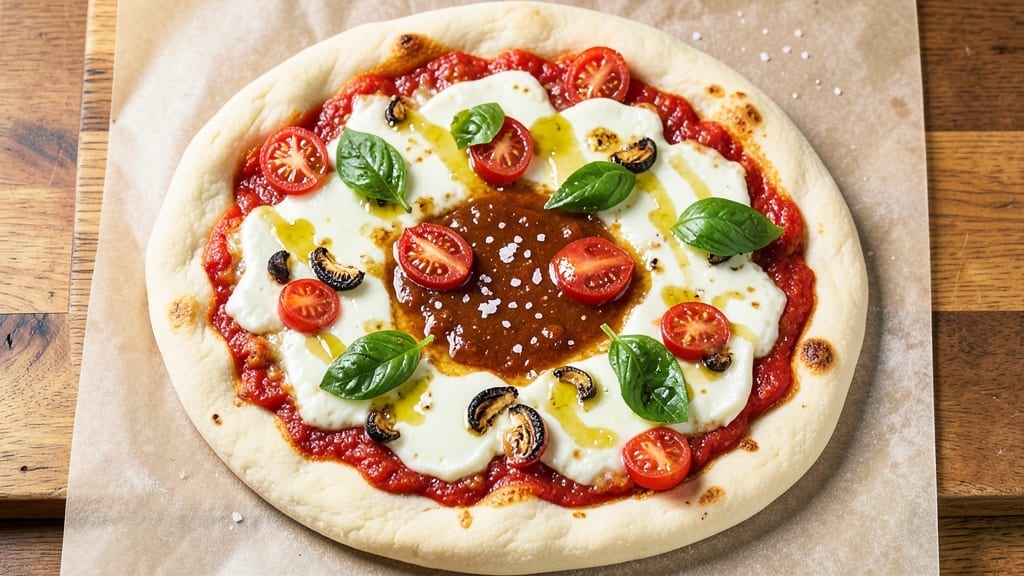
An 18-hour pizza dough recipe transforms your kitchen into a Neapolitan-style pizzeria with just five ingredients and no kneading—just patience. The secret lies in cold fermentation, which develops deep flavor and that coveted chewy, airy crust.
I perfected this method after years of experimenting, and it never fails to impress, even with picky eaters.
This dough requires zero active work—just mix, rest, and let time do the magic. The slow fermentation breaks down gluten for a tender bite while allowing flavors to meld naturally.
Unlike quick doughs, this version develops a complex taste that rivals artisanal pizzas, with a crispy yet pliable crust that holds toppings perfectly.
By the time you pull it from the fridge, you’ll have dough that’s ready to shape in minutes, with a texture so forgiving it’s impossible to mess up.
The result? A pizza with a golden, blistered crust, a light and airy interior, and enough flavor to satisfy even the most discerning pizza lovers.
Whether you’re making classic Margherita or loaded deep-dish, this dough is your foundation. The long fermentation also means you can prep ahead—perfect for game days or spontaneous dinner cravings. Let’s get started on your chewy, restaurant-quality crust.
Ingredients for 18 hour pizza dough
Five ingredients transform your kitchen into a Neapolitan pizzeria overnight with no kneading.
| Ingredient | Amount | Notes |
|---|---|---|
| All-Purpose Flour 🌾 | 3 ½ cups | High-protein preferred for chewy texture |
| Active Dry Yeast 🍞 | ¼ tsp | Ensure freshness with expiration date check |
| Granulated Sugar 🍚 | ¼ tsp | Helps activate yeast |
| Diamond Crystal Kosher Salt 🧂 | 1 ½ tsp | Adjusts to 1 tsp table salt |
| Extra-Virgin Olive Oil 🫒 | ½ cup | High-quality for authentic flavor |
| Warm Water 💧 | 1 ¼ cups | 105-110°F for optimal yeast activation |
| Semolina Flour 🌾 | ¼ cup | For dusting and authentic texture |
The flour is where the magic happens—King Arthur or Caputo Tipo 00 if you want to splurge, but King Arthur or Bob’s Red Mill high-protein works perfectly for home cooks. Yeast is non-negotiable here: grab a fresh packet from Whole Foods or your local market—they usually have it refrigerated for maximum potency. Store-bought yeast in those tiny envelopes? Use it within 3 months of the date on the package. The olive oil should be fruity and peppery—California Olive Ranch or Colavita are my go-tos, but any extra-virgin will do. For the water, room temperature is fine, but if you’re in a hurry, warm it to 105-110°F using a thermometer or just dip your finger in—it should feel like bathwater.
No high-protein flour? Add 1 tbsp vital wheat gluten per cup of flour to mimic the texture. Short on olive oil? Avocado oil or melted coconut oil works in a pinch, though the flavor won’t be quite the same. Yeast not fresh? Double the amount if it’s been sitting in your pantry for months. The sugar can be swapped for honey or maple syrup, but stick to the same amount—it’s just there to wake up the yeast. Semolina is optional but gives that classic rustic pizza crust texture—sub with all-purpose flour if you’re out, though your dough might stick slightly more.
This dough is designed to chill—no exceptions. Wrap it tightly in plastic wrap or a damp towel, then place it in the fridge for the full 18 hours. The longer it ferments, the better it tastes, but 12 hours minimum will still give you great results. If you’re prepping ahead, it keeps in the fridge for up to 3 days—just let it sit at room temperature for 1 hour before shaping. For longer storage, freeze the dough in portions wrapped in plastic for up to 3 months. Thaw overnight in the fridge before using.
Why You’ll Love This Recipe
- Set-and-Forget Magic: I mix the dough, let it rise overnight, and wake up to perfectly developed flavor—no babysitting required. The yeast works its magic while I sleep, so I’m not stuck in the kitchen for hours.
- Crispy-Chewy Gold Standard: That 18-hour ferment? It transforms simple flour, yeast, and olive oil into dough with unmatched texture—crispy edges, pillowy center, and a depth of flavor you won’t get from quick-rise dough. Honestly, it’s the difference between takeout and homemade.
- Weeknight Superstar: I make a batch on Sundays, divide it into portions, and freeze what I don’t use. Need a pizza in a pinch? Just thaw, stretch, and bake—no last-minute dough disasters. (Yes, even on a Tuesday night.)
- Budget-Friendly Luxury: Five ingredients, one bowl, zero waste—this dough costs pennies per serving but tastes like a high-end trattoria. The long rise amplifies flavor without extra cash, and leftovers keep feeding me for days without breaking the bank.
Step-by-step instructions for 18-Hour pizza dough
Here’s how to transform simple ingredients into a chewy, flavorful pizza crust through overnight magic.
Activate the Yeast for Maximum Rise
In a large bowl, combine the 1.25 cups warm water (between 105-110°F) with the 0.25 tsp granulated sugar and 0.25 tsp active dry yeast. Let this sit for 5-10 minutes until you see frothy bubbles forming on the surface. This confirms your yeast is alive and ready to work its magic.
I always check the water temperature first—too hot kills the yeast, too cold makes it sluggish. If no bubbles appear within 10 minutes, your yeast might be expired. The sugar jumpstarts fermentation, creating the perfect environment for flavor development during our long fermentation.
Mix the Dough and Knead Until Smooth
Add the 3.5 cups all-purpose flour and 1.5 tsp Diamond Crystal kosher salt to the yeast mixture. Stir with a wooden spoon until a shaggy dough forms, then pour in the 0.5 cup extra-virgin olive oil. Use your hands to work the oil into the dough until it becomes cohesive and elastic.
Turn the dough onto a lightly floured surface and knead for 8-10 minutes until smooth and springy. You’ll know it’s ready when it passes the windowpane test—stretch a small piece between your fingers until it’s thin enough to see light through. The olive oil creates that signature chewy texture while keeping the crust tender.
First Rise and Overnight Fermentation
Lightly oil a large bowl, place the dough inside, and cover with plastic wrap or a damp kitchen towel. Let it rise at room temperature for 1 hour until it doubles in size. This initial rise develops gluten structure for better texture.
After the first rise, transfer the dough to the refrigerator where it will ferment slowly for 17-18 hours. Cold fermentation enhances flavor complexity and prevents overproofing. I like to place the dough in a covered container to maintain moisture. The dough will rise slowly in the fridge, developing deep, tangy flavors that you won’t get with quick methods.
Shape and Final Proof Before Baking
Remove the dough from the refrigerator and let it sit at room temperature for 1-2 hours to soften slightly. Dust your work surface with 0.25 cup semolina flour—this prevents sticking and adds that signature crust texture. Divide the dough into 4 equal pieces (about 8 ounces each) and shape into balls.
Let the shaped dough rest for 30 minutes covered with a towel. This final proof gives the gluten time to relax, making it easier to stretch without tearing. The semolina creates that beautiful, crispy crust while keeping the interior chewy. Now your dough is ready for your favorite toppings and baking method.
Pro Tips For Making 18 Hour Pizza Dough
- Weigh Your Flour: Skip the scooping—use a kitchen scale for the flour. I learned this the hard way when my dough turned out too stiff or sticky because of inconsistent measuring. For this recipe, aim for 100% hydration (equal parts flour and water by weight), and don’t let those cup measurements fool you.
- Dissolve the Sugar: Mix the granulated sugar directly into the warm water before adding yeast—it dissolves faster and kickstarts fermentation. I used to sprinkle it on top, and the yeast would clump like a lazy lump. A quick stir here saves you from waiting for sluggish yeast later.
- Cold Proof Works: After the initial rise, transfer the dough to the fridge for the remaining 16 hours. The cold slows fermentation, develops flavor, and makes shaping easier—no more sticky, gummy messes. Just pull it out 1–2 hours before shaping to bring it to room temp.
- Oil the Bowl Twice: Coat your mixing bowl with olive oil before adding the dough, then add another light layer after the first rise. This prevents sticking and makes turning the dough out effortless. I used to skip the second coat, and half my dough would tear when I tried to pull it free.
Regional styles of this dish
Neapolitan Roots
This dough traces its lineage to Naples, Italy, where pizza originated in the 18th century as a simple, affordable meal for working-class bakers. Traditional Neapolitan dough uses Tipo 00 flour, but high-protein all-purpose flour works beautifully at home.
The key is the slow fermentation—original recipes relied on wood-fired ovens and ambient kitchen temperatures, which we replicate with our fridge method. The result is that iconic chewy-yet-airy crust with a slightly charred edge. 🌍
New York Style Twist
For a thicker, foldable crust, add ½ cup extra olive oil to the dough and reduce the water by ¼ cup. This creates the signature New York-style dough that can handle heavy toppings like pepperoni and sausage.
Shape into a 12-inch round and stretch it gently—it should be about ½-inch thick at the edges. Bake at 500°F for 10-12 minutes for that classic crispy exterior. The longer fermentation keeps the interior soft even with thick toppings.
Roman-Style Variations
Roman pizza, or pizza al taglio, uses a rectangular dough cut into squares. Divide your dough into 4 equal rectangles (about 10×12 inches each) and proof them on a baking sheet for 30 minutes.
Top with ricotta cheese, cured meats, and fresh herbs before baking at 475°F for 12-15 minutes. The high hydration from the overnight fermentation gives it that signature crispy yet tender texture. Serve at room temperature for the best experience.
California Fusion Approach
Elevate your dough with 1 tablespoon garlic powder and ½ teaspoon dried oregano mixed into the flour before combining. This creates a California-style base perfect for toppings like goat cheese, caramelized onions, and fresh arugula.
The longer fermentation enhances the garlic flavor without overpowering. For extra flair, brush the shaped dough with olive oil and sprinkle with flaky sea salt before baking. 🌶️
Sourdough Hybrid
Want a tangier crust? Replace ½ cup of the all-purpose flour with ½ cup active sourdough starter (fed and bubbly). This adds natural acidity and depth of flavor. The starter should be at its peak—4-6 hours after feeding. The dough will be stickier, so use extra semolina when shaping.
Proof the dough for 20 minutes before baking to prevent overproofing. The result is a complex, slightly sour crust that pairs perfectly with sweet toppings like figs and prosciutto.
Nutrition facts
Frequently asked questions
Can I use this dough for deep-dish pizza?
This 18-hour cold-fermented dough works beautifully for deep-dish, but you’ll need to adjust the shaping. Roll it into a 12-inch round and press it into a greased pan to create a 1-inch-thick crust. The long fermentation makes it sturdy enough to hold heavy toppings like cheese and sausage without collapsing. Bake at 375°F for 25-30 minutes with a lid, then remove the lid for the last 5 minutes to brown the top.
What if my dough doesn’t rise after 18 hours?
If your dough shows little to no rise, your yeast may be inactive. First, check the water temperature—it should be 105-110°F. If the yeast didn’t bubble within 10 minutes when mixed with sugar, it’s likely dead. For a quick fix, add ½ tsp fresh yeast and let it sit at room temperature for 1 hour before refrigerating again. If the dough still doesn’t rise, start fresh with new yeast.
Can I make this dough without olive oil?
Yes, but the texture will differ. Replace the ½ cup olive oil with ¼ cup melted butter or avocado oil, but reduce the water by 2 tablespoons to maintain the right consistency. The dough will be slightly less chewy but still delicious. For a crispier crust, brush the shaped dough with melted butter before baking.
How do I store leftover dough?
Wrap the unused dough tightly in plastic wrap or place it in an airtight container. It keeps in the fridge for up to 3 days—just let it sit at room temperature for 1 hour before shaping. For longer storage, freeze portions for up to 3 months. Thaw overnight in the fridge before using. The cold fermentation actually improves flavor over time!

- 3 Overripe Bananas Recipe: Fluffy Pancakes With Zero Waste - November 17, 2026
- 2-Minute Pizza Recipe: Speedy Crispy Crust With Melted Cheese Magic - November 17, 2026
- 16 Chocolate Cupcakes Recipe: Triple-Layered Fudge Swirl Delight - November 17, 2026