
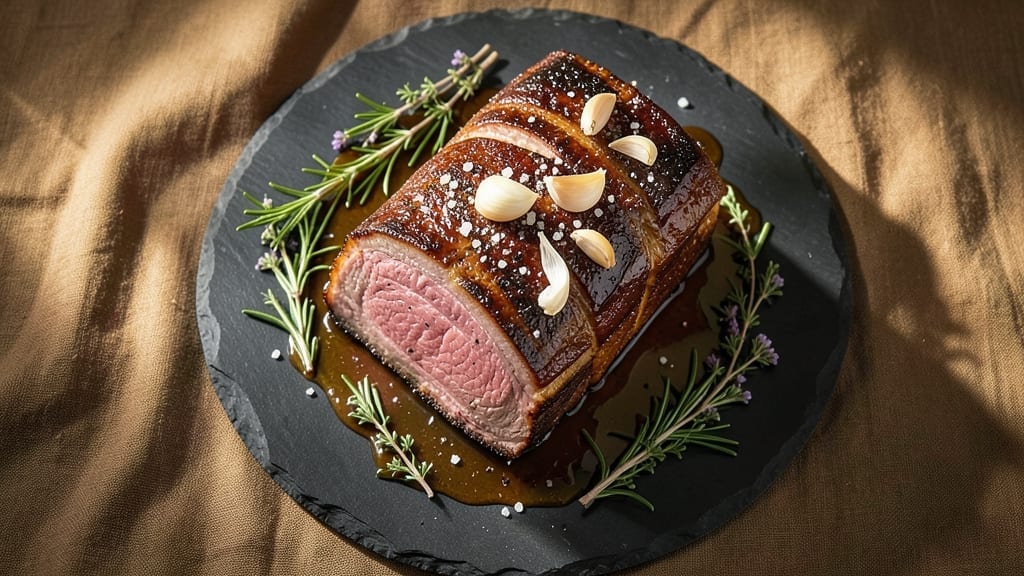
A 20 lb prime rib roast cooked to perfection delivers a showstopping centerpiece with a crispy crust and juicy pink center—the kind of dish that transforms any holiday table into a gourmet experience. The secret lies in precise seasoning, careful temperature control, and letting the meat rest before carving.
I’ve perfected this technique after years of testing, ensuring every slice delivers that ideal balance of texture and flavor. What sets this recipe apart is the foolproof method for achieving a golden-brown crust without drying out the interior.
A dry brine overnight enhances tenderness, while a high-heat sear locks in juices. The roasting process is monitored closely to hit 125°F internal temperature—rare enough for that signature pink but safe for serving. This isn’t just a recipe; it’s a confidence booster for hosting memorable meals.
By the time you serve this masterpiece, your guests will be impressed by the crispy edges and tender, juicy meat that practically melts in their mouths. The aroma alone will have everyone gathering at the table early.
Pair it with classic sides like roasted garlic mashed potatoes or a fresh herb salad to complete the meal. The key to success is patience—letting the prime rib rest for 30 minutes before carving ensures every slice stays succulent.
This recipe delivers restaurant-quality results at home, making it ideal for holidays, celebrations, or when you want to impress. Let’s get cooking!
Ingredients for 20 lb prime rib roast
Twenty pounds of prime rib demands quality ingredients for that signature crispy crust and juicy pink center.
| Ingredient | Amount | Notes |
|---|---|---|
| Prime Rib Roast (Bone-In) 🥩 | 20 lb | Center-cut, USDA Prime grade |
| Kosher Salt 🧂 | 2 cups | Diamond Crystal preferred |
| Freshly Ground Black Pepper 🌶️ | ½ cup | Coarse grind preferred |
| Garlic Cloves 🧄 | 12 whole | Smashed for dry brine |
| Fresh Rosemary 🌿 | ¼ cup | Chopped, stems removed |
| Fresh Thyme 🌿 | ¼ cup | Stems removed, leaves only |
| Unsalted Butter 🧈 | ½ cup | Cold, cut into small cubes |
| Butcher's Twine 🪢 | 1 package | Heavy-duty, 12-inch lengths |
| Vegetable Oil 🫒 | ½ cup | High smoke point for searing |
| Red Wine 🍷 | 1 cup | Bold Cabernet Sauvignon |
| Beef Bone Broth 🍲 | 2 cups | Homemade or high-quality store-bought |
| Balsamic Vinegar 🍶 | 2 tbsp | Aged 12+ months preferred |
| Fresh Parsley 🌿 | ¼ cup | Chopped, for garnish |
| Cornstarch 🌾 | 2 tbsp | For crust enhancement |
The prime rib is non-negotiable—USDA Prime with good marbling is essential for that melt-in-your-mouth texture. Local butchers often carry better cuts than grocery stores, and they’ll trim it to your specifications. Look for a roast with a thick fat cap—this protects the meat during roasting. For the dry brine, Diamond Crystal kosher salt dissolves more easily than table salt, and the coarse grind of freshly ground black pepper adds texture to the crust. The herbs should be vibrant—fresh rosemary and thyme from a farmers market have more flavor than supermarket bundles.
No prime rib? Chuck roast or ribeye steaks can work in a pinch, but the texture won’t be identical. Substitute the red wine with beef broth plus 1 tbsp balsamic vinegar for depth. Using pre-grated Parmesan on your butter? Skip it—it gets clumpy. For the crust, cornstarch mixed with melted butter creates that golden-brown finish without drying the meat. If you’re short on time, skip the dry brine, but your crust will be less crispy. The bone broth can be swapped for water plus 1 tbsp Worcestershire sauce if needed.
Prime rib needs patience—48 hours in the fridge before roasting for proper dry brining. The twine should be removed 30 minutes before serving to let the roast relax. Store any leftovers in an airtight container for 3-4 days—though with this recipe, you’ll likely eat it all. For reheating, low oven (200°F) for 20 minutes keeps it moist. The crust won’t be as crispy, but the meat stays juicy. Portion into 1-inch slices for easy serving.
Why You’ll Love This Recipe
- Salt-and-Garlic Magic: I swear by this combo—just kosher salt and crushed garlic cloves tucked into the seams of that bone-in roast. The crust? Chef’s kiss. It’s not fancy, but it’s foolproof and transforms a simple cut into something restaurant-worthy without the fuss.
- Sunday Dinner Hero: Between us, this is my go-to for gatherings—birthdays, holidays, or just because. The rosemary adds that fresh herb punch, and the bone-in version means extra flavor without extra work. Guests will ask for seconds before dessert even hits the table.
- Leftovers That Don’t Suck: Honestly, I make this on purpose for the leftovers. The meat stays tender for days, and I repurpose it into sliders, hash, or even a loaded baked potato bar. No sad, dry reheats—just rich, juicy bites that taste better the next day.
- One-Pan, Zero Stress: Not the prettiest, but the taste makes up for it. You’re basically setting it, forgetting it, and letting the oven do the heavy lifting. The bone keeps the meat moist, and the peppercorns add just enough bite to cut through the richness. My lazy Sunday mornings thank me.
Step-by-step instructions for perfectly crisped prime rib roast
Mastering this 20-pound prime rib requires precision timing and technique to balance that coveted pink center with an irresistible crust.
Prepare the Dry Brine for Maximum Flavor Penetration
Remove the prime rib from its packaging and place it on a wire rack set over a rimmed baking sheet. This elevation is critical—it allows air to circulate evenly on all sides during the dry brine process. In a small bowl, combine the 2 cups kosher salt, 0.5 cup freshly ground black pepper, 12 whole smashed garlic cloves, 0.25 cup chopped rosemary, and 0.25 cup thyme leaves. The salt should coat the meat generously, working its way into the crevices and along the bone.
Pat the mixture into the meat using your hands, pressing firmly to ensure even distribution. Cover loosely with plastic wrap and refrigerate for 24 hours. This extended dry brine period transforms the meat’s texture and flavor—you’ll notice the surface becomes dry and crusty, which is exactly what we want for that perfect sear later. The garlic and herbs will infuse deeply, creating layers of flavor that no wet brine could match.
Sear the Prime Rib for an Unmatched Crust
Remove the prime rib from the refrigerator and let it sit at room temperature for 2 hours before cooking. Preheat your oven to 375°F and place a roasting rack in a large heavy-duty roasting pan. Heat the 0.5 cup vegetable oil in a large skillet over medium-high heat until shimmering. Using kitchen tongs, carefully sear the prime rib on all sides for 2-3 minutes per side, turning frequently to render the fat and develop a deep mahogany crust.
Transfer the seared prime rib to the prepared roasting rack. This searing step is non-negotiable—it creates the flavor foundation and prevents the meat from steaming during the long cook. The crust should be deep brown with visible caramelization. If you notice any areas not browning evenly, return them to the skillet for an additional 30 seconds until properly seared.
Roast Low and Slow for Perfect Doneness
Place the seared prime rib in the preheated oven and roast for 3 hours. This initial cooking phase builds the foundation for that signature pink center. After 3 hours, check the internal temperature using a meat thermometer inserted into the thickest part of the roast. The temperature should read 125°F—this is where we want to begin our reverse sear technique.
Remove the prime rib from the oven and let it rest on a cutting board for 15 minutes. While it rests, prepare your finishing sauce by combining the 1 cup red wine, 2 cups beef bone broth, and 2 tbsp balsamic vinegar in a saucepan. Bring to a simmer over medium heat and reduce by half until you have a glossy, concentrated sauce. Stir in the 0.5 cup cold unsalted butter, cut into small cubes, until fully incorporated and emulsified.
Finish with a High-Heat Crust and Sauce
Return the prime rib to the oven and increase the temperature to 450°F. Roast for an additional 15-20 minutes until the internal temperature reaches 130°F and the crust is deeply caramelized. This final high-heat phase creates that coveted crispy crust while maintaining the juicy pink center. The crust should be so crisp it crackles when you touch it, with a deep mahogany color that contrasts beautifully with the tender meat beneath.
Remove the prime rib from the oven and let it rest for 30 minutes before carving. During this rest, baste the prime rib with the reduced wine sauce, allowing it to penetrate the meat and create a glossy finish. Sprinkle the 0.25 cup chopped parsley over the top just before serving. The cornstarch can be mixed with 1 tablespoon cold water to create a slurry and added to the sauce at the end if you prefer a slightly thicker consistency for drizzling.
Pro Tips For Making 20 Lb Prime Rib Roast
- CRANK THE HEAT FIRST: Start your prime rib on the hottest setting your oven can handle—500°F or higher—until it’s seared and the crust forms. I learned this the hard way after a dry, pale roast that tasted like it was cooked at a funeral home’s slow cooker. Once the crust is deep brown (about 15 minutes), drop to 325°F for the rest—this locks in flavor and moisture.
- SALT LIKE IT’S 1920: Generously coat that 20-pound beast with kosher salt the night before—yes, even if you’re impatient like me. The salt needs time to penetrate the surface and form that flavorful crust. Skip this, and your prime rib will taste like it’s missing its soul.
- STOP AT 115°F: Pull the prime rib out when the internal temp hits 115°F for medium-rare—no peeking! Overcooking is the silent killer of prime rib, turning it into leather. Let it rest under foil for 5-10 minutes (yes, even if you’re dying to slice), then carve against the grain.
- MINCE THAT GARLIC: Don’t just smash garlic cloves on top—finely mince them and work them into the crust with softened butter before roasting. My grandmother swore by this, and she was right: the garlic blends into the meat instead of sitting like a sad, uncooked garnish. Use 8-10 cloves for a 20-pound roast.
Troubleshooting this dish
Overcooked Crust
If your prime rib crust turns black or leathery instead of golden-brown, it’s likely overcooked. This happens when the high-heat phase exceeds 20 minutes or the oven temperature fluctuates. To fix it, reduce the final sear time to 12-15 minutes at 450°F and monitor closely.
Keep the oven door closed—every time you open it, you lose 10-15°F of heat, causing uneven cooking. 🔥
Uneven Cooking
Uneven doneness (some areas rare, others well-done) usually means the roast wasn’t properly rested before the final sear. Let the prime rib rest 15 minutes after the initial 3-hour roast to equalize internal temperatures.
If you’re still seeing hot spots, rotate the roasting pan halfway through the final high-heat phase to ensure even exposure. A meat thermometer is non-negotiable here—insert it into the thickest part, avoiding fat or bone.
Dry, Stringy Meat
Dry prime rib is almost always caused by skipping the resting period or cutting into it too soon. The 30-minute rest before carving is critical—it allows juices to redistribute.
If you’ve already sliced into it and it’s dry, try this: Place the roast in a 200°F oven for 30 minutes with a cup of beef broth in the pan. The steam will rehydrate the meat slightly.
For future attempts, never exceed 130°F internal temp—this keeps the center juicy while achieving that crispy crust. 💫
Sauce Too Thin
The wine reduction sauce should coat the back of a spoon but not be watery. If yours is too thin, simmer it uncovered over medium-high heat for an extra 5-7 minutes to reduce further.
For a thicker finish, mix 1 tbsp cornstarch with 1 tbsp cold water, then stir it into the sauce at the end. If the sauce separates (butter floating on top), whisk vigorously or use an immersion blender to re-emulsify.
A splash of beef bone broth can also help balance the consistency.
Fat Cap Not Rendering
If the fat cap isn’t browning properly, it’s likely because the prime rib wasn’t seared long enough or the oven wasn’t hot enough. For next time, increase the sear time to 3-4 minutes per side and ensure your oven reaches 450°F before inserting the roast.
If the fat cap is still stubborn, use a kitchen torch for 30 seconds on high heat to crisp it up before serving. Just be careful—fat can flare up unexpectedly! ⚡
Twine Leaving Marks
Butcher’s twine can leave unsightly indentations if left on too long. Remove it 30 minutes before serving to allow the meat to relax and fill in those lines.
If the twine leaves visible marks even after removal, gently press the roast with your hands or use a meat mallet to smooth out the surface before carving. For a cleaner look, use flaxseed twine—it’s edible and dissolves when cooked, leaving no residue.
Nutrition facts
Frequently asked questions
How do I know when my 20 lb prime rib is done?
Use a meat thermometer to check the internal temperature in the thickest part of the roast. For that signature pink center, aim for 125-130°F. The crust should be deep mahogany brown and crispy. Never rely on time alone—prime rib cooks at different rates depending on your oven.
Can I cook a 20 lb prime rib in a regular home oven?
Yes, but you’ll need a large roasting pan and a heavy-duty roasting rack to ensure even heat circulation. A 20 lb roast requires about 3-4 hours at 375°F before the final high-heat sear. If your oven is small, consider cooking it in two batches or using a hotel pan for better heat distribution.
How far in advance can I prepare the dry brine?
You can dry brine the prime rib up to 48 hours ahead of cooking. The longer it brines, the more flavorful and tender the meat becomes. Just store it uncovered on a wire rack in the fridge, and let it sit at room temperature for 2 hours before cooking. The surface will look dry and crusty—that’s perfect for searing!
What’s the best way to carve a 20 lb prime rib?
First, remove the twine and let the roast rest for 30 minutes. Use a sharp carving knife to slice against the grain into 1-inch thick slices. Start at the bone and work outward—this makes each slice easier to handle. For presentation, fan the slices slightly on a platter and drizzle with the reduced wine sauce.
Can I make this recipe with a smaller prime rib?
The technique works for any size, but adjust cooking times accordingly. For example, a 10 lb roast will take about 2-2.5 hours at 375°F before the final sear. Reduce the seasoning and sauce ingredients proportionally—this recipe is designed for a 20 lb roast, but the ratios scale down well.

- 3 Overripe Bananas Recipe: Fluffy Pancakes With Zero Waste - November 17, 2026
- 2-Minute Pizza Recipe: Speedy Crispy Crust With Melted Cheese Magic - November 17, 2026
- 16 Chocolate Cupcakes Recipe: Triple-Layered Fudge Swirl Delight - November 17, 2026