
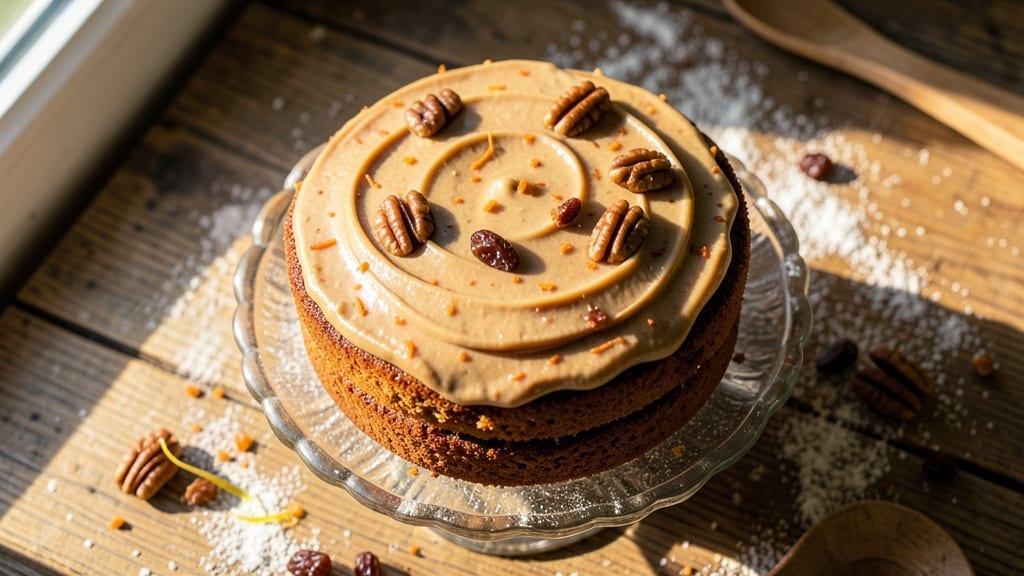
This 1970 carrot cake recipe brings back the nostalgic charm of classic American home baking, where walnut streusel and cream cheese frosting create a dessert that feels like a warm hug from the past.
The secret lies in the perfect balance of moist, spiced carrot cake layered with a crunchy walnut topping and tangy frosting that melts with every bite. I’ve tested this recipe countless times to ensure it delivers that signature 70s texture—tender cake, buttery streusel, and frosting so rich it’s almost sinful.
The recipe starts with a simple yet flavorful cake batter, where carrots, cinnamon, and nutmeg blend seamlessly with warm spices. The walnut streusel, toasted to golden perfection, adds a satisfying crunch that contrasts beautifully with the soft cake layers.
What makes this version special is the cream cheese frosting—smooth, slightly sweet, and just sweet enough to complement the cake without overpowering its natural flavors.
Baking this carrot cake is straightforward, but the magic happens in the details: folding in crushed pineapple for a touch of vintage sweetness, ensuring the streusel is evenly distributed, and letting the frosting set just long enough to hold its shape.
The result is a cake that looks as impressive as it tastes, with layers that reveal themselves in every slice.
Perfect for celebrations, family gatherings, or simply treating yourself to a slice of nostalgia, this carrot cake is a timeless classic that never goes out of style.
Whether you’re baking for a crowd or savoring a single slice, the combination of textures and flavors will transport you back to the 70s—without the polyester.
Ingredients for 1970 carrot cake
Here’s what you’ll need to recreate that nostalgic 70s carrot cake with layers of walnut crunch and tangy frosting.
| Ingredient | Amount | Notes |
|---|---|---|
| All-Purpose Flour 🌾 | 2 ½ cups | Sifted for light texture |
| Granulated Sugar 🍚 | 2 cups | White or light brown |
| Packed Brown Sugar 🍚 | 1 cup | Light or dark variety |
| Vegetable Oil 🫒 | 1 cup | Light or canola oil |
| Large Eggs 🥚 | 4 whole | Room temperature preferred |
| Unsweetened Applesauce 🍎 | ½ cup | For moisture and texture |
| Crushed Pineapple 🍍 | 1 cup | Drained, for vintage sweetness |
| Grated Carrots 🥕 | 3 cups | Finely grated, about 6 medium carrots |
| Walnuts 🌰 | 1 ½ cups | Chopped, for streusel |
| Old-Fashioned Rolled Oats 🍚 | 1 cup | For streusel texture |
| Melted Butter 🧈 | ½ cup | Unsalted, for streusel |
| Ground Cinnamon 🌶️ | 2 tsp | Freshly ground preferred |
| Ground Nutmeg 🌶️ | ½ tsp | Freshly grated preferred |
| Ground Ginger 🌶️ | 1 tsp | For warmth and depth |
| Baking Soda 🧂 | 1 tsp | For leavening |
| Salt 🧂 | ½ tsp | Kosher or sea salt |
| Cream Cheese 🧀 | 8 oz | Room temperature, full-fat |
| Powdered Sugar 🍚 | 3 cups | For frosting sweetness |
| Vanilla Extract 🌿 | 1 tbsp | Pure vanilla preferred |
The walnuts and cream cheese are the stars here—Costco or Trader Joe’s have the best prices for bulk walnuts, but any grocery store works. For the cream cheese, Philadelphia brand is my go-to; it melts beautifully. Carrots should be vibrant orange—organic from the farmers market if possible, but store-bought works too. The oats? Old-fashioned rolled give that perfect crunch, not quick oats. Toast the walnuts and oats together for that signature 70s flavor—don’t skip this step.
No walnuts? Pecans or macadamias work in a pinch, but texture changes. Short on cream cheese? Substitute with equal parts softened butter and powdered sugar, though the tang will be milder. The crushed pineapple adds moisture and that classic 70s sweetness—Dole brand is what I’ve used for years, but any canned pineapple in juice will do. For the frosting, if you’re avoiding dairy, vegan cream cheese works, though the texture is slightly softer. The key is letting the frosting set at room temperature before serving—patience is worth the wait.
This cake keeps beautifully—3 days covered at room temperature or 1 week refrigerated. The frosting can be made a day ahead, but store it separately until ready to assemble. Freeze the unfrosted cake layers for up to 3 months—thaw overnight in the fridge before adding frosting. I always bake an extra layer or two; the leftovers make incredible breakfast toast with a drizzle of the frosting. Wrap tightly with plastic wrap to keep it fresh.
Why You’ll Love This Recipe
- No Fuss Mixing: The brown sugar and oil combo keeps everything sticky-sweet without overworking the batter. Honestly, I just dump everything into one bowl—no creaming, no sifting—just stir until the flour disappears. That’s it. The eggs bind it perfectly, so no dry, crumbly mess here.
- Moisture Locked In: Between the packed brown sugar and vegetable oil, this cake stays tender for days. I’ve had slices from a week ago taste fresher than store-bought—no weird dryness, no gummy texture. The carrots add natural moisture, but the real magic is how the sugars keep it soft without needing extra fat.
- Party or Pantry: Make it for a potluck or bake a single layer for breakfast all week. The recipe scales easily, and the neutral flavor means it pairs with cream cheese frosting, yogurt glaze, or even just a sprinkle of cinnamon sugar. My kids ask for it plain—yes, even over cereal.
- Budget Baking: Flour, sugar, and oil? That’s about as basic as it gets. I’ve made this for under $3 a serving, and the leftovers last forever. Freeze slices for quick breakfasts or snack attacks—no fancy ingredients, just pure, reliable comfort. (Between us, it’s my go-to when I’m broke but still want to feel fancy.)
Step-by-step instructions for 1970 carrot cake
Here’s how to recreate that nostalgic carrot cake with its signature walnut streusel and velvety cream cheese frosting.
Prepare the Cake Batter
Preheat your oven to 350°F and grease two 9-inch round cake pans with vegetable oil, then line the bottoms with parchment paper. In a large mixing bowl, combine the 2.5 cups all-purpose flour, 2 cups granulated sugar, 1 cup packed brown sugar, 1 cup vegetable oil, 4 whole large eggs, 0.5 cup unsweetened applesauce, 1 cup crushed pineapple, and 3 cups grated carrots. Mix on low speed until just combined—don’t overmix or the cake will be dense.
In a separate small bowl, whisk together the 2 teaspoons ground cinnamon, 0.5 teaspoon ground nutmeg, 1 teaspoon ground ginger, 1 teaspoon baking soda, and 0.5 teaspoon salt. Gradually add this dry spice mixture to the wet ingredients while mixing on low speed. The batter should be thick but pourable. Divide the batter evenly between the prepared cake pans and smooth the tops with a spatula.
Make the Walnut Streusel Topping
While the cake bakes, prepare the streusel topping in a medium bowl. Combine the 1.5 cups chopped walnuts, 1 cup old-fashioned rolled oats, and remaining 0.5 cup melted butter. Mix with a fork until the oats are evenly coated. In a small bowl, whisk together 2 tablespoons granulated sugar (reserved from the cake batter) with 1 teaspoon ground cinnamon. Sprinkle this sugar mixture over the walnut-oat mixture and toss to coat thoroughly.
This streusel should resemble coarse crumbs with visible walnut pieces. The texture is key—it should hold its shape when sprinkled but still crumble easily. Sprinkle the streusel evenly over each cake pan, pressing down gently with the back of a spoon to help it adhere.
Bake the Carrot Cakes
Bake the cakes in the preheated oven for 25-30 minutes, or until a toothpick inserted into the center comes out clean. The cakes should be golden brown at the edges, and the tops should spring back when gently pressed. Rotate the pans halfway through baking for even browning. Let the cakes cool in the pans for 10 minutes, then transfer to a wire rack to cool completely.
Here’s the thing—don’t skip the cooling step. The cakes will continue setting as they cool, and trying to frost them while warm will result in a messy, runny frosting. I’ve learned this the hard way, so trust the process and let them cool completely before proceeding.
Prepare the Cream Cheese Frosting
While the cakes cool, make the frosting by beating the 8 ounces cream cheese and 3 cups powdered sugar together in a large mixing bowl using an electric mixer on medium speed until smooth and creamy. Add the 1 tablespoon vanilla extract and continue mixing until fully incorporated. The frosting should be thick but spreadable—if it’s too stiff, add 1 teaspoon milk at a time until it reaches the right consistency.
This is where the magic happens. The cream cheese should be completely smooth with no lumps, and the frosting should have a velvety texture. If you see any lumps, use a spatula to press them against the side of the bowl while mixing continues. The frosting will thicken as it sits, so don’t worry if it looks slightly soft at first.
Assemble and Serve
Once the cakes are completely cool, level the tops if needed with a serrated knife. Place one cake layer on a serving plate and spread a generous layer of the cream cheese frosting over the top. Place the second cake layer on top and spread the remaining frosting over the top and sides, creating a smooth, even surface. Use a spatula to create decorative swirls or waves on the sides if desired.
For that authentic 1970s touch, I like to sprinkle the top with additional chopped walnuts or a light dusting of powdered sugar. Serve the cake at room temperature for the best texture and flavor. Each slice should deliver moist carrot cake with that perfect crunchy streusel topping and sweet, tangy cream cheese frosting.
Pro Tips For Making 1970 Carrot Cake
- Mix Dry Ingredients First: I learned this the hard way—skipping it means lumps of brown sugar hiding in your batter. Whisk flour, baking soda, and spices together before adding wet ingredients, or you’ll end up with a cake that tastes unevenly sweet and dry in spots.
- Grate Carrots Fine: Sounds weird, but it works: tiny, almost paste-like shreds blend better into the batter and keep the texture moist. A box grater with small holes does the job—no food processor needed, and you’ll avoid that “chewy carrot” surprise in every bite.
- Don’t Overmix the Batter: After burning three batches, I finally figured out the oil’s the culprit—too much mixing turns it into glue. Stir just until the flour disappears; the batter should be thick but pourable. Overmixing = dense, tough cake.
- Bake at 325°F (No Higher): My grandmother swore by this, and she was right: 350°F makes the outside burn before the center sets. Stick to 325°F and check for doneness at 45 minutes—insert a toothpick, and if it comes out clean (or with a few moist crumbs), you’re golden.
Make-ahead tips for 1970 carrot cake
Prep Ahead Strategy
Start by baking the carrot cake layers 24 hours in advance—this allows flavors to meld beautifully. Store the cooled layers in an airtight container at room temperature. The frosting can also be made ahead and refrigerated separately for up to 48 hours.
This gives you flexibility to assemble the cake when guests arrive, ensuring that first slice is always perfect. 📅
Freezer-Friendly Layers
For long-term storage, freeze the unfrosted cake layers wrapped tightly in plastic wrap and aluminum foil. They’ll keep for up to 3 months in the freezer. When ready to serve, thaw overnight in the fridge, then let sit at room temperature for 1 hour before frosting.
This prevents condensation from making the frosting soggy. ❄️
Streusel Make-Ahead Tip
Prepare the walnut streusel topping a day ahead and store it in a sealed container at room temperature. The oats and nuts will absorb flavors overnight, intensifying that classic 70s crunch. Just sprinkle it fresh before baking for maximum crispiness. I always double the batch—it’s perfect over pancakes too! 🌰
Frosting Prep Shortcut
Make the cream cheese frosting the night before and refrigerate it. When ready to assemble, let it sit at room temperature for 30-45 minutes to soften. This makes spreading much easier and prevents lumps.
If it thickens too much, add 1 teaspoon milk at a time until it reaches a smooth, spreadable consistency. 🧀
Assemble Like a Pro
Level the cake layers with a serrated knife right before frosting for clean slices. Use a bench scraper to smooth the frosting between layers—it creates a professional finish.
For extra flair, pipe decorative swirls with a piping bag and large round tip. This step takes just 10 minutes but makes all the difference! ✨
Serving Suggestions
Serve the cake at room temperature for the best texture. For a vintage touch, dust the top with powdered sugar or sprinkle extra walnuts. Pair with a cup of chai tea or coffee to complement the warm spices.
The cake keeps well for 3 days covered at room temperature or 1 week refrigerated. 🍵
Nutrition facts
Frequently asked questions
Why does this 1970s carrot cake use crushed pineapple?
Crushed pineapple was a popular addition in vintage carrot cakes—it adds moisture and a subtle sweetness that balances the warm spices. The 70s were all about bold flavors, and pineapple brings that nostalgic touch while keeping the cake tender. Plus, it helps prevent dryness in the dense batter.
Can I substitute walnuts in the streusel?
Yes! If you’re allergic or prefer other nuts, try pecans or macadamias for a similar texture. For a nut-free option, use sunflower seeds or chopped dried apricots. Just toast them first to enhance flavor—this step is key for that classic crunch.
How do I fix cracked frosting on my cake?
If your frosting cracks while setting, don’t panic! Use a spatula to gently smooth it out, then chill the cake for 15 minutes to help it firm up. For extra stability, add 1 teaspoon cornstarch to the frosting mixture. The cake will still taste delicious—it’s all about presentation!
Can I make this cake gluten-free?
Replace the all-purpose flour with a 1:1 gluten-free baking flour blend (like Bob’s Red Mill). Add 1 teaspoon xanthan gum to improve texture. The cake will be slightly denser but still moist. For the streusel, use certified gluten-free oats.
What’s the secret to perfect cream cheese frosting?
Let your cream cheese come to room temperature first—this prevents lumps. Beat it for 2-3 minutes until completely smooth, then gradually add powdered sugar. For extra richness, add 1 tablespoon lemon juice to brighten the flavor. The frosting should be thick but spreadable—like soft butter.

- 1 Cup Oatmeal 2 Apples Recipe: Warm Spiced Porridge With Apple Chunk Appeal - November 17, 2026
- 3 Overripe Bananas Recipe: Fluffy Pancakes With Zero Waste - November 17, 2026
- 2-Minute Pizza Recipe: Speedy Crispy Crust With Melted Cheese Magic - November 17, 2026