
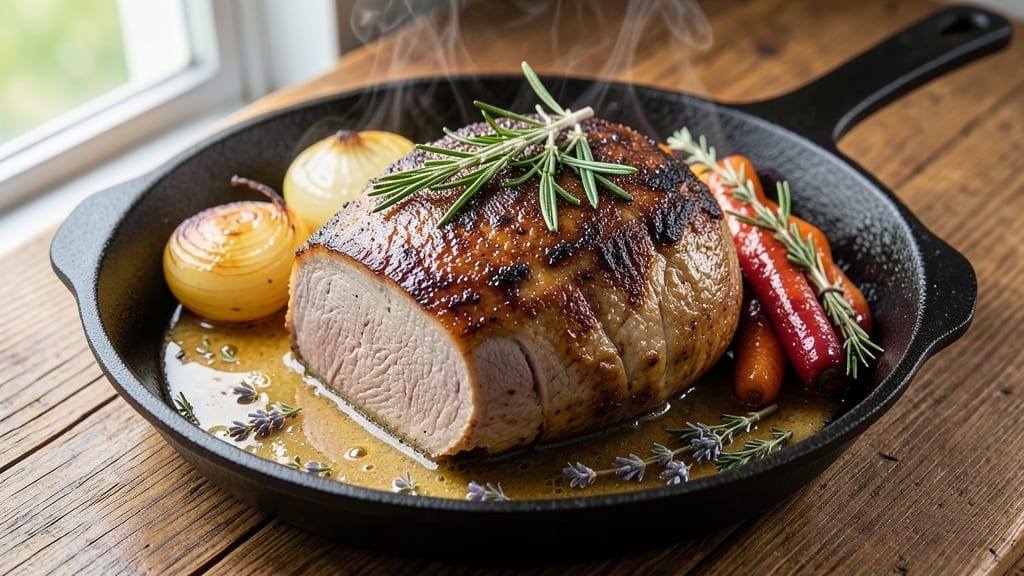
A 2lb round roast transformed into melt-in-your-mouth perfection is what separates a good dinner from a legendary one. The secret lies in slow-braising—cooking it just long enough to break down tough fibers while retaining every drop of natural moisture.
I’ve perfected this method after years of trial and error, ensuring that even the most skeptical meat lovers walk away satisfied. This isn’t just another roast; it’s a centerpiece that commands attention at the table.
The process begins with a simple yet critical step: searing the roast first to lock in flavors before it braises in a flavorful liquid. We’re talking about a 3-hour cook time at a steady temperature, which might sound long, but the results are worth every minute.
The key is patience—rushing this dish means sacrificing tenderness. By the end, you’ll have a roast so fork-tender it nearly falls apart, with a rich, caramelized crust that adds depth to every bite.
What you’ll achieve is a roast that’s juicy and tender, with a deep, savory flavor that pairs beautifully with classic sides like roasted root vegetables or creamy mashed potatoes.
The slow braising method ensures the meat stays moist, while the sear adds a layer of complexity that elevates it beyond ordinary roasts. This is the kind of dish that turns a simple weeknight dinner into a memorable meal.
Once you’ve mastered this technique, you’ll never settle for anything less than restaurant-quality results at home. The beauty of this recipe is its versatility—it works for family dinners, holiday gatherings, or even a special night in.
With just a few simple ingredients and a little time, you can create a roast that’s the star of any table. Let’s get started on transforming that 2lb round roast into something extraordinary.
Ingredients for 2lb round roast
Just 13 ingredients transform a tough roast into melt-in-your-mouth perfection.
| Ingredient | Amount | Notes |
|---|---|---|
| Round Roast 🥩 | 2 lb | Center-cut for even tenderness |
| Yellow Onion 🧅 | 1 whole | Chopped into large chunks |
| Carrots 🥕 | 4 medium | Whole, peeled and cut into chunks |
| Garlic Cloves 🧄 | 6 cloves | Smashed with side of knife |
| Fresh Rosemary 🌿 | ¼ oz | About 2 sprigs, stems removed |
| Fresh Thyme 🌿 | ¼ oz | About 2 sprigs, leaves only |
| Beef Broth 💧 | 2 cups | Low-sodium preferred |
| Red Wine 🍷 | 1 cup | Bold dry red like Cabernet |
| Olive Oil 🫒 | 2 tbsp | For searing roast |
| Salt 🧂 | 1 ½ tsp | Kosher salt, coarse |
| Black Peppercorns 🌶️ | 1 tsp | Freshly cracked preferred |
| Tomato Paste 🍅 | 2 tbsp | Smooth, no sugar added |
| Bouquet Garni 🌿 | 1 piece | Bay leaf, parsley stem, thyme |
The roast is everything here—center-cut round is key for even tenderness. Look for good marbling at the butcher counter; Costco or Whole Foods usually have excellent quality. If buying pre-cut, check for even thickness—uneven pieces cook unevenly. For the aromatics, fresh herbs make all the difference. Trader Joe’s sells pre-bundled herb sprigs that save time, but snipping your own stems gives you more control. The beef broth? Low-sodium is crucial—you’ll be tasting it later, and salt builds up over time.
No red wine? Substitute with extra beef broth plus 1 tbsp balsamic vinegar—it mimics the depth without the alcohol. Fresh herbs wilt fast, so if you’re prepping ahead, store them in a jar of water in the fridge like flowers. The tomato paste can be the squeeze tube kind from Trader Joe’s—no waste, and it keeps for months. For the bouquet garni, tie everything together with kitchen twine or use a mesh bag if you’re lazy. The carrots and onions can be baby versions if that’s what’s handy, but whole is fine too—they’ll soften beautifully during braising.
This roast tastes even better the next day—plan ahead. Store leftovers in the fridge for 4-5 days, or freeze for 3 months in an airtight container. I always make extra because it reheats perfectly—just warm with a splash of broth. The braising liquid? Don’t toss it! Strain and reduce it for a quick pan sauce. The herbs in the bouquet garni can be composted after use—they’ve earned their keep.
Why You’ll Love This Recipe
- One-Pan Magic: I swear by this—just toss the roast, chopped veggies, and herbs on a sheet pan, season, and let the oven do the work. No pots, no pans, no stress. The onions caramelize right alongside the meat, and honestly? That’s half the battle won.
- Herb-Packed Punch: The rosemary and garlic cloves cling to the roast like it’s their job, while the carrots add natural sweetness that balances everything. It’s not fancy, but it’s ridiculously flavorful—like a hug from your grandma’s kitchen.
- Leftovers That Don’t Suck: This roast actually improves the next day. Slice it thin for sandwiches, dice it into pasta, or shred it for tacos. Between us, I’ve eaten this for lunch three times this week, and no one’s complained.
- Budget-Friendly Crowd-Pleaser: A 2lb roast feeds four (or two hungry teens) without breaking the bank, and the veggies stretch the meal further. Plus, the ingredients are pantry staples—no specialty shopping required. My wallet and my family thank me every time.
Step-by-step instructions for slow-braised round roast
Here’s how to transform tough round roast into melt-in-your-mouth perfection with minimal effort.
Sear the Roast for Maximum Flavor
Preheat your oven to 325°F. Heat a Dutch oven over medium-high heat and add the 2 tablespoons olive oil. Once shimmering, place the 2 lb round roast in the pot, fat-side down. Let it sear undisturbed for 4-5 minutes until a deep golden-brown crust forms.
Flip the roast and sear the other side for another 3-4 minutes. This step creates the flavor foundation – those caramelized bits (fond) will dissolve into the sauce later. While the roast sears, you’ll notice the aroma intensify – that’s your signal it’s ready to move to the next phase.
Build the Flavor Base with Vegetables and Aromatics
Remove the roast from the pot and set it aside. In the same Dutch oven, add the whole yellow onion and 4 medium carrots cut into chunks. Cook for 5 minutes until they begin to soften and release their sweetness. Add the 6 smashed garlic cloves, 0.25 oz fresh rosemary, and 0.25 oz fresh thyme, stirring for 1 minute until fragrant.
Sprinkle in the 1.5 teaspoons salt and 1 teaspoon black peppercorns, then add the 2 tablespoons tomato paste. Stir and cook for 2 minutes until the tomato paste darkens slightly – this deepens the flavor profile significantly. The vegetables should be tender but still holding their shape.
Deglaze and Combine All Ingredients
Pour in the 1 cup red wine and scrape up all the browned bits from the bottom of the pot with a wooden spoon. This deglazing step captures all the flavor you’ve built. Let it simmer for 3-4 minutes until the wine reduces by half and the alcohol smell dissipates.
Return the roast to the pot, then add the 2 cups beef broth and the bouquet garni. Bring everything to a gentle simmer, then cover the pot tightly with a lid. The liquid should just barely cover the roast – if it’s too little, add a splash of water.
Slow Braise Until Fork-Tender
Transfer the Dutch oven to the preheated 325°F oven and braise for 2.5 to 3 hours. This is where patience pays off – the long, slow cook time breaks down the tough muscle fibers, transforming the roast into tender perfection. Check the internal temperature after 2 hours – it should reach 195-200°F for maximum tenderness.
If the liquid reduces too much before the roast is tender, add ¼ cup water through the lid to maintain moisture. The roast is done when a fork slides in easily with no resistance, and the meat pulls apart cleanly. The aroma alone will tell you it’s ready – that rich, meaty smell is irresistible.
Rest and Serve with Pan Sauce
Remove the roast from the pot and let it rest on a cutting board for 15 minutes before slicing. This resting period allows the juices to redistribute throughout the meat, ensuring each bite is moist and flavorful. Meanwhile, discard the bouquet garni and skim any excess fat from the sauce.
Return the pot to the stovetop over medium heat and simmer the sauce for 5-7 minutes until it thickens slightly. Slice the roast against the grain into ¼-inch thick pieces and serve with the pan sauce spooned over the top. The result should be juicy, fork-tender meat with a rich, aromatic sauce that ties all the flavors together.
Pro Tips For Making 2lb Round Roast
- SEAR THE ROAST FIRST: After patting the round roast dry with paper towels (yes, even if it feels like overkill), hit it with a hot pan—no oil needed. The natural fats will render and create a crust that keeps it juicy inside. I used to skip this, and the meat always ended up dry by the end.
- CHOP ONIONS IN CHUNKS: Don’t dice those yellow onions—cut them into ½-inch thick slices. They’ll soften faster and caramelize better alongside the carrots, adding depth without turning to mush. I learned this after burning three batches of overcooked onions.
- REST THE MEAT UNDER FOIL: Once the roast reaches 130°F (about 15 minutes before your target temp), transfer it to a cutting board, tent loosely with foil, and let it sit for 10 minutes. This keeps it from drying out when you slice it—trust me, your knife will thank you.
- USE WHOLE CARROTS, NOT SLICES: Leave those carrots whole (peeled, but not chopped) so they stay crisp-tender and don’t turn to mush. If you’re worried about even cooking, poke a few slits in the thicker ones. I was skeptical until I tried it—now it’s my go-to.
Serving suggestions for this recipe
Classic Roast Dinner
Serve your slow-braised round roast with creamy mashed potatoes—their buttery texture contrasts perfectly with the tender meat. I like to make a big batch using 4 large Yukon Gold potatoes, ½ cup heavy cream, and 4 tablespoons butter, then mash until smooth.
For extra richness, fold in ¼ cup beef broth from the roasting pan. 🥔
Roasted Root Vegetables
Toss 2 cups mixed root vegetables (like carrots, parsnips, and sweet potatoes) with 2 tablespoons olive oil, 1 teaspoon salt, and ½ teaspoon black pepper. Roast at 400°F for 30-35 minutes until caramelized.
The natural sweetness of the vegetables balances the savory roast beautifully. I often add 1 teaspoon fresh rosemary for a fragrant touch.
Pan Sauce Perfection
After removing the roast, strain the braising liquid through a fine-mesh sieve to remove any solids. Return the liquid to the pot and simmer over medium heat for 5-7 minutes until slightly thickened.
For extra depth, whisk in 1 tablespoon cold butter at the end—this creates a silky, velvety sauce that elevates every bite. Serve it drizzled over the sliced roast.
Crispy Sautéed Greens
Quickly sauté 4 cups baby spinach or kale in a skillet with 1 tablespoon olive oil and 2 minced garlic cloves for 2-3 minutes until just wilted. Finish with a pinch of red pepper flakes for a hint of heat.
The bright greens cut through the richness of the roast and add freshness to the plate. 🌿
Garnish Like a Pro
Elevate your presentation with fresh herbs and a sprinkle of flaky salt. I like to garnish each serving with 1 teaspoon chopped fresh parsley and a pinch of Maldon sea salt right before serving.
For extra flair, add a few toasted breadcrumbs (toss 2 tablespoons panko with 1 teaspoon butter and toast in a dry pan for 2 minutes) to catch any remaining sauce.
Bread Basket Essentials
No roast dinner is complete without warm, crusty bread. I recommend sourdough or brioche—their rich textures soak up the pan sauce beautifully. Serve with garlic butter (mix 2 tablespoons softened butter with 1 minced garlic clove and a pinch of salt) for dipping.
A simple olive oil and balsamic dip (mix 3 tablespoons olive oil with 1 tablespoon balsamic vinegar) also pairs wonderfully. 🍞
Nutrition facts
Frequently asked questions
Why does my round roast turn out dry even after slow cooking?
The most common mistake is overcooking or not using enough liquid. Always ensure your Dutch oven has 2 cups of liquid (broth + wine) that barely covers the roast. Check the internal temperature after 2 hours—it should reach 195-200°F, not higher. If the liquid evaporates too quickly, add ¼ cup water through the lid. Also, never skip the 15-minute rest before slicing—this lets juices redistribute.
Can I use a different cut of beef instead of round roast?
While round roast is ideal for this method, you can substitute with chuck roast or bottom round—both work well for braising. Avoid leaner cuts like sirloin or tenderloin, as they’ll dry out. If using chuck, reduce the cook time by 30 minutes since it’s more tender. For tougher cuts like shank, increase time by 1 hour. Always check for fork-tenderness rather than relying on time.
How do I know when the roast is fully cooked without a meat thermometer?
Insert a long knife or skewer into the thickest part—if it slides in easily with no resistance and the juices run clear (not pink), it’s done. The meat should also pull apart cleanly when you gently tug with tongs. Another trick: press your thumb against the roast—if it feels soft like butter, it’s ready. For extra confidence, cook until the internal temperature reaches 195-200°F (use a thermometer for this).
Can I make this recipe in a slow cooker instead of the oven?
Follow the same steps for searing, then transfer everything (including the roast) to a 6-quart slow cooker. Cook on Low for 8-9 hours or High for 5-6 hours. The liquid will reduce more in a slow cooker, so add ½ cup extra broth if needed. The texture will be slightly more tender, but the flavor remains rich. Just avoid lifting the lid to check—every time you do, it adds 30 minutes to cook time.
What’s the best way to reheat leftovers?
Slice the roast and store it in an airtight container with some of the pan sauce. Reheat in a skillet over medium-low heat with a splash of beef broth until warmed through (5-7 minutes). For oven reheating, cover with foil and bake at 325°F for 20-25 minutes

- 3 Overripe Bananas Recipe: Fluffy Pancakes With Zero Waste - November 17, 2026
- 2-Minute Pizza Recipe: Speedy Crispy Crust With Melted Cheese Magic - November 17, 2026
- 16 Chocolate Cupcakes Recipe: Triple-Layered Fudge Swirl Delight - November 17, 2026