
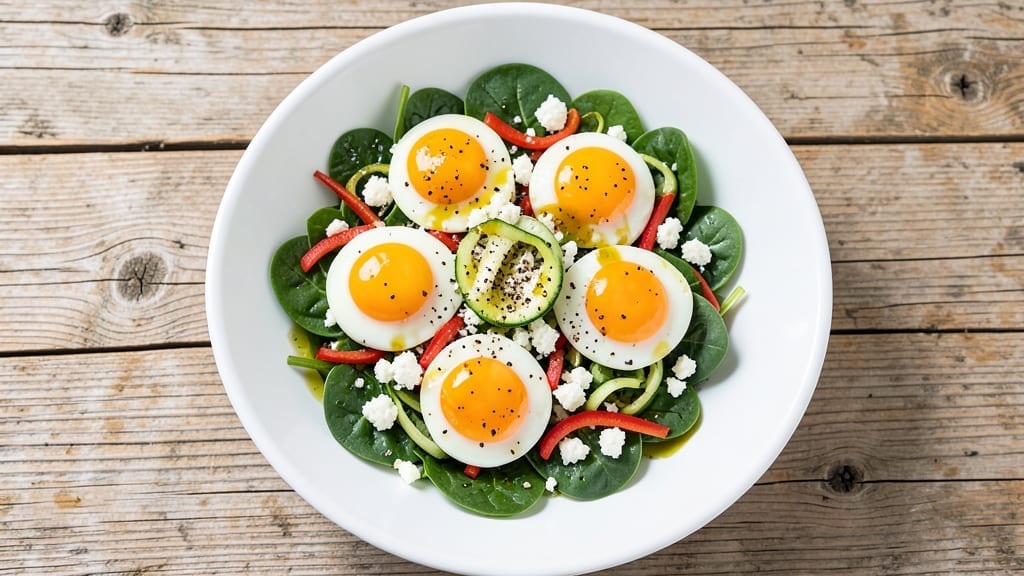
The 3-day egg diet delivers rapid weight loss with protein-packed meals that keep you full while cutting calories efficiently. This structured plan focuses on eggs as the primary protein source, paired with fiber-rich vegetables and healthy fats to stabilize energy.
I designed it to be vegetarian-friendly, with no meat or fish required, while ensuring balanced nutrition throughout the day.
Each day follows a simple framework: high-protein breakfasts (eggs with veggies), light lunches (egg salads or omelets), and dinner options that include eggs with lean sides. Prep ahead to save time—hard-boiled eggs, chopped veggies, and pre-portioned ingredients streamline the process.
The plan prioritizes low-calorie, high-satiety meals to curb cravings while promoting fat loss.
You’ll enjoy meals like scrambled eggs with spinach and feta, egg-white omelets with mushrooms, and egg-based soups that stay under 500 calories per meal. The diet emphasizes vegetarian protein (eggs, tofu, Greek yogurt) and fiber (leafy greens, zucchini, bell peppers) to support digestion and metabolism.
By the end of three days, you’ll notice reduced bloating and increased energy—without feeling deprived.
For best results, drink plenty of water (at least 8 cups daily) and avoid processed sugars or refined carbs. The plan includes snack options (like hard-boiled eggs or Greek yogurt) to prevent hunger pangs. While designed for short-term weight loss, it’s best paired with a sustainable, long-term nutrition plan afterward.
Ingredients for 3 day egg diet
Six eggs, fresh veggies, and a sprinkle of feta—this breakfast packs protein and fiber for lasting energy.
| Ingredient | Amount | Notes |
|---|---|---|
| Large Eggs 🥚 | 6 whole | Pasture-raised for better nutrition |
| Baby Spinach 🌿 | 2 cups | Fresh, loosely packed |
| Feta Cheese 🧀 | ½ cup | Crumbled, vegetarian-friendly |
| Extra-Virgin Olive Oil 🫒 | 2 tbsp | Cold-pressed, fruity variety |
| Red Bell Pepper 🌶️ | ½ cup | Diced, fresh or jarred |
| Zucchini 🥒 | 1 medium | Julienned, skin removed |
| Zucchini 🥒 | 1 whole | Medium size, organic preferred |
| Greek Yogurt 🥛 | ½ cup | Non-fat, plain variety |
| Lemon Juice 🍋 | 1 tbsp | Freshly squeezed |
| Garlic Cloves 🧄 | 2 cloves | Minced, fresh preferred |
| Salt 🧂 | ½ tsp | Diamond Crystal kosher |
| Black Pepper 🌶️ | ¼ tsp | Freshly ground |
| Cucumber 🥒 | ½ cup | Diced, peeled |
| Red Onion 🧅 | ¼ cup | Thinly sliced |
| Fresh Dill 🌿 | 2 tbsp | Chopped, fresh preferred |
The eggs are the star here, so pasture-raised or organic makes all the difference—they’re richer in nutrients and taste better. Trader Joe’s and Whole Foods carry good options, but any high-quality eggs work. If you’re watching calories, stick with whites for the base and add yolks to the feta mix. The spinach should be fresh and vibrant—wilted leaves mean it’s past its prime. For the zucchini, medium-sized works best—they’re tender enough to julienne without being watery. If you’re prepping ahead, store chopped veggies in airtight containers with a paper towel to absorb moisture.
No feta? Vegan feta or crumbled goat cheese works just as well—just check the label for vegetarian certification. Fresh dill is ideal, but dried dill at one-third the amount gets you close. The red bell pepper can be swapped for jalapeño or banana pepper if you want a little kick. For extra protein, stir in tofu crumbles or chickpeas when cooking. If you’re short on time, jarred bell peppers or frozen spinach (thawed and drained) are solid shortcuts. The Greek yogurt adds creaminess without heavy calories—opt for non-fat to keep it light.
This breakfast keeps beautifully in the fridge for 3 days if stored in airtight containers. Portion it into single-serving containers for grab-and-go mornings. The veggies stay crispest if you add lemon juice right before storing. For meal prep, hard-boil 4 eggs ahead—they’ll last 1 week in the fridge. If you’re freezing, focus on the egg base without the fresh veggies—they’ll get mushy when thawed. Reheat gently in the microwave or on the stovetop to keep everything tender.
Why You’ll Love This Recipe
- No-Fuss Assembly: I swear, this takes less time than waiting for the microwave to ding. Just fry the eggs, toss in the spinach and bell pepper while they’re still sizzling, and crumble that feta on top—done. No chopping marathons, no fancy techniques, just hands-on for 10 minutes.
- Salty-Sweet Crunch: That charred red bell pepper? Chef’s kiss. The eggs stay runny in the center (trust me, that’s the magic), the spinach wilts into a salty, olive-oil-soaked blanket, and the feta adds this briny tang that makes every bite feel like a little reward. It’s the kind of dish where you’ll pause mid-bite just to appreciate it.
- Lunchbox Hero: Between us, this is my secret weapon for packed lunches. Portion the eggs and veggies into containers the night before, drizzle with olive oil, and grab it cold or reheated—it’s still hearty and satisfying. Honestly, my coworkers think I’m a gourmet chef when they see their lunch.
- Budget Breakthrough: Eggs, spinach, and feta stretch farther than you’d think, especially when you bulk it up with bell peppers. I made this for three days straight and still had enough for leftovers—no wasted ingredients, no last-minute grocery runs. Plus, the olive oil makes it feel fancy without the price tag.
Step-by-step instructions for protein-packed egg diet breakfast
Here’s how to assemble this nutrient-dense meal in under 15 minutes—perfect for kickstarting your metabolism.
Prepare the Egg Base
Crack the 6 whole large eggs into a bowl and whisk vigorously with the 0.5 teaspoon salt and 0.25 teaspoon black pepper until the yolks and whites are fully combined. I like to use a fork for this—it creates just enough air to give the finished eggs a lighter texture. The eggs should be completely uniform in color with no visible streaks.
In a separate small bowl, mix the 0.5 cup Greek yogurt with the 1 tablespoon lemon juice and 2 tablespoons chopped fresh dill. This tangy yogurt mixture will add a bright contrast to the rich eggs. Set both mixtures aside while you prepare the vegetables—keeping them separate prevents the yogurt from curdling when combined with the hot eggs later.
Sauté the Vegetable Mixture
Heat the 2 tablespoons extra-virgin olive oil in a large nonstick skillet over medium heat until shimmering. Add the 2 minced garlic cloves and sauté for 30 seconds until fragrant—this prevents the garlic from burning while still releasing its full flavor. Add the 0.5 cup diced red bell pepper, 0.5 cup diced cucumber, and 0.25 cup thinly sliced red onion, cooking for 3-4 minutes until the vegetables soften slightly but still maintain their distinct colors.
Remove the skillet from heat and stir in the 2 cups loosely packed baby spinach. The residual heat will just barely wilt the spinach—you want it to stay vibrant green, not mushy. Transfer this vegetable mixture to a large serving platter and set aside. This step ensures your vegetables are perfectly cooked without losing their crispness or nutritional value.
Cook the Eggs to Perfection
Return the skillet to medium heat and carefully pour in the whisked eggs. Let them sit undisturbed for 2-3 minutes until the edges begin to set but the centers remain slightly runny. This creates that signature silky texture we want. Gently tilt the pan to let any uncooked egg flow toward the edges, then use a spatula to fold the eggs over themselves, creating soft, fluffy curds.
Cook for another 1-2 minutes until the eggs are just set but still slightly moist. The key here is speed—overcooking turns eggs rubbery. Remove from heat immediately when they reach this stage. Here’s the thing—this method gives you that perfect balance between firm edges and creamy centers that makes this dish so satisfying.
Assemble the Protein-Packed Breakfast
Spread the cooked egg mixture evenly over the sautéed vegetable base on your platter. Using the back of a spoon, gently swirl the eggs into the vegetables, creating a marbled effect that makes each bite visually appealing and packed with nutrients. The eggs should completely cover the vegetables, creating a cohesive dish that’s both hearty and light.
Drizzle the yogurt-dill mixture evenly over the eggs, allowing it to pool slightly in the crevices. The acidity from the lemon juice will cut through the richness of the eggs, while the dill adds a fresh herbal note. Sprinkle with the 0.5 cup crumbled feta cheese just before serving—this keeps it from melting completely into the eggs, preserving its salty, tangy texture.
Serve Immediately for Maximum Freshness
Divide the dish into 4 equal portions and serve immediately while the eggs are still warm. The contrast between the warm eggs, cool vegetables, and tangy yogurt creates a perfect balance of temperatures and flavors. I always recommend serving this with a side of sliced zucchini—just julienne the 1 medium zucchini and lightly toss with a pinch of salt and a drizzle of olive oil to maintain the diet’s fresh, low-calorie focus.
Each serving delivers a perfect balance of protein from the eggs and Greek yogurt, fiber from the vegetables, and healthy fats from the olive oil. The lemon juice and fresh dill not only enhance flavor but also support digestion, making this an ideal breakfast for rapid weight loss while keeping you satisfied for hours.
Pro Tips For Making 3 Day Egg Diet
- Crack Eggs Cold: I learned this the hard way—room-temperature eggs slide out of shells messily when you’re scrambling. Pop them straight from the fridge into a bowl first, then whisk. The cold yolks will emulsify better, giving you that silky texture the 3-day diet relies on.
- Salt Spinach First: Baby spinach wilts into a sad pile if you toss it raw into the pan. Sprinkle it with a pinch of salt and let it sit for 2 minutes before cooking—this draws out moisture so it crisps up properly. Works even better if you massage it with your hands like you’re kneading dough.
- Skip Pre-Cut Bell Pepper: Those store-bought pepper strips? Overpriced and uneven. Dice your own red bell pepper into ¼-inch pieces—it cooks faster and adds texture. Toss it in the pan for 30 seconds before the spinach so it softens just enough to balance the feta’s saltiness.
- Use Crumbled Feta: I used to slice feta like cheese on a sandwich, and it’d melt into a greasy puddle. Now I crumble it by hand over the finished dish—it stays chunky, distributes evenly, and doesn’t turn the eggs into a cheese sauce. (Yes, it’s more work, but the texture matters.)
Common mistakes when making perfect results
Overcooking Eggs
Eggs are delicate, and overcooking turns them rubbery or dry. I’ve seen this happen when people keep them on heat too long after the edges set. For this diet, aim for eggs that are just set but still slightly runny in the center—this keeps them creamy.
Remove them from heat immediately when they reach this stage. A 1-2 minute cook time after the edges firm up is ideal. 🔥
Skipping the Yogurt Mixture
The yogurt-dill mixture isn’t just for flavor—it adds protein and tanginess that balances the richness of the eggs. If you skip it, you’ll miss out on the bright contrast that keeps the dish fresh and satisfying.
Mix the 0.5 cup Greek yogurt with lemon juice and dill before combining with the eggs to avoid curdling. Trust me, this step makes all the difference!
Using Old or Wilted Veggies
Fresh, crisp veggies are key for both nutrition and texture. Wilted spinach or soggy bell peppers ruin the dish’s freshness. Buy spinach the day you plan to use it and store it in a sealed container with a paper towel to absorb moisture.
For bell peppers, choose firm ones and slice them just before cooking. Prepping veggies the night before works, but add lemon juice to keep them vibrant. 🌿
Ignoring Portion Control
This diet relies on precise portions to keep calories in check. One common mistake is overserving the eggs or veggies, which can easily add 100+ extra calories per serving. Use a food scale or measuring cups to divide the dish into 4 equal portions before serving.
I always weigh my eggs (about 1.5 oz per egg) to stay accurate.
Not Prepping Ahead
Rushing in the morning leads to mistakes like overcooked eggs or uneven veggies. Prep the night before by chopping veggies, measuring ingredients, and even whisking the eggs in advance.
Store everything in airtight containers in the fridge. On the day of, just reheat the skillet and cook—no stress. This diet is all about efficiency! ⏰
Overlooking Hydration
The 3-day egg diet works best with plenty of water to flush out toxins and curb cravings. Skipping hydration leads to fatigue or headaches. Aim for 8 cups daily, and add lemon slices to your water for flavor.
I also recommend herbal teas—they’re calorie-free and help with digestion. Staying hydrated keeps energy levels steady and prevents overeating.
Nutrition facts
Frequently asked questions
Can I do this 3-day egg diet if I’m vegan?
This plan isn’t vegan-friendly because it uses eggs and Greek yogurt. For a vegan alternative, replace eggs with tofu scramble (using firm tofu + turmeric) and swap feta for vegan cheese. Use plant-based yogurt and ensure all ingredients are certified vegan. The protein structure remains similar but with plant-based sources.
How many calories does each day’s meals total?
Each day’s meals average 1,200-1,400 calories, with 80-100g protein per day. The breakfast alone provides 350-400 calories with 25g protein from eggs and yogurt. Lunch and dinner are similarly balanced, with each meal under 500 calories while keeping carbs low and fiber high.
What if I get hungry between meals?
Plan for 2-3 snacks per day to stay satisfied: hard-boiled eggs (2 per serving), cucumber slices with hummus, or a small Greek yogurt with lemon. These keep you full without breaking the diet’s calorie goals. Drinking water or herbal tea also helps curb hunger—aim for 8 cups daily to support metabolism.
Can I exercise while on this diet?
Light exercise like walking or yoga is fine, but avoid intense workouts. The diet provides enough protein for muscle maintenance but is calorie-restricted for rapid weight loss. If you exercise, focus on 30-minute sessions and prioritize hydration. Listen to your body—fatigue is common in the first 24 hours as your system adjusts.
What should I eat after the 3-day diet?
Transition gradually to avoid rebound weight gain. Start with balanced meals: lean protein (chicken, fish, or tofu), complex carbs (quinoa, sweet potatoes), and veggies. Avoid processed foods or sugar—your body will crave them after the low-calorie phase. Reintroduce fiber-rich foods first to support digestion and energy levels.

- 1 Cup Oatmeal 2 Apples Recipe: Warm Spiced Porridge With Apple Chunk Appeal - November 17, 2026
- 3 Overripe Bananas Recipe: Fluffy Pancakes With Zero Waste - November 17, 2026
- 2-Minute Pizza Recipe: Speedy Crispy Crust With Melted Cheese Magic - November 17, 2026