
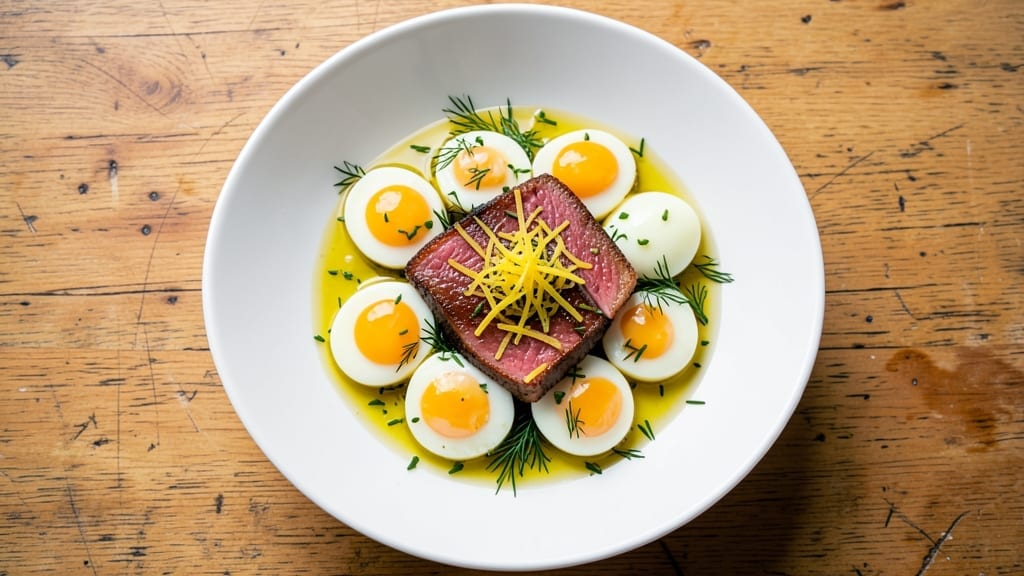
When you need a fluffy scrambled egg dish packed with ocean-fresh flavor, this 3-egg-and-tuna recipe delivers restaurant-quality results in minutes. The secret lies in gentle heat and precise seasoning—creamy eggs meet tender tuna in a bright, savory scramble that feels like a coastal breakfast in a bowl.
I developed this after years of perfecting the balance between tender eggs and flaky fish, ensuring every bite stays moist and flavorful.
What makes this recipe stand out is the foolproof technique for achieving perfectly fluffy eggs while maintaining the delicate texture of tuna. A touch of lemon zest brightens the dish, while fresh herbs add a pop of color and freshness.
The dish comes together in 15 minutes, making it ideal for busy mornings or a quick lunch when you crave something hearty yet light.
By the time you’re done, you’ll have a creamy, golden scramble with tender tuna flakes scattered throughout—each bite offers a perfect harmony of rich eggs and briny fish.
The dish is naturally pescatarian-friendly, packed with protein, and ready to be paired with toasted sourdough or a crisp green salad for a complete meal.
Whether you’re meal prepping for the week or whipping up breakfast for two, this recipe adapts effortlessly. The key is keeping the heat medium-low to prevent overcooking the tuna while letting the eggs set just right.
Serve immediately for the best texture, or store leftovers for up to 2 days—though I doubt they’ll last that long.
Ingredients for 3 eggs and tuna
Three eggs, fresh tuna, and a touch of lemon create this restaurant-worthy scramble in minutes.
| Ingredient | Amount | Notes |
|---|---|---|
| Large Eggs 🥚 | 3 whole | Room temperature for even cooking |
| Fresh Tuna Steak 🐟 | 6 oz | Sushi-grade, thinly sliced (1/8-inch) |
| Extra-Virgin Olive Oil 🫒 | 1 tbsp | Lightly flavored for delicate taste |
| Fresh Lemon Zest 🍋 | 1 tsp | Brightens the dish without bitterness |
| Fresh Chives 🌿 | 2 tbsp | Finely chopped for garnish |
| Fresh Dill 🌿 | 1 tbsp | Finely chopped, for freshness |
| Unsalted Butter 🧈 | 1 tbsp | Cold, cubed for fluffy texture |
| Diamond Crystal Kosher Salt 🧂 | ¼ tsp | Adjust to taste |
| Freshly Ground Black Pepper 🌶️ | ⅛ tsp | Freshly cracked for best flavor |
| Fresh Lemon Juice 🍋 | 1 tsp | For acid balance |
| Heavy Cream 🥛 | 1 tbsp | Optional for extra creaminess |
The tuna makes this dish shine—sushi-grade is non-negotiable for tender flakes. Grab it from the seafood counter, ideally the day you plan to cook. If your store doesn’t carry it, Trader Joe’s or Whole Foods always have a good selection. Look for bright, translucent flesh with no fishy odor. The eggs? Pasture-raised if you can find them—they scramble creamier. Keep everything cold until you’re ready to cook, and slice the tuna paper-thin with a sharp knife for even cooking. I always buy extra tuna because it’s worth having leftovers for lunch the next day.
No fresh dill? Substitute with parsley or basil at double the amount. Short on chives? Green onions work in a pinch. The heavy cream is optional but adds luxurious texture—half-and-half works too. If you’re avoiding dairy, skip it entirely. The lemon juice is key for brightness, but if you’re out, lime juice at half the amount gives a similar zing. For the olive oil, avocado oil is a great neutral alternative. And if you can’t find sushi-grade tuna, high-quality canned albacore (drained well) works in a bind—just pat it dry thoroughly before adding.
This dish is best served immediately, but if you must reheat, low heat in a nonstick pan prevents the tuna from drying out. Store leftovers in an airtight container for up to 2 days—though I can’t guarantee they’ll last that long. The tuna keeps best in the fridge for 1 day before cooking, so plan accordingly. For meal prep, cook the eggs separately and mix in the tuna just before serving to maintain texture. The lemon zest and herbs stay fresh for 3 days in the fridge if sealed tightly in a container.
Why You’ll Love This Recipe
- No-Fuss Freshness: I swear by this when I’m too tired to chop anything. Just crack eggs, sear tuna in olive oil, and finish with lemon zest—no blending, no waiting. The tuna stays tender while the eggs get that golden runny center, and the chives add a bright pop without extra effort.
- Bright Ocean Bite: The lemon zest cuts through the richness of the tuna like a summer breeze. Honestly, the first time I added it, my husband paused mid-bite and said, “Why didn’t we do this sooner?”—that’s how good the contrast is. Fresh chives tie it all together with a herbaceous whisper.
- Lunchbox Hero: Between us, this is my go-to for work lunches or picnics. Pack the eggs and tuna separately, then reheat gently—they’re still perfect. My daughter takes hers in a thermos, and she’s not picky. (Yes, even on a Tuesday night.)
- Budget Luxury: Fresh tuna feels fancy, but one steak stretches for three servings here. Eggs are cheap, olive oil lasts forever, and a lemon goes a long way. I’ve made this for $10 and still felt like I ordered sushi—without the sticker shock.
Step-by-step instructions for fluffy scrambled eggs with tuna
Here’s how to create a delicate, fluffy scramble where the tuna shines and every bite stays moist.
Prepare the Tuna and Aromatics
Pat the 6 oz fresh tuna steak completely dry with paper towels and slice it into ⅛-inch thick pieces. You want these slices to cook quickly and evenly, so thin is key. In a small bowl, combine the 1 tsp fresh lemon zest and 1 tsp fresh lemon juice—this brightens the tuna and balances its natural richness.
Finely chop the 2 tbsp fresh chives and 1 tbsp fresh dill, setting them aside for later. The chives add a delicate oniony note, while the dill brings fresh, herby brightness that pairs beautifully with the tuna. If using the 1 tbsp heavy cream, whisk it lightly with a fork to break up any lumps—this ensures a silky texture when incorporated later.
Cook the Tuna Gently
Heat a nonstick skillet over medium-low heat and add the 1 tbsp extra-virgin olive oil. Let it warm for 30 seconds until shimmering but not smoking—this prevents the tuna from overcooking. Add the tuna slices and cook for 1 minute per side, just until they turn opaque and slightly translucent at the edges.
Remove the tuna from the skillet and set it aside on a plate. The tuna should still have a slight bounce—it’s done when it’s no longer raw in the center but hasn’t turned rubbery. Overcooking here will make the tuna dry and tough, so keep an eye on it. Meanwhile, reduce the heat to low and add the 1 tbsp unsalted butter to the same skillet.
Scramble the Eggs to Perfection
Crack the 3 whole large eggs into a bowl and whisk vigorously for 20 seconds until the yolks and whites are fully combined. Season immediately with the 0.25 tsp diamond crystal kosher salt and 0.125 tsp freshly ground black pepper. The eggs should look uniform and slightly frothy—this ensures a light, airy texture.
Pour the eggs into the skillet with the melted butter. Let them sit undisturbed for 5 seconds to set slightly at the bottom, then gently push the eggs from one side of the pan to the other with a spatula, folding them over as you go. Repeat this motion for 30-45 seconds until the eggs are soft but set—they should still look slightly moist and creamy, not dry or rubbery.
Combine and Finish
Return the tuna to the skillet and gently fold it into the eggs using a spatula. Add the 1 tbsp heavy cream (if using) and stir once or twice to distribute it evenly. Cook for an additional 10-15 seconds—just enough to warm through. The goal is to keep the eggs tender and the tuna warm without overcooking either.
Remove the skillet from heat and let the scramble rest for 10 seconds. This brief pause allows the eggs to finish setting slightly and the flavors to meld. Plate immediately, garnishing with the chopped chives and dill. Serve with crusty bread or a simple green salad to balance the richness of the dish.
Pro Tips For Making 3 Eggs And Tuna
- SEAR TUNA FAST: Hit the tuna steak with a screaming-hot pan—just 30 seconds per side max—until it’s golden and just starting to pull apart. Overcooking turns it rubbery, and nobody wants that. (Yes, even if you’re impatient like me.)
- CRACK EGGS GENTLY: Slide those eggs into the pan from a height of about 3 inches, not a dump. This keeps the whites intact and prevents them from splattering everywhere—trust me, your kitchen floor will thank you.
- SALT THE TUNA: Sprinkle a pinch of flaky salt on the tuna before searing—it crisps up beautifully and balances the richness. I learned this the hard way after serving bland tuna that tasted like nothing.
- ZEST FIRST, THEN ZEST: Add the lemon zest after removing the pan from heat—it’s delicate and burns fast. A quick toss with the eggs and chives at the end keeps the flavor bright, not bitter. (Your future self will notice the difference.)
Best sauces and condiments for this dish
Lemon-Herb Aioli
This bright, creamy sauce elevates the dish by balancing the richness of the eggs and tuna.
Whisk together ½ cup mayonnaise (I use Duke’s for its smooth texture), 1 tbsp fresh lemon juice, 1 tsp lemon zest, 1 tbsp finely chopped chives, and a pinch of salt.
For extra depth, add ½ tsp garlic powder and a splash of water if needed to thin slightly. Drizzle over the finished scramble for a restaurant-worthy touch. 🍋
Spicy Sriracha Mayo
If you crave heat, mix ¼ cup mayonnaise with 1 tsp sriracha (adjust to taste) and ½ tsp soy sauce for umami. Dot this fiery sauce around the plate or swirl it into the eggs before serving.
The kick complements the tuna’s brininess perfectly—just be mindful of the eggs’ delicate texture. 🌶️
Garlic-Herb Butter
For a luxurious finish, melt 1 tbsp unsalted butter with 1 minced garlic clove and 1 tsp chopped parsley in a small pan until fragrant. Spoon dollops over the scramble or use it to sauté the tuna for extra flavor.
This adds a rich, aromatic layer that pairs beautifully with the dish’s fresh ingredients. 🧈
Tahini-Yogurt Sauce
A tangy, nutty sauce transforms this into a Mediterranean-inspired dish. Blend 2 tbsp tahini, 2 tbsp plain Greek yogurt, 1 tsp lemon juice, and 1 tsp water until smooth.
Drizzle over the scramble or serve on the side for dipping toast. The tahini’s creaminess contrasts the tuna’s texture wonderfully. 🥛
Classic Hollandaise
For a decadent touch, whip up a quick hollandaise by blending 2 egg yolks, 1 tbsp lemon juice, and ½ cup melted butter over a double boiler.
The silky sauce coats the eggs and tuna, adding a buttery richness. Serve immediately to prevent curdling. This is ideal for a brunch presentation. 🍳
Nutrition facts
Frequently asked questions
Can I use canned tuna instead of fresh?
Yes, but with adjustments! Use high-quality canned albacore (drained well) and pat it completely dry with paper towels to prevent a watery texture. Opt for flaked varieties and reduce cooking time to 30 seconds in the skillet. The flavor will be slightly different but still delicious—just expect a firmer texture than fresh.
Why does my tuna turn rubbery when cooking?
Overcooking is the #1 culprit! Keep heat at medium-low and cook tuna for only 1 minute per side. Fresh tuna should have a slight bounce when done—if it feels firm or gray, it’s overdone. Also, ensure your pan isn’t too hot, as high heat dries out the fish quickly.
How do I make this dish extra creamy?
Add 1 tbsp heavy cream or 2 tbsp whole milk to the eggs before scrambling. For even richer results, stir in 1 tbsp crème fraîche or Greek yogurt at the end. The key is to incorporate these ingredients gently to maintain the eggs’ fluffy texture.
Can I meal prep this recipe?
Cook the eggs separately and store them in an airtight container for 2 days. When ready to eat, reheat gently in a pan and add the tuna (cooked fresh) just before serving. This preserves the tuna’s delicate texture better than reheating it with the eggs.
What’s the best way to store leftover tuna?
Fresh tuna keeps best in the fridge for 1 day before cooking. Store raw tuna in an airtight container with a paper towel pressed against it to absorb moisture. For longer storage, vacuum-seal it and freeze for up to 3 months—thaw overnight in the fridge before using.

- 5 Lb Eye Round Roast Recipe: Slow-Braised to Melt-in-Mouth Tenderness - November 3, 2026
- 3-Hour Ciabatta Bread Recipe: Crusty Chews and Airy Holes Mastered - November 3, 2026
- 5 Fruit Salad Recipe: Vibrant Rainbow Layers With No Brown Spots - November 3, 2026