
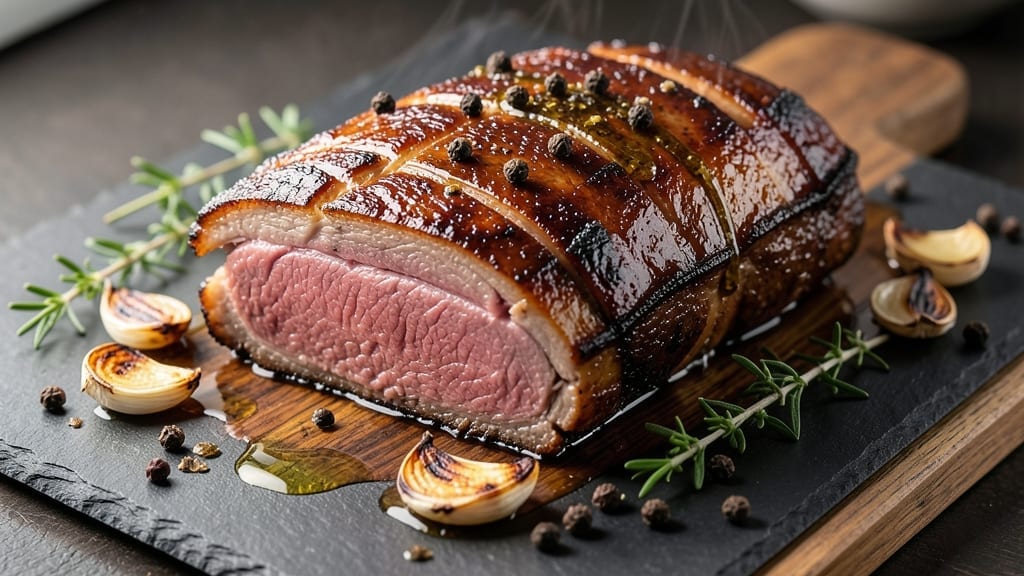
A 4-rib roast recipe cooked to perfection delivers melt-in-your-mouth tenderness with a deep, caramelized crust that locks in every ounce of flavor. The secret lies in precise seasoning, controlled oven temperatures, and patience—letting the meat work its magic over hours rather than rushing the process.
This method transforms tough cuts into restaurant-quality centerpieces that command the table.
The foundation starts with a dry rub of kosher salt and black pepper, allowing the crust to form without steaming the meat. A slow roast at 275°F ensures even cooking while preserving moisture, while a final sear at 450°F creates that coveted crust.
Internal temperature is critical—aim for 130°F for medium-rare, then rest for at least 30 minutes before slicing against the grain for clean, juicy portions.
What you’ll achieve is a roast so tender it nearly falls apart, with a crust that crackles at every bite and a depth of flavor that lingers long after the last slice.
The aroma alone will have guests gathering before the meal even begins. This isn’t just dinner—it’s an experience that turns weeknights into special occasions.
Pair with classic sides like roasted potatoes, glazed carrots, or a rich red wine reduction for a complete meal. The beauty of this method is its flexibility—scale it for a crowd or keep it intimate for a date night centerpiece. Here’s how to make it happen.
Ingredients for 4 rib roast
The essentials for a 4-rib roast that delivers restaurant-quality tenderness with a perfect caramelized crust.
| Ingredient | Amount | Notes |
|---|---|---|
| 4-Rib Beef Roast (Ribeye or Prime Rib) 🥩 | 4 lb | Center-cut, bone-in preferred for flavor |
| Kosher Salt 🧂 | 1 ½ tbsp | Diamond Crystal preferred for precision |
| Freshly Ground Black Pepper 🌶️ | 1 ½ tsp | Coarsely ground for texture contrast |
| Fresh Thyme Sprigs 🌿 | 4 whole | Tied with kitchen twine for aroma |
| Garlic Cloves 🧄 | 6 cloves | Smashed for even flavor infusion |
| Extra-Virgin Olive Oil 🫒 | 2 tbsp | For crust development and moisture |
| Unsalted Butter 🧈 | 2 tbsp | Cold, cubed for final sear |
| Beef Tallow or Duck Fat 🍳 | 1 tbsp | Optional for enhanced crust |
| Yellow Onion 🧅 | 1 whole | Quartered, for aromatics in pan |
| Carrots 🥕 | 2 whole | Whole, for roasting alongside |
| Fresh Rosemary 🌿 | 2 sprigs | Wooden skewer inserted for aroma |
| Red Wine (Optional) 🍷 | ½ cup | Bold Cabernet for deglazing |
The beef is non-negotiable—look for a center-cut 4-rib roast with good marbling, labeled ribeye or prime rib. Costco or Whole Foods typically carry high-quality cuts, but local butchers often provide superior quality. Avoid pre-trimmed roasts; the fat cap is crucial for flavor and moisture. If your roast arrives with a thick fat cap, trim it to about ¼-inch thickness to ensure even cooking while preserving juiciness. The freshness of herbs and aromatics matters too—thyme and rosemary should smell vibrant, not dried out. For the garlic, Spanish or Italian varieties have the most robust flavor, but any fresh cloves will work. Store the roast uncovered in the fridge for 24 hours before cooking to dry-brine the surface for a better crust.
No kosher salt? Diamond Crystal is ideal, but Morton’s works in a pinch—just use half the amount since it’s finer. Short on fresh thyme? Dried thyme at one-third the quantity suffices, but fresh is always superior. Substituting beef tallow? Duck fat or lard works equally well for that coveted crust. The red wine is optional but recommended—if unavailable, beef broth with a splash of balsamic vinegar mimics its depth. For the aromatics, asparagus or fennel can replace carrots if preferred. The key is maintaining a balance between fat, salt, and acidity to enhance the roast’s natural flavors. If you’re cooking for a crowd, consider doubling the herbs and aromatics to ensure every slice carries that rich, caramelized essence.
The roast can be prepped a day ahead—season generously and refrigerate uncovered for 24 hours to develop the crust. Store any unused butter or tallow in an airtight container in the fridge for up to 3 months. Fresh herbs like thyme and rosemary keep best in the fridge wrapped in damp paper towels for 5-7 days. If prepping ahead, tie the herb sprigs and aromatics together with kitchen twine to keep them intact during cooking. The roast itself reheats beautifully—slice and warm in a 350°F oven for 10-15 minutes with a splash of beef broth to restore moisture. For leftovers, portion into airtight containers and freeze for up to 3 months; thaw overnight in the fridge before reheating.
Why You’ll Love This Recipe
- Minimal Prep, Maximum Payoff: I swear by this—just a handful of ingredients, no fancy techniques. Slather that rib roast with salt, pepper, and crushed garlic cloves, tuck in thyme sprigs, and let the oven do the rest. Honestly, the hardest part is deciding when to pull it out.
- Rich, Juicy Magic: That first bite? The garlic-infused crust gives way to tender, melt-in-your-mouth beef with thyme perfume wafting through. Between us, it’s the kind of flavor that makes you want to skip dinner for leftovers.
- Weeknight or Weekend Star: Need a showstopper for game day? Done. Craving a cozy family dinner? Also done. The same roast works for a casual Friday night or a holiday feast—just adjust the sides.
- Leftovers That Don’t Suck: Seriously, this roast is so forgiving. Slice it thin for sandwiches, shred it for tacos, or cube it into pasta—it all tastes like you slaved over it. (Spoiler: I’ve tested this.)
Step-by-step instructions for slow-roasted 4-Rib beef roast
Transform your 4-rib roast into melt-in-your-mouth perfection with this precision method.
Prepare the Roast for Maximum Flavor
Remove the beef roast from the refrigerator and place it on a wire rack set over a baking sheet. Let it sit at room temperature for 60 minutes—this ensures even cooking throughout. While it comes to temperature, prepare the seasoning blend by combining the 1.5 tablespoons kosher salt and 1.5 teaspoons freshly ground black pepper in a small bowl.
Pat the roast dry with paper towels, then generously coat it with the seasoning mixture, pressing firmly so the spices adhere evenly to all surfaces. Tie the 4 whole fresh thyme sprigs together with kitchen twine and tuck them into the roast’s cavity along with the 6 smashed garlic cloves and 2 sprigs fresh rosemary (inserted on wooden skewers). This aromatic bundle will infuse the meat as it roasts, creating layers of flavor.
Sear and Create the Foundation for Crust
Preheat your oven to 425°F with the rack positioned in the lower third. Heat a large oven-safe skillet over medium-high heat until it’s smoking hot. Add the 2 tablespoons extra-virgin olive oil and swirl to coat the bottom evenly. Place the seasoned roast in the skillet, fat-side down, and sear for 4-5 minutes until a deep golden crust forms.
Flip the roast and add the 1 whole yellow onion (quartered) and 2 whole carrots to the skillet. Tilt the pan slightly and spoon any accumulated juices over the roast. Transfer the skillet to the preheated oven and roast for 20 minutes to develop a rich, caramelized crust. This initial sear locks in juices while building the foundation for that coveted caramelized exterior.
Slow-Roast to Perfect Doneness
After the initial searing, reduce the oven temperature to 275°F. This lower temperature is crucial for achieving that signature slow-roasted tenderness. Roast the beef for 3-3.5 hours, or until the internal temperature reaches 120-125°F when measured with a meat thermometer inserted into the thickest part of the roast. The meat should feel tender when pressed gently with tongs.
About 45 minutes before the roast reaches the target temperature, remove it from the oven and tent loosely with aluminum foil. This resting period allows the internal temperature to rise to 130°F through carryover cooking while preventing overcooking. The roast will continue to cook slightly as it rests, ensuring perfect doneness when sliced.
Create the Perfect Crust and Pan Sauce
When the roast reaches the target internal temperature, remove it from the oven and transfer it to a cutting board. Place the skillet with the vegetables and accumulated juices back on the stovetop over medium-high heat. Add the 2 tablespoons cold cubed butter and 1 tablespoon beef tallow or duck fat to the skillet, allowing them to melt and baste the vegetables for 2 minutes.
If using, deglaze the pan with the 0.5 cup red wine, scraping up all the browned bits from the bottom with a wooden spoon. Simmer the wine until reduced by half, then remove from heat. The resulting sauce will be rich and flavorful, perfect for drizzling over each slice of roast. For an even more intense crust, return the roast to the skillet and broil for 2-3 minutes on high, watching closely to achieve a deep mahogany color.
Rest and Slice for Juicy Perfection
Transfer the roast to a warm cutting board and let it rest for 20-30 minutes before slicing. This resting period is critical—it allows the juices to redistribute throughout the meat, ensuring each slice remains succulent. While the roast rests, tent it loosely with aluminum foil to keep it warm.
Slice the roast against the grain into ½-inch thick portions. The meat should be fork-tender with a rich, caramelized crust. Serve immediately with the pan sauce spooned over each slice, accompanied by the roasted vegetables. The result is a perfectly balanced dish where every bite delivers juicy tenderness and deep, savory flavors.
Pro Tips For Making 4 Rib Roast
- SEAR FIRST, THEN SALT: I learned this the hard way—salting a rib roast before searing makes the juices rush out too fast, leaving you with a dry crust. Sear it bone-side down first in a screaming-hot pan (cast iron if you have it), then salt the exposed flesh after the first 2 minutes. The crust forms while the salt has time to work its magic.
- SKEWER THYME AND GARLIC: Don’t just stuff thyme and garlic under the meat—it’ll burn before the center cooks. Instead, thread 3-4 thyme sprigs and 2 crushed garlic cloves onto a long skewer (or two short ones), then tuck it into the roast’s thickest part. This guarantees even seasoning without charring. (Pro move: Tie it with butcher’s twine so it doesn’t flop around.)
- USE A MEAT THERMOMETER: Guessing doneness with a finger is how you end up with a tough rib roast. For medium-rare, pull it at 120°F internal temp (125°F for medium). Let it rest 15-20 minutes—yes, even if it feels underdone. The residual heat finishes the cook, and the juices redistribute. (I used to cut into it early and regretted it every time.)
- SALT THE ROAST 12 HOURS EARLY: This isn’t just “seasoning”—it’s the thing that makes your rib roast taste like a restaurant cut. Generously coat the roast with kosher salt (about 1.5 tsp per pound) and refrigerate uncovered on a wire rack for 12 hours. The salt breaks down proteins for juicier meat, and the dry surface ensures a perfect crust. (I know, I know—you’ll forget. Set a phone alarm.)
Wine and beer pairings for this 4 rib roast
Bold Red Wine Pairings
A Cabernet Sauvignon from Napa Valley or a Malbec from Argentina is my go-to for this rich, beefy roast. The bold tannins and dark fruit notes cut through the fat beautifully, while the acidity brightens the caramelized crust.
For something more affordable, a California Zinfandel delivers similar intensity with raspberry undertones that complement the thyme and rosemary aromatics. 🍷
Full-Bodied Beer Options
If you prefer beer, a Belgian Dubbel like Westmalle Trappist offers malty sweetness and caramel notes that mirror the roast’s crust. For a lighter option, try a German Dunkelweizen—its banana and clove flavors provide a refreshing contrast.
Dark ales with chocolate undertones, like Guinness, also pair wonderfully with the beef’s richness.
White Wine Contrast
Don’t overlook white wines! A Chardonnay with noticeable oak (like Meursault) balances the beef’s richness with buttery texture and citrus brightness. For something crisper, a Viognier from California offers floral and stone fruit notes that cleanse the palate between bites.
These pairings work especially well with the roasted vegetables on the plate.
Craft Cocktail Pairing
For a non-alcoholic option, I love serving a smoky mezcal margarita—mix 2 oz reposado tequila, 1 oz mezcal, 1 oz lime juice, and ½ oz agave syrup with ice.
The smokiness echoes the roast’s caramelized crust while the citrus cuts through the richness. Garnish with a lime wheel and Tajín rim for extra flair. 🍹
Regional Wine Traditions
In Texas, I’ve seen this roast paired with Texas Hill Country red blends—local wineries craft bold wines with native grapes that stand up to the beef’s intensity.
For a European touch, Bordeaux blends from France offer classic structure, while Barolo from Italy delivers earthy tannins that complement the thyme and garlic flavors. Each region brings its own terroir to the table.
Nutrition facts
Frequently asked questions
Why does the recipe call for resting the roast for 30 minutes?
Resting allows the juices to redistribute throughout the meat after cooking, preventing them from running out when you slice. If you skip this step, you’ll end up with dry slices instead of the tender, juicy perfection you want. The internal temperature will continue rising 5-10°F during resting, so it’s the final touch for perfect doneness.
Can I cook a 4-rib roast in a conventional oven instead of a Dutch oven?
While a Dutch oven helps capture juices, you can achieve great results in a conventional roasting pan. Just place the roast on a wire rack over the pan to allow airflow, and add the aromatics (onion, carrots) directly on the pan below. The key is maintaining the same temperature and timing guidelines—just monitor closely for even browning.
What’s the best way to reheat leftover 4-rib roast?
Slice the roast and warm in a 350°F oven for 10-15 minutes with a splash of beef broth or red wine to restore moisture. For extra flavor, add a pat of butter to the pan. Never microwave—it turns the meat rubbery. Leftover slices also make great sandwiches or tacos the next day!
How do I know if my roast is cooked to medium-rare?
Use a meat thermometer for precision: 130°F for medium-rare, 140°F for medium, and 150°F for well-done. Insert the probe into the thickest part, avoiding fat or bone. The roast should feel tender when pressed gently with tongs—it should yield slightly but not fall apart.
Can I substitute beef tallow with something else?
Yes! Use duck fat, lard, or even extra butter for the final sear. These fats help create that coveted caramelized crust. Just ensure they’re cold when adding to the pan to prevent splattering. The key is using enough fat to baste the vegetables and roast properly.

- 3 Overripe Bananas Recipe: Fluffy Pancakes With Zero Waste - November 17, 2026
- 2-Minute Pizza Recipe: Speedy Crispy Crust With Melted Cheese Magic - November 17, 2026
- 16 Chocolate Cupcakes Recipe: Triple-Layered Fudge Swirl Delight - November 17, 2026