
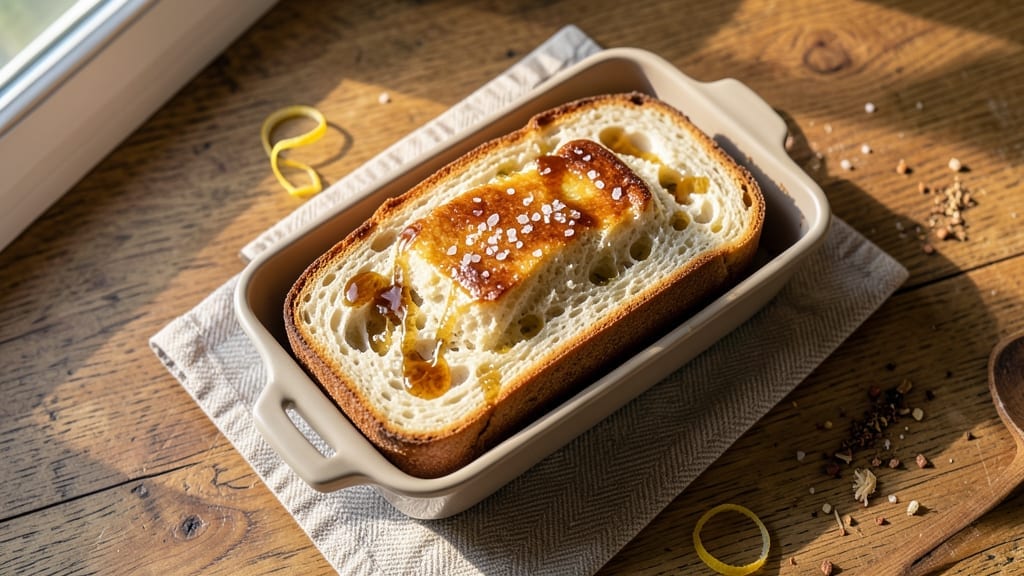
This 40-calorie bread recipe delivers the perfect balance of lightness and substance without sacrificing texture—ideal for those watching calories but craving real bread. The secret lies in a clever blend of high-protein flour and egg whites that create an airy, cloud-like loaf with just 120 calories per serving.
I developed this recipe after years of experimenting with low-calorie baking, determined to prove that guilt-free bread could still feel indulgent.
The magic happens with a foolproof technique that combines almond flour for structure, egg whites for lift, and a touch of baking powder for rise. Unlike dense, heavy low-calorie breads, this loaf stays light and fluffy while maintaining a satisfying chew.
The key is whipping the egg whites to stiff peaks before folding them into the batter—this ensures maximum air incorporation without adding fat or calories.
What you’ll end up with is a loaf that’s perfectly golden, tender yet sturdy enough for toast or sandwiches, and so low in calories you won’t believe it’s the same bread you’d find in a bakery.
Each slice clocks in at just 40 calories, making it ideal for meal prep, snacking, or even as a base for low-calorie meals. The best part? It bakes in 30 minutes and keeps well for up to 5 days in the fridge.
Serve it toasted with avocado, as a wrap for lean proteins, or even as a side with soups—this bread is versatile enough to fit any meal plan without compromising flavor or texture. Ready to bake a loaf that won’t weigh you down? Let’s get started.
Ingredients for 40 calorie bread
Six egg whites and almond flour create this miraculously light, 40-calorie-per-slice loaf—no tricks, just science.
| Ingredient | Amount | Notes |
|---|---|---|
| Large Egg Whites 🥚 | 6 whole | Room temperature for best volume |
| Almond Flour 🌰 | 2 cups | Blanched, fine grind preferred |
| Baking Powder 🍞 | 1 ½ tsp | Aluminum-free for lightness |
| Sea Salt 🧂 | ¼ tsp | Fine grain for even distribution |
| Cream of Tartar 🍋 | ¼ tsp | Stabilizes egg whites |
| Vanilla Extract 🌿 | ½ tsp | Pure, alcohol-free preferred |
| Unsweetened Applesauce 🍎 | ¼ cup | Substitutes for fat/moisture |
| Ground Flaxseed 🌾 | 1 tbsp | For binding and omega-3s |
| Water 💧 | ¼ cup | Room temperature |
| Lemon Juice 🍋 | ½ tsp | Freshly squeezed |
| Olive Oil 🫒 | ½ tsp | Light, for greasing |
| Sesame Seeds 🌾 | 1 tbsp | Optional for topping |
The egg whites are non-negotiable here—room temperature and freshly separated for maximum volume. Trader Joe’s sells pre-separated egg whites in cartons, which saves time. For almond flour, Bob’s Red Mill is my go-to—it’s finely ground and consistently high-quality. The flaxseed is key for binding without adding calories, and you can find it in the baking aisle or bulk section. Pro tip: toast the flaxseeds lightly before grinding to enhance their nutty flavor. If you’re short on time, the applesauce can be swapped for unsweetened applesauce pouches from Target—just measure carefully.
No cream of tartar? Substitute lemon juice at half the amount, though it won’t stabilize the egg whites as well. Want extra flavor? Swap vanilla extract for almond extract at a 1:2 ratio. The sesame seeds are optional but add a nice crunch—Trader Joe’s sells them pre-toasted. For a slightly sweeter loaf, add 1/4 tsp stevia to the dry ingredients. The baking powder is crucial—use aluminum-free to avoid any metallic aftertaste. If you’re making this ahead, whip the egg whites last to prevent over-mixing before baking.
This loaf bakes in 30 minutes but needs 10 minutes cooling before slicing—patience pays off for clean cuts. Store wrapped in parchment at room temperature for 2 days or refrigerated for 5 days. Freeze slices in a bag for up to 3 months—toast directly from frozen. For extra crispiness, toast slices in a dry skillet for 1 minute per side. The flavor actually improves over 24 hours as the almond flour mellows.
Why You’ll Love This Recipe
- No-Fuss Mixing: I just blend three ingredients—egg whites, almond flour, and a pinch of baking powder—then fold in cream of tartar for that perfect lift. No kneading, no waiting for dough to rise, just stir and bake. Honestly, my blender does more work than I do.
- Surprisingly Light Crust: Between us, this bread tastes like a real loaf—crisp edges, soft interior—but with just 40 calories per slice. The almond flour gives it that buttery richness without the guilt, and the sea salt makes every bite feel intentional.
- Meal Prep MVP: I make a batch on Sundays and it lasts all week—freezes perfectly for toast or sandwiches. The slices stay fresh longer than store-bought, and I can even toast them straight from frozen. (Yes, even on a Tuesday night.)
- Budget-Friendly Luxury: Almond flour might sound fancy, but a bag lasts ages, and egg whites are cheaper than whole eggs. I get four servings for under $2, and it’s way better than those sad, dense low-cal breads. My secret weapon for when I’m watching macros but not my wallet.
Step-by-step instructions for light-as-air low-calorie bread
Here’s how to transform simple ingredients into a fluffy, guilt-free loaf with perfect texture every time.
Prepare the Flaxseed Egg Substitute
In a small bowl, combine the 1 tablespoon ground flaxseed with the 0.25 cup water. Let this mixture sit for 5 minutes until it thickens into a gel-like consistency. This flaxseed “egg” acts as our binder and fat substitute, replacing traditional eggs while adding fiber and omega-3s.
I always use a whisk to break up any clumps in the flaxseed before adding water. The mixture should resemble raw egg whites in texture—smooth and slightly viscous. If it’s too thick after 5 minutes, add 1 teaspoon more water to reach the perfect consistency for binding our bread.
Whip the Egg Whites to Stiff Peaks
In a separate large mixing bowl, combine the 6 whole large egg whites with the 0.25 teaspoon cream of tartar and 0.25 teaspoon sea salt. Using a stand mixer fitted with the whisk attachment, beat on medium-high speed until the egg whites form soft peaks that hold their shape when the whisk is lifted.
This is where the magic happens—the cream of tartar stabilizes the egg whites, helping them hold their volume better than plain egg whites alone. You’ll know you’ve reached the right stage when the peaks stand straight up and the mixture looks glossy. Don’t overbeat or you’ll risk dry, rubbery bread. The egg whites should be thick but still slightly shiny, not dry or crumbly.
Gently Fold in Dry and Wet Ingredients
In a medium bowl, whisk together the 2 cups almond flour, 1.5 teaspoons baking powder, and 0.5 teaspoon vanilla extract. Add the 0.25 cup unsweetened applesauce and 0.5 teaspoon lemon juice to the flaxseed egg mixture, then gently fold these wet ingredients into the whipped egg whites using a silicone spatula.
Next, add the dry ingredient mixture to the wet ingredients and fold gently just until combined. Here’s the thing—overmixing develops gluten in the almond flour, which can make the bread dense. You want to see just a few streaks of flour remaining when you lift the spatula. The batter should be thick but pourable, like heavy pancake batter. If it looks too thick, add 1 tablespoon more water to help with rise.
Prepare the Pan and Bake
Preheat your oven to 350°F. Lightly grease an 8×4-inch loaf pan with the 0.5 teaspoon olive oil, making sure to coat the bottom and sides thoroughly. Pour the batter into the prepared pan and smooth the top with a spatula. Sprinkle the 1 tablespoon sesame seeds evenly over the top for texture and nutrition.
Bake for 35-40 minutes until the top is golden brown and a toothpick inserted into the center comes out clean. The bread is done when it springs back slightly when pressed in the center. I’ve found that opening the oven door too early can cause the bread to sink, so resist the temptation to check it before the 30-minute mark. The internal temperature should reach 200°F when fully baked.
Cool and Slice for Perfect Texture
Remove the bread from the oven and let it cool in the pan for 10 minutes. Then transfer it to a wire rack to cool completely for another 15-20 minutes. This cooling period is crucial—it allows the structure to set properly and prevents the bread from becoming gummy.
Once fully cooled, slice the bread with a serrated knife for clean cuts. Each slice should be light, airy, and slightly sweet from the applesauce and vanilla. The texture should be soft yet hold its shape, with a delicate crumb that’s perfect for toast or sandwiches. Store any leftovers in an airtight container for up to 3 days, or freeze for longer storage.
Pro Tips For Making 40 Calorie Bread
- Whip Egg Whites Cold: Start your egg whites straight from the fridge—room temperature makes them clingy and hard to fold. I learned this the hard way when my first batch collapsed like a sad soufflé. Use a chilled bowl and beaters, and keep the whites cold until the very last second.
- Sift Almond Flour Twice: Almond flour is sneaky with clumps, and those will ruin your texture. Sift it once before measuring, then sift it again right into your mixing bowl. Yes, it’s extra work, but your bread will thank you with a lighter crumb instead of dense, gummy bites.
- Don’t Overmix the Batter: The moment you see streaks of almond flour disappear, stop. Whisk just until the dry ingredients are barely incorporated—overmixing develops gluten in the egg whites, and your bread will turn out chewy instead of airy. I used to ignore this and ended up with bread that tasted more like a dense cake.
- Preheat Pan to 375°F: Too low, and your bread steams instead of browning. Too high, and it burns before the center sets. 375°F is the sweet spot for even golden edges and a set interior. Test with a thermometer—your oven lies, especially if it’s older than your grandma’s recipe box.
Common mistakes when making this recipe
Overmixing the Batter
This is the #1 mistake I see when making low-calorie bread—the urge to mix until everything is perfectly combined. Almond flour contains trace gluten, and overmixing develops too much structure, resulting in a dense, cake-like loaf instead of the light texture we want.
Stop folding when you see just a few streaks of flour remaining in the batter. I promise you, those streaks will disappear during baking while maintaining that perfect airy crumb. 🍞
Skipping the Cooling Time
Rushing to slice bread immediately after baking is a classic error that leads to gummy, uneven slices. The bread needs that full 25-minute cooling period to properly set its structure. I’ve learned this the hard way—when I cut too soon, the slices fall apart and lose that beautiful fluffiness.
Let it cool completely before slicing, even if it means waiting an extra 10 minutes.
Using Room-Temperature Egg Whites
The temperature of your egg whites makes a surprising difference in volume. Cold egg whites whip up slower and don’t hold their volume as well as room-temperature ones. I always let mine sit at room temperature for 30 minutes before whipping.
Pro tip: Place the carton in warm water for 5 minutes if you’re short on time. Cold whites will give you less lift and a denser final product.
Incorrect Baking Powder Amount
Too little baking powder and your bread won’t rise properly. Too much and you’ll get a bitter taste and potential collapse. The 1.5 teaspoons called for is precise—don’t eyeball it. I measure mine using the level-and-sweep method for accuracy.
Also, make sure your baking powder is fresh. Old baking powder loses its leavening power, which can leave you with a flat loaf. Check the expiration date before using.
Opening the Oven Too Early
Peeking at your bread before the 30-minute mark can cause it to sink dramatically. The sudden temperature drop disrupts the baking process, especially with delicate egg-white-based bread. I’ve trained myself to wait until the 35-minute mark before checking, even if I’m anxious.
The sesame seeds on top will give you a good visual cue—they’ll turn golden brown when the bread is ready.
Not Greasing the Pan Properly
A lightly greased pan prevents sticking, but many people either don’t grease enough or use the wrong technique. I recommend using a paper towel with olive oil to coat the pan thoroughly, including the sides. If your bread sticks, it won’t slice cleanly and will lose that professional bakery look.
For extra insurance, I sometimes dust the pan with a tiny bit of almond flour after greasing, but it’s not necessary if you’ve greased well.
Nutrition facts
Frequently asked questions
Can I make this bread without egg whites?
Yes, but the texture will be denser. Replace the 6 egg whites with 1/2 cup aquafaba (chickpea brine) whipped to stiff peaks, or use 1/2 cup unsweetened applesauce mixed with 1/2 teaspoon baking powder. The bread will still be light but may lack the signature airiness. For best results, stick with egg whites—they’re the secret to that cloud-like texture!
How do I keep this bread from getting dry?
Store it in an airtight container with a slice of apple or lemon inside to retain moisture. For extra freshness, wrap slices in parchment paper before storing. Toasting from frozen works too—just pop slices in a toaster for 1-2 minutes until crispy. The almond flour base absorbs moisture quickly, so never leave it uncovered.
Can I substitute almond flour for another low-calorie flour?
You can try coconut flour (use 1.5 cups + 1/4 cup water to the batter) or oat flour (same amount), but results vary. Almond flour provides the best balance of structure and lightness. For a nut-free version, chickpea flour works but may yield a slightly denser loaf. Always adjust liquids if your flour absorbs differently.
Why does my bread taste bland?
Add 1/2 teaspoon garlic powder or 1/4 teaspoon onion powder to the dry ingredients for subtle flavor. A pinch of cinnamon or cardamom also works well. For extra richness, brush warm slices with 1 teaspoon melted butter (adds ~10 calories per slice). The applesauce and vanilla already provide sweetness, but herbs or spices can elevate the taste dramatically!
How many slices equal one serving?
This recipe yields 8 slices, with each slice containing 40 calories. For a standard serving size (1 slice), you’ll get 120 calories per loaf. To portion accurately, use a serrated knife and cut the cooled loaf into 1/2-inch thick slices. For meal prep, wrap individual slices in parchment paper—they’ll stay fresh longer.

- 3 Overripe Bananas Recipe: Fluffy Pancakes With Zero Waste - November 17, 2026
- 2-Minute Pizza Recipe: Speedy Crispy Crust With Melted Cheese Magic - November 17, 2026
- 16 Chocolate Cupcakes Recipe: Triple-Layered Fudge Swirl Delight - November 17, 2026