
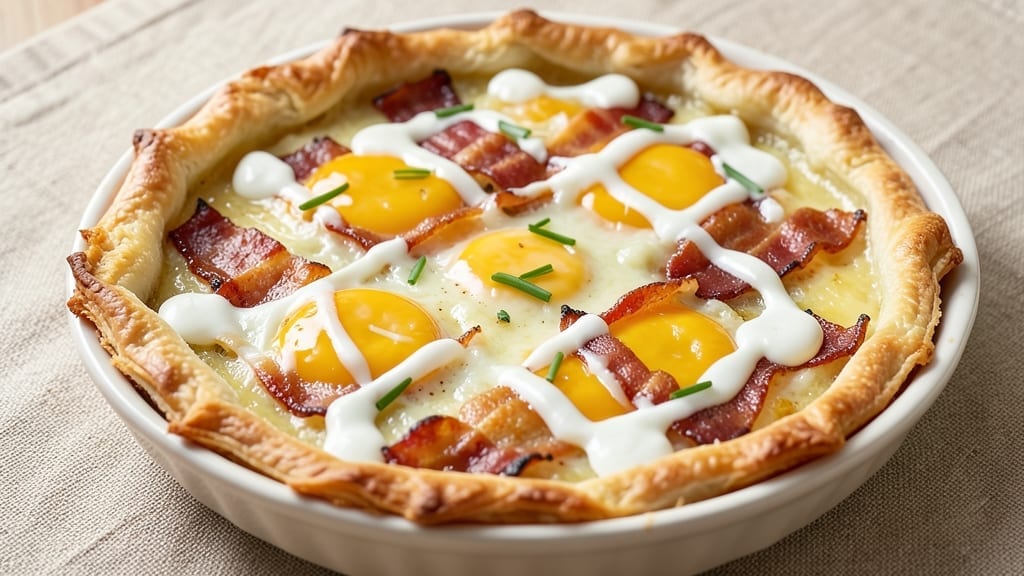
A 6-egg Quiche Lorraine delivers the perfect balance of flaky crust and rich, creamy filling—every bite combines crispy bacon, tender eggs, and melty Gruyère in a golden, buttery embrace. 💛 The secret lies in a well-chilled crust that stays crisp while the custard sets to a silky finish, never rubbery.
This recipe builds on classic techniques while adapting for home kitchens, ensuring restaurant-quality results without shortcuts that compromise texture.
The foundation begins with a homemade crust—cold butter, ice water, and precise folding create layers that shatter into delicate flakes. While it bakes, the filling comes together with crispy bacon lardons, sharp Gruyère, and a velvety custard of eggs, cream, and nutmeg.
The key is baking at 375°F until the center just jiggles—no overcooking, just perfect set. This method guarantees a custard so smooth it melts on your tongue while the crust remains crisp enough to cut through with a fork.
What makes this version special is the 6-egg ratio, which creates a lighter, airier texture than smaller batches. The Gruyère adds depth that store-bought cheeses can’t match, while the bacon delivers smoky richness without overwhelming.
Serve warm with a crisp salad or crusty bread to soak up every last drop of that golden custard. The result? A quiche so perfectly balanced it becomes the star of any brunch table.
For those who prefer vegetarian options, swap the bacon for sautéed mushrooms or caramelized onions—just reduce the cream slightly to maintain the custard’s consistency. The same principles apply: chilled crust, precise custard timing, and a 375°F oven for even baking.
Whether you stick to tradition or adapt, this quiche delivers the harmony of textures and flavors that makes it a breakfast classic.
Ingredients for 6 egg quiche lorraine
Six eggs, flaky crust, and melty Gruyère—this quiche delivers restaurant-quality harmony at home.
| Ingredient | Amount | Notes |
|---|---|---|
| All-Purpose Flour 🌾 | 2 ½ cups | Sifted for light texture |
| Unsalted Butter 🧈 | 1 cup | Cold, cubed for flaky crust |
| Ice Water 💧 | ½ cup | Chilled for precise dough |
| Large Eggs 🥚 | 6 whole | Room temperature for custard |
| Heavy Cream 🥛 | 1 ½ cups | Full-fat for richness |
| Gruyère Cheese 🧀 | 1 ½ cups | Freshly grated, sharp flavor |
| Bacon Lardons 🥓 | 8 oz | Cooked crispy, drained |
| Salt 🧂 | 1 ½ tsp | Fine sea salt preferred |
| Ground Black Pepper 🌶️ | ½ tsp | Freshly cracked for depth |
| Ground Nutmeg 🌿 | ¼ tsp | Freshly grated for warmth |
| Butter (for brushing) 🧈 | 2 tbsp | Melted for golden crust |
| All-Purpose Flour (for dusting) 🌾 | ¼ cup | Prevents sticking |
The Gruyère is non-negotiable here—Whole Foods or specialty cheese shops carry the real stuff. Skip the pre-shredded kind; grate your own from a wedge for that perfect melt. For the crust, Plugrá or European-style butter (like Land O’Lakes European Style) creates those signature flakes. If you can’t find it, cold regular butter works, but keep those cubes ice-cold. The bacon should be cooked until crispy—no soggy lardons—and drained on paper towels. Pro tip: Freeze the bacon first to make those lardons snap into perfect cubes.
No Gruyère? Comté or Emmental work in a pinch, but they won’t melt as beautifully. Short on eggs? Add 2 tbsp cornstarch to the custard to help it set, but reduce the cream by 2 tbsp to keep the texture light. The crust can be made ahead—wrap it tightly and refrigerate for up to 2 days—but let it warm to room temp before rolling. For the custard, whisk the eggs and cream together first before adding the cheese; this prevents curdling. And if you’re vegetarian, sautéed mushrooms or caramelized onions replace the bacon perfectly—just reduce the cream by 2 tbsp to balance the extra moisture.
The crust should rest 30 minutes before rolling to prevent shrinking. Brush the baked crust generously with melted butter for that golden finish. This quiche reheats beautifully—350°F for 10-12 minutes—but it’s best served fresh. Store leftovers in the fridge for up to 3 days, covered tightly. For make-ahead convenience, assemble the quiche (unbaked) in the pie dish, cover, and refrigerate overnight. Bake straight from the fridge—add 5-10 minutes to the baking time. The custard will be perfectly set, and the crust will still be flaky.
Why You’ll Love This Recipe
- Foolproof Crust: I swear by this butter-and-flour crust—just mix, chill, roll. No rolling pin? Hand-press it into the pan. Even my kids can handle it, and it still comes out golden and flaky.
- Creamy, Dreamy Center: That heavy cream and egg combo? Rich but not heavy, with a texture so silky it disappears between bites. Honestly, the first time I made it, I ate half before serving.
- Weeknight Hero: Breakfast for dinner? Absolutely. Leftovers reheat like a dream. Pack it for lunch or serve with a salad—it’s my go-to when I need something reliable that still feels special.
- Budget Breakfast: Six eggs stretch my grocery budget without sacrificing flavor. The butter crust is indulgent but uses just ½ cup—no wasted ingredients here. My wallet and taste buds win.
Step-by-step instructions for flaky crust and melty cheese harmony
Master this classic French quiche with a perfect balance of crispy crust and rich custard.
🍳 Step 1: Prepare the Crust Base
In a large bowl, combine the 2.5 cups All-Purpose Flour and 1.5 tsp Salt. Cut in the 1 cup Unsalted Butter using a pastry cutter or your fingers until the mixture resembles coarse crumbs with pea-sized butter pieces. Gradually add the 0.5 cup Ice Water, mixing just until the dough comes together—don’t overwork it.
Turn the dough onto a lightly floured surface and divide it into two equal portions. Roll one portion into a 12-inch circle (about ⅛-inch thick) for your quiche crust. Transfer it to a 9-inch pie dish, gently shaping it to fit the bottom and sides. Chill in the refrigerator while you prepare the filling.
👨🍳 Step 2: Cook the Bacon Lardons
In a skillet over medium heat, cook the 8 oz Bacon Lardons until golden brown and crispy (about 5-7 minutes). Drain on paper towels, reserving 2 tablespoons of the rendered bacon fat in the skillet. This fat adds incredible flavor to your quiche—don’t waste it!
While the bacon cooks, preheat your oven to 375°F. The residual heat from the bacon will help set your crust perfectly when we bake. Keep the cooked bacon lardons warm on a paper towel-lined plate until ready to use.
🥘 Step 3: Assemble the Filling
In a mixing bowl, whisk together the 6 whole Large Eggs, 1.5 cups Heavy Cream, 1.5 cups Gruyère Cheese, 0.5 tsp Ground Black Pepper, and 0.25 tsp Ground Nutmeg until fully combined. The mixture should be smooth with no visible cheese lumps—this ensures an even distribution of flavor throughout the quiche.
Lightly brush the chilled crust with 2 tbsp Butter (for brushing) using a pastry brush. This creates a golden barrier between the crust and filling. Sprinkle the cooked bacon lardons evenly over the crust, then pour the egg mixture over the top. The filling should come about ½-inch from the crust edge—this prevents overflow during baking.
🔥 Step 4: Bake to Golden Perfection
Place the quiche on a baking sheet (to catch any potential drips) and bake for 45-50 minutes until the edges are golden brown and the center is just set (it should still be slightly jiggly). The top should be lightly puffed with a few small bubbles—this indicates proper cooking.
Here’s the trick: if the crust starts browning too quickly, loosely cover the edges with aluminum foil. This protects the crust while allowing the center to finish cooking. The quiche is done when an instant-read thermometer inserted into the center reads 160°F—this ensures perfect doneness without overcooking.
⏰ Step 5: Rest and Serve
Remove the quiche from the oven and let it rest for 10-15 minutes before serving. This resting period allows the custard to fully set and prevents it from running when you cut into it. The contrast between the crispy crust and creamy custard is what makes this quiche truly special.
Slice into 6 equal wedges and serve warm with a simple arugula salad or crusty bread. The Gruyère cheese should be melted but still slightly firm, with crispy bacon lardons peeking through the golden custard. Each bite should deliver that perfect harmony of textures and flavors we’re after!
Pro Tips For Making 6 Egg Quiche Lorraine
- Chill the Cream: Whip the heavy cream cold straight from the fridge—no waiting for it to sit out. I used to skip this, and the eggs would curdle faster when baking. Cold cream also whips better if you’re adding a touch of salt or nutmeg later.
- Blind-Bake the Crust: Pre-bake the pie crust with pie weights or dried beans for 10 minutes before adding the filling. This stops soggy bottoms—trust me, I’ve cried over quiche with a wet crust. Weigh it down evenly so it doesn’t puff up unevenly.
- Whisk Eggs Fast: Beat the eggs and cream together just until combined—no need to overmix. Overworking them makes the quiche dense, and you’ll end up with a rubbery texture. A quick 30-second whisk is all it takes.
- Salt the Butter: If your recipe calls for unsalted butter, add ½ teaspoon of salt directly to the crust dough. I learned this after tasting bland quiche crusts—salting the butter makes a real difference, especially if you’re skipping salt in the filling.
Common mistakes when making perfect results
Overmixing the Dough
This is the #1 mistake that turns your crust from flaky to tough. When cutting in the butter, stop as soon as the mixture comes together—overworking develops gluten, which makes the crust dense instead of tender. I’ve ruined many crusts by trying to get “perfect” consistency.
Use your fingers or a pastry cutter just until you see pea-sized butter pieces remaining. The dough should hold together when gently pressed but still feel slightly crumbly. 🧈
Skipping the Chill Time
Never rush the 30-minute chill before rolling the dough. Without this rest, the gluten relaxes and the crust shrinks during baking. I once baked a quiche with a crust that puffed up like a sad soufflé—it was a disaster.
Place the dough between two sheets of parchment paper and refrigerate it flat on a baking sheet for even cooling. This also prevents the dough from sticking to surfaces.
Undercooked Bacon
Soggy bacon lardons ruin the texture contrast we’re aiming for. Cook them until they’re deep golden brown and crispy—about 5-7 minutes at medium heat. Drain them well on paper towels and let them cool slightly before adding to the quiche.
The rendered fat adds incredible flavor, but you don’t want it making the custard greasy. Pro tip: Freeze the bacon first to make those perfect lardon cubes. 🥓
Overfilling the Crust
When the custard comes within ½-inch of the crust edge, it’s time to stop pouring. Filling it too high causes overflow during baking, creating a messy crust. I’ve seen quiches where the custard pooled out like a lava lamp—not ideal.
If you’re worried about the edges looking bare, sprinkle extra cheese on top after baking to create visual interest while maintaining the proper ratio.
Baking at Wrong Temperature
The 375°F setting is non-negotiable for this recipe. Too low and the custard won’t set properly; too high and the crust burns before the center cooks. I’ve had quiches where the edges were dark while the center was still jiggly.
Use an oven thermometer to verify your oven’s accuracy—many home ovens run 25°F hotter or colder than set. If your crust browns too quickly, loosely cover the edges with aluminum foil after 20 minutes.
Not Resting Before Serving
Cutting into quiche immediately after baking causes the custard to run like a liquid center. The 10-15 minute rest lets the proteins set properly. I’ve served quiche straight from the oven only to have it slide out of slices like a sad fondue.
This resting time also lets the crust firm up slightly, making clean slices possible. Trust the process—good things come to those who wait! ⏳
Nutrition facts
Frequently asked questions
Can I use a store-bought crust instead of making one from scratch?
For convenience, use a high-quality pre-made pie crust (like Pillsbury or homemade-style frozen crusts). Chill it thoroughly before filling to prevent shrinking. Brush it with 2 tbsp melted butter before adding the filling for that golden finish. Just avoid pre-baked crusts—they won’t crisp up properly during baking.
What can I substitute for Gruyère if I can’t find it?
Try Comté or Emmental for a similar melt. For a sharper flavor, use Parmesan mixed with mozzarella (50/50 ratio). Avoid pre-shredded cheese—it contains anti-caking agents that prevent proper melting. If you’re vegetarian, swap bacon for sautéed mushrooms or caramelized onions and reduce cream by 2 tbsp to balance moisture.
How do I fix a runny quiche?
If the center is undercooked, return it to a 350°F oven for 5-10 minutes until set. For a runny custard after baking, try this trick: Place the quiche on a wire rack over a baking sheet, then broil for 1-2 minutes (watch closely!) to firm up the top. If it’s already sliced, sprinkle 1 tbsp flour over each serving and broil briefly to thicken.
Can I make this quiche ahead of time?
Yes! Assemble the quiche (unbaked) in the pie dish, cover tightly, and refrigerate for up to 24 hours. Bake straight from the fridge—add 5-10 minutes to the baking time. For make-ahead storage, refrigerate baked quiche for up to 3 days or freeze for 2 months. Reheat slices at 350°F for 10-12 minutes to restore crispiness.
Why does my quiche crust get soggy?
Soggy crusts happen when steam from the custard doesn’t escape. Pre-bake the crust for 10 minutes before adding filling, or blind-bake it with pie weights. Another trick: Sprinkle ½ cup crushed cornflakes on the crust before adding filling to absorb moisture. Always chill the crust thoroughly before filling to prevent steam buildup.

- 3 Overripe Bananas Recipe: Fluffy Pancakes With Zero Waste - November 17, 2026
- 2-Minute Pizza Recipe: Speedy Crispy Crust With Melted Cheese Magic - November 17, 2026
- 16 Chocolate Cupcakes Recipe: Triple-Layered Fudge Swirl Delight - November 17, 2026