
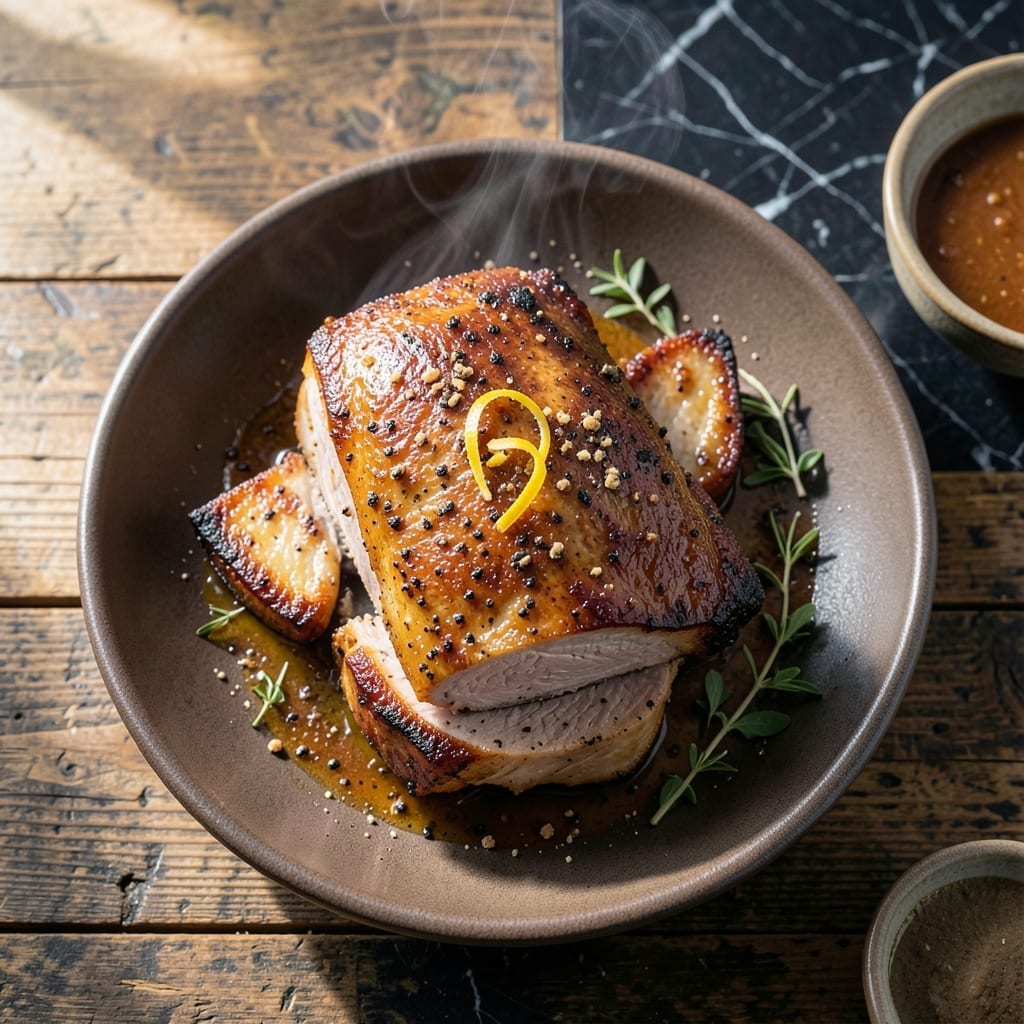
Achieving perfectly tender pulled pork doesn’t require a smoker or hours of babysitting. This method uses slow, even heat to transform a tough cut into fall-apart meat with a caramelized exterior.
The key lies in the rotisserie technique, which bastes the pork in its own juices as it spins. A simple dry rub of salt, pepper, and spices enhances the natural flavor without overpowering it.
After 6 to 8 hours of steady roasting, the pork develops a crispy bark outside while staying juicy inside. The result? Meat so tender it shreds with a fork, every time.
Serve it on buns, in tacos, or straight from the pan. This dish delivers restaurant-quality results with minimal effort.
Ingredients for Rotisserie Pork Shoulder
Simple dry rub and slow heat transform pork shoulder into something extraordinary.
| Ingredient | Amount | Notes |
|---|---|---|
| Pork Shoulder 🐖 | 4 lb | Bone-in, skin-on preferred |
| Kosher Salt 🧂 | 2 tbsp | Diamond Crystal preferred |
| Black Pepper 🌶️ | 2 tsp | Freshly ground for best flavor |
| Brown Sugar 🍚 | ¼ cup | Light or dark variety |
| Paprika 🌶️ | 1 tbsp | Sweet or smoked variety |
| Garlic Powder 🧄 | 1 tbsp | Not garlic salt |
| Onion Powder 🧅 | 1 tbsp | Fresh ground preferred |
| Dried Oregano 🍃 | 1 tsp | Mediterranean variety preferred |
| Olive Oil 🫒 | 2 tbsp | For rubbing and basting |
| Apple Cider Vinegar 🍏 | ¼ cup | For tangy balance |
| Yellow Mustard 🟡 | 2 tbsp | Standard prepared mustard |
| Chicken Stock 🍲 | 1 cup | Low-sodium preferred |
The pork shoulder is non-negotiable here. Bone-in, skin-on gives you that perfect bark and self-basting action. I source mine from Costco or Whole Foods—look for good marbling and a thick fat cap. The salt matters too: Diamond Crystal dissolves better than table salt. Don’t skip the brown sugar; it’s what creates that caramelized crust as the meat spins.
No pork shoulder? Pork butt works identically (it’s the same cut, just from a different part of the shoulder). Out of paprika? Smoked paprika adds depth, but regular is fine. For the vinegar, white vinegar in a pinch, though cider brings better balance. The mustard is mostly for color—Dijon works too if that’s what you have.
The dry rub keeps for 6 months in a cool, dark place. Cooked pork stays juicy for 4-5 days in the fridge or freezes beautifully for 3 months. Reheat gently with a splash of stock to keep it moist.
Why You’ll Love This Recipe
- Set and Forget: I season the pork shoulder with salt, pepper, and brown sugar, then let the rotisserie do all the work.
- Sweet and Smoky: The brown sugar caramelizes while the paprika adds just the right amount of smokiness to every bite.
- Feeds a Crowd: Honestly, this makes enough for a family dinner with leftovers for sandwiches the next day.
- Budget Friendly: Pork shoulder is affordable, and this recipe turns it into something ridiculously good.
Step-by-Step Instructions for Rotisserie Pork Shoulder
This method guarantees tender, fall-apart meat with a caramelized exterior every time.
Step 1: Prepare the Wet Rub for Maximum Flavor
In a small bowl, whisk together the 0.25 cup Apple Cider Vinegar, 2 tbsp Yellow Mustard, and 2 tbsp Olive Oil until smooth. This wet base ensures the dry rub adheres properly and creates a beautiful bark.
I use a fork for whisking—it breaks up the mustard better than a spoon. The mixture should be thick but pourable. Don’t skip this step; the acidity from the vinegar helps tenderize the pork shoulder while the mustard adds depth of flavor.
Step 2: Create and Apply the Dry Rub
In a separate bowl, combine the 2 tbsp Kosher Salt, 2 tsp Black Pepper, 0.25 cup Brown Sugar, 1 tbsp Paprika, 1 tbsp Garlic Powder, 1 tbsp Onion Powder, and 1 tsp Dried Oregano. Mix thoroughly to break up any clumps in the brown sugar.
Pat the 4 lb Pork Shoulder dry with paper towels, then rub it all over with the wet mixture. Immediately follow with the dry rub, pressing it into every crevice of the meat. The pork should be completely coated with no dry spots.
Step 3: Slow-Roast to Tender Perfection
Place the pork shoulder fat-side up in a roasting pan or Dutch oven. Pour the 1 cup Chicken Stock into the bottom of the pan—this creates steam that keeps the meat moist during the long cook.
Cover tightly with foil or a lid and roast in a preheated 300°F oven for 5-6 hours. You’ll know it’s ready when the internal temperature reaches 195-205°F and a fork slides in with no resistance. I check at the 5-hour mark and let it go longer if needed.
Step 4: Rest and Shred for Serving
Remove the pork from the oven and let it rest covered for 30 minutes. This allows the juices to redistribute throughout the meat. Resist the urge to shred it immediately—resting makes a noticeable difference in moisture.
Transfer the pork to a cutting board and shred using two forks, pulling the meat apart along its natural seams. Discard any large fat chunks. The meat should separate effortlessly, with some pieces crispy from the rub and others melt-in-your-mouth tender.
Mix the shredded pork with some of the pan juices to keep it moist. The bark pieces will be intensely flavorful—distribute them evenly throughout the pulled pork for the best texture in every bite.
Pro Tips For Making Rotisserie Pork Shoulder
- Dry the Shoulder: Pat the pork shoulder completely dry with paper towels before seasoning—I learned this the hard way after my first few attempts had a steamed, pale crust instead of that perfect rotisserie bark.
- Let It Rest: Pull the pork off the heat at 195°F and let it rest under foil for at least 30 minutes, or the juices will run all over your cutting board instead of staying in the meat.
- Use Coarse Salt: Stick with kosher salt for the dry rub; fine table salt can make the surface too salty and the texture uneven, especially with a long cook time.
- Skip the Water Pan: Sounds weird, but it works: I stopped using a water pan in the rotisserie and got better bark—too much moisture just softens the crust you worked so hard to build.
Wine and Beer Pairings for These Flavors
Bold Red Wines
For this dish, a medium-bodied red wine like Chianti or Sangiovese works beautifully—the acidity cuts through the richness while complementing the smoky, spiced notes. I also love a Zinfandel with its jammy fruit flavors. 🍷
Rich White Wines
If you prefer white wine, a buttery Chardonnay or Viognier holds up well against the pork’s bold flavors. The oakiness in aged Chardonnay adds depth. Serve slightly chilled for best results.
Craft Beer Choices
A smoked porter or amber ale enhances the caramelized crust. The maltiness mirrors the brown sugar in the rub. I recommend Stone Brewing Smoked Porter for a perfect match. 🍺
Light Beer Options
For something lighter, a crisp pilsner or Hefeweizen cleanses the palate between bites. The carbonation cuts through the fat, while citrus notes balance the spices. Try Samuel Adams Noble Pils.
Non-Alcoholic Pairings
For alcohol-free options, sparkling apple cider or ginger beer offer refreshing contrast. The effervescence and sweetness complement the pork’s savory depth. I love Fever-Tree Ginger Beer. ✨
Nutrition Facts
Frequently Asked Questions
Do I need a rotisserie attachment for this?
No, a standard oven works perfectly. The recipe uses slow roasting to mimic rotisserie results. Just ensure even heat distribution in your oven for best results.
Can I use a smaller cut of pork?
Yes, but adjust cooking time. A 2-3 lb piece may finish in 3-4 hours. Always check internal temperature reaches 195-205°F rather than relying on time alone.
Why does the meat need to rest before shredding?
Resting allows juices to redistribute. Skipping this step can leave meat dry and juices on the cutting board. 30 minutes covered is ideal for maximum moisture.
Can I make this ahead of time?
Cooked pork stays juicy for 4-5 days refrigerated. Reheat gently with pan juices or broth to maintain moisture.

- 2-Medium Pizza Dough Recipe: Chewy Crust With Zero Gluten Guilt - October 4, 2026
- 12 Lb Rib Roast Recipe: Low-and-Slow Mastery for Showstopping Taste - October 4, 2026
- 5-Gallon Apple Mash Recipe: Slow-Simmered Spice Infusion for Crowds - October 4, 2026