

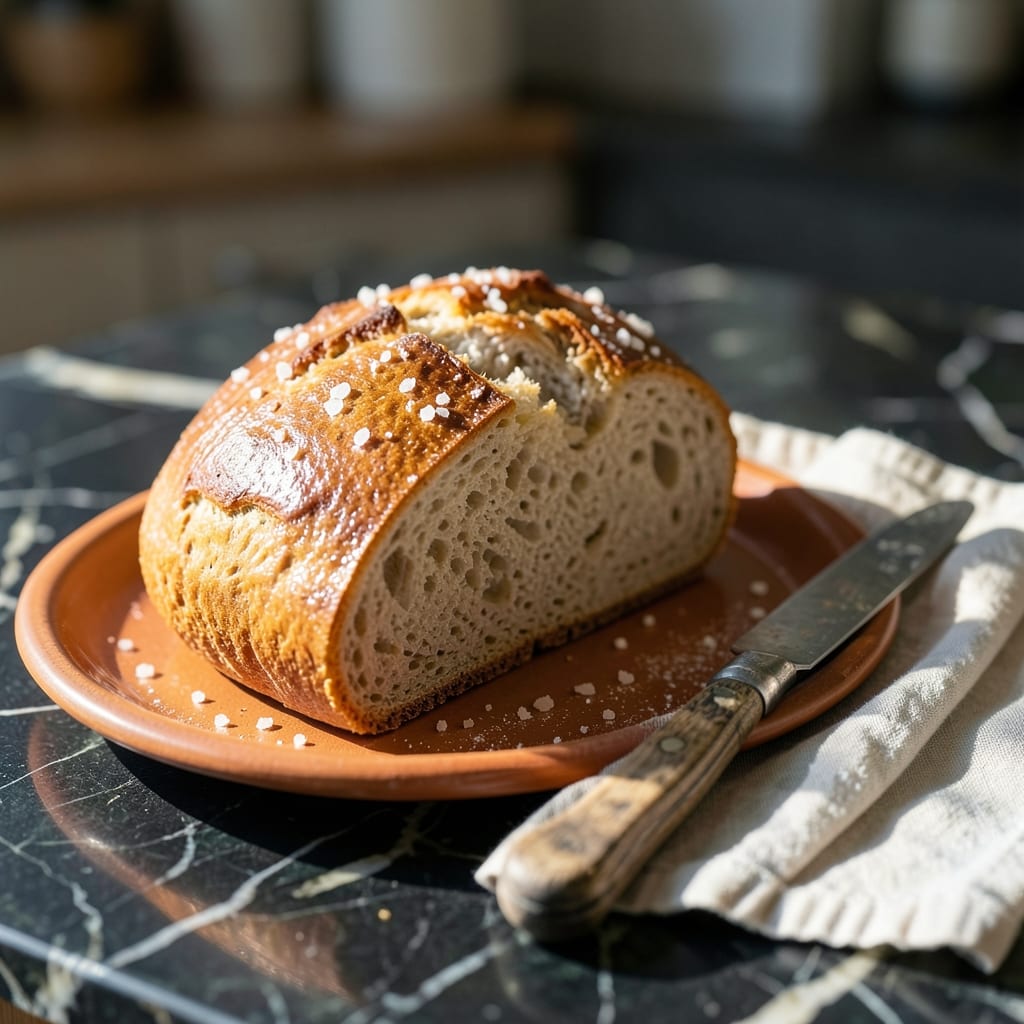
There’s something deeply satisfying about pulling a warm, hands-free loaf of wheat bread from your bread machine. This recipe delivers a soft, slightly sweet artisan loaf with minimal effort.
With a few simple ingredients and the right settings, you’ll have fresh, homemade bread ready in hours. No kneading, no mess—just perfect results every time.
Ingredients for Wheat Bread Recipe for Bread Machine
Simple pantry staples combine to create this artisan loaf with ease.
| Ingredient | Amount | Notes |
|---|---|---|
| Bread Flour 🌾 | 3 cups | All-purpose can substitute in a pinch |
| Whole Wheat Flour 🌾 | 1 cup | Fine grind for best texture |
| Granulated Sugar 🍚 | 2 tbsp | For subtle sweetness |
| Salt 🧂 | 1 ½ tsp | Fine sea salt preferred |
| Active Dry Yeast 🍞 | 2 ¼ tsp | Check expiration date |
| Unsalted Butter 🧈 | 2 tbsp | Softened to room temperature |
| Milk 🥛 | 1 cup | Whole milk for richness |
| Honey 🍯 | 2 tbsp | Warm slightly for easier mixing |
| Large Egg 🥚 | 1 whole | Room temperature preferred |
| Vital Wheat Gluten 🌾 | 1 tbsp | Enhances wheat bread structure |
[recipeingredientscaler]
The flour blend is critical for texture. King Arthur Flour offers consistent quality for both bread and whole wheat varieties. Use fine-grind whole wheat for best results—coarse can make the loaf dense. The yeast must be fresh; test it in warm water with a pinch of sugar before committing. Fleischmann’s or Red Star are reliable brands available at most supermarkets.
No honey? Maple syrup or agave works at a 1:1 ratio. For a vegan version, swap the milk for warm water and butter for coconut oil. The egg can be omitted (the loaf will be slightly denser) or replaced with a flax egg. If your machine struggles with wheat bread, add an extra 1/4 cup liquid to compensate for the whole grain absorption.
Store flour in airtight containers to prevent rancidity. The yeast keeps in the freezer for 6-12 months. Once baked, the loaf stays fresh for 3-4 days at room temperature or 1 week refrigerated. Slice and freeze for longer storage.
Why You’ll Love This Recipe
- Set and Forget: Just dump the flour, sugar, yeast, and salt in the machine and walk away—no kneading, no watching, no fuss.
- Nutty Warmth: The whole wheat flour gives it this cozy, slightly sweet depth that’s way better than store-bought.
- Meal Prep Hero: I slice and freeze half the loaf for sandwiches all week, and it toasts up like fresh.
- Budget Friendly: A pound of bread for the cost of a few cups of flour? Honestly, it feels like stealing.
Step-by-Step Instructions for Wheat Bread in a Bread Machine
This method ensures optimal texture and rise every time with minimal effort.
Step 1: Prepare and Measure Wet Ingredients
Begin by warming the milk slightly—just enough to take the chill off, about 80-90°F. In a small bowl, whisk together the 1 cup milk, 2 tbsp honey, and the large egg until fully combined and the honey is dissolved.
Cut the 2 tbsp unsalted butter into small pieces to ensure even distribution. I always use softened butter as specified to prevent clumping in the dough. The warmth of the milk helps incorporate everything smoothly.
Step 2: Layer Dry Ingredients in the Bread Pan
Add the 3 cups bread flour and 1 cup whole wheat flour to the bread machine pan, spreading them evenly. Create a small well in the center of the flour mixture and add the 2 tbsp granulated sugar, 1.5 tsp salt, and 1 tbsp vital wheat gluten.
Make a small indentation in the center of these dry ingredients and add the 2.25 tsp active dry yeast. It’s critical to keep the yeast separate from the wet ingredients until the machine starts mixing—this prevents premature activation.
Step 3: Add Wet Ingredients and Begin the Cycle
Pour the prepared wet mixture from Step 1 over the dry ingredients in the pan. Add the pieces of unsalted butter to the corners of the pan. This placement ensures the butter incorporates gradually as the machine kneads.
Insert the pan into the bread machine and select the basic or whole wheat cycle with a medium crust setting. The total cycle time will be approximately 3 hours and 30 minutes, but this varies by machine model. Start the machine immediately after adding all ingredients.
Step 4: Monitor the Dough Formation
About 10-15 minutes into the cycle, check the dough through the machine’s window. It should form a smooth, elastic ball that pulls away from the sides of the pan. If the dough appears too dry, add 1-2 teaspoons of water.
Conversely, if the dough looks sticky and doesn’t pull away from the sides, sprinkle in 1-2 teaspoons of bread flour. The dough should be slightly tacky but not wet. The vital wheat gluten helps strengthen the structure, especially important with the whole wheat flour.
Step 5: Complete the Cycle and Cool the Loaf
Allow the bread machine to complete its full cycle undisturbed. When finished, the loaf should be golden brown on top and sound hollow when tapped. Remove the pan from the machine and let the loaf cool in the pan for 5 minutes.
Turn the loaf out onto a wire rack and let it cool completely for at least 1 hour before slicing. This cooling period is essential—it allows the crumb structure to set properly and prevents a gummy texture. Slicing too soon will result in a dense, underdeveloped loaf.
Pro Tips For Making Wheat Bread Recipe For Bread Machine
- Warm Your Ingredients: Take the milk or water out of the fridge 30 minutes before starting—the yeast activates better at room temp. I learned this the hard way after a loaf refused to rise.
- Measure Flour Right: Spoon the bread and whole wheat flour into measuring cups, then level off—scooping directly from the bag packs it down and makes dense bread.
- Skip Packed Yeast: If using a jar of active dry yeast, stir it gently before measuring. The stuff settles, and a packed tablespoon can throw off the whole rise.
- Use Bread Mode: Sounds obvious, but double-check your machine is set to the whole wheat or bread cycle—wrong setting means under-kneaded dough. My first three loaves were bricks before I noticed.
Troubleshooting This Recipe
🔥 Too Dry or Tough?
This usually happens if you use too much flour or not enough liquid. Bread machines can be sensitive to measurements, so even a slight imbalance throws off the texture.
Quick Fix: Add 1-2 tablespoons of water or milk next time. Ensure you’re using the “dough” setting if your machine has one, as it allows for better hydration.
🍞 Bread Didn’t Rise?
Old yeast or incorrect water temperature (too hot or too cold) can prevent the dough from rising properly. Yeast needs warmth to activate but can be killed by extreme heat.
Quick Fix: Use fresh yeast and ensure your liquids are lukewarm (around 110°F). Test your yeast first by mixing it with warm water and a pinch of sugar—it should foam within 5-10 minutes.
⏰ Dense or Heavy Loaf?
Over-kneading or using too much whole wheat flour (which is heavier) can result in a dense loaf. Bread machines knead vigorously, so the dough can become overworked.
Quick Fix: Replace 10-20% of the whole wheat flour with bread flour for a lighter texture. Also, avoid opening the lid during kneading or rising.
🎯 Crust Too Thick or Hard?
A thick crust often forms if the bread bakes too long or the machine’s temperature is too high. Some bread machines also have a tendency to over-brown.
Quick Fix: Try the “light crust” setting if available. For extra control, remove the loaf 5-10 minutes early and let it finish baking in the oven if needed.
Nutrition Facts

- 21-Pound Turkey Recipe: Juicy Golden Meat With Foolproof Temperature Tricks - October 3, 2026
- 3-Lb Ribeye Roast Recipe: Steakhouse-Quality Crust and Juicy Core - October 3, 2026
- 6-Can Vegetable Soup Recipe: Pantry-to-Pot Heartiness in One Pot - October 3, 2026